
Measure Packed Products First in Retail Shelving Design for Retailers


Prioritize three things in that order: measure your packed products before you touch a fixture catalog, design the layout around sightlines and customer flow, and choose modular, adjustable shelving rated for the actual weight of your merchandise. Everything else, from finish to lighting, is secondary to those three decisions. Get them wrong and even beautiful shelving will feel cramped, unsafe, or wrong for the products it holds.
TL;DR:
Proper product measurement should be based on packed dimensions to avoid fitting issues and ensure shelves accommodate actual merchandise.
Shelving materials should match store style and product needs, with metal for durability, wood for aesthetics, and glass for premium displays, all with appropriate finishes.
Sightlines and circulation layout are crucial, requiring staggered shelf heights, deliberate gaps, and aisle clearance to enhance visual merchandising and customer flow.
A detailed buyer’s checklist must include verifying load ratings, SKU fit, modularity, finish samples, and realistic lead times to prevent costly mistakes.
Custom shelving from a design-build team offers tailored solutions that better fit product sizes and store layouts, with careful planning reducing installation costs and time.
Table of Contents
What Are the Different Types of Retail Shelving?
Every retail floor is really a mix of a few core fixture families, each suited to a different job. Picking the right one starts with knowing what each does best.
Gondola shelving is the free-standing, double-sided workhorse for aisles carrying high SKU counts, like grocery or hardware.
Wall units run along perimeter walls and maximize storage without eating floor space, ideal for boutiques with limited square footage.
Slatwall offers grooved panels that accept hooks, shelves, and hangers, useful for apparel or stores that swap layouts often.
Etagere and open shelving create an airy, boutique feel for lower-volume, higher-margin goods like ceramics or specialty foods.
Display cases protect and showcase small, high-value items such as jewelry or electronics.
Endcaps sit at the start or end of an aisle and are prime real estate for promotions, since shoppers see them from multiple directions before they even enter the aisle.
Free-standing gondolas suit larger footprints that need reconfiguring; wall-mounted units suit tight spaces where floor space is precious. Specialty needs, like refrigerated shelving for perishables or locked cases for theft-prone items, should be scoped early since they carry longer lead times and different load and safety requirements.
Which Materials and Finishes Work Best for Retail Shelving?
Metal shelving handles heavy, high-turnover goods and shrugs off daily wear, which is why it dominates hardware stores and grocery aisles. Wood brings warmth and works well for boutiques, cafes, and specialty retail where the fixture itself is part of the brand story. Glass adds a premium feel for cosmetics or jewelry but demands more cleaning and careful load planning. Mixed-material fixtures, wood framing with metal brackets or glass inserts, let you balance durability with a distinct look without paying full custom-metal pricing throughout.
Finish choices affect more than looks. A matte black metal frame reads industrial; a light oak grain reads approachable and warm. Integrated LED strips and demarcated signage zones improve product visibility, and current shelving trends lean heavily toward modular, tech-enabled fixtures with built-in lighting and adjustable components.
Metal: best durability, lowest maintenance, less warmth
Wood: strong brand fit, moderate upkeep, softer aesthetic
Glass: premium look, highest maintenance, needs load caution
Mixed materials: flexible cost and style balance
Reclaimed wood and modular components that get reused across seasonal resets can lower lifecycle costs while appealing to eco-conscious shoppers, since sustainable materials are increasingly a stated differentiator in fixture design.
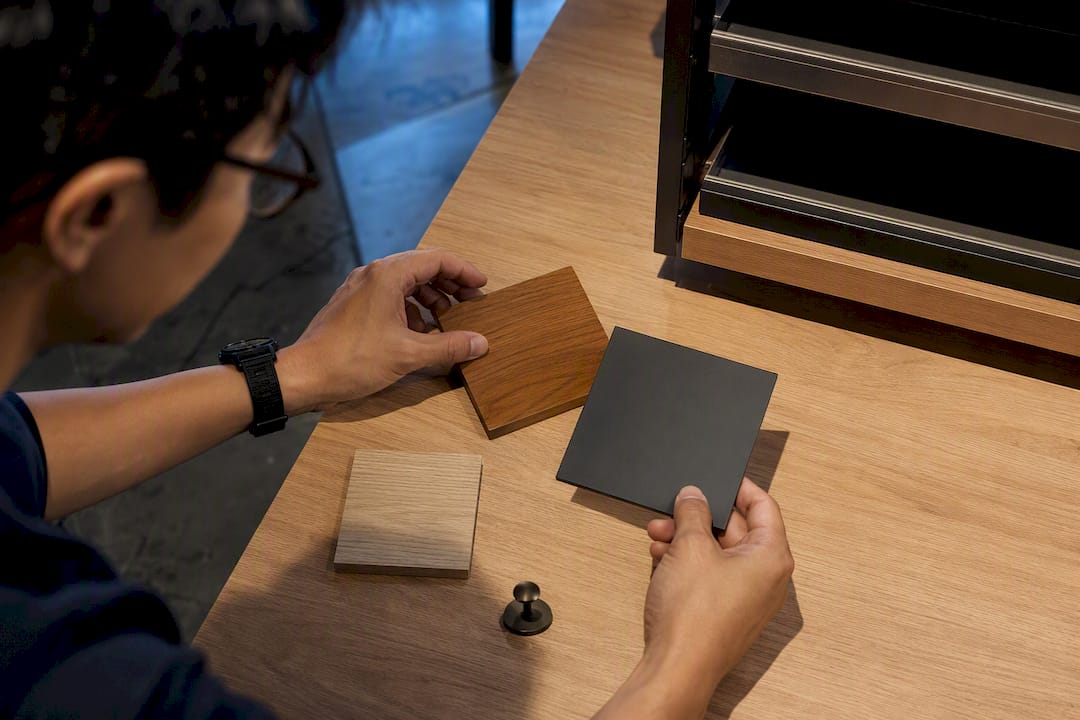
Pro Tip: Request a physical finish swatch before approving any order. Screen renderings almost always shift the perceived tone of wood grain and metal coating once it’s under actual store lighting.
How Do You Measure Products for Shelf Fit?
Nominal shelf dimensions on a spec sheet almost never match the space your product actually needs. Design from the packed product, meaning the item in its retail packaging, not the bare unit, since packed dimensions and the item’s bottom contact area determine real usable space. Follow this sequence before ordering anything:
Measure packed width, depth, and height for every SKU, including any header cards or blister packaging that adds bulk.
Account for front-lips and dividers, which can quietly eat one to two inches of usable depth per shelf.
Record facing counts per SKU and note replenishment direction, since front-loaded stock behaves differently than top-loaded stock.
Document acceptable substitutions for near-empty states, so a partially sold-through shelf still looks intentional.
Factor in manufacturer tolerances and packaging deformation, both of which can quietly shrink usable shelf space over time.
Skipping this step is the single most common reason a “correct” shelf order arrives and doesn’t fit.
How Do You Plan Sightlines, Flow, and Load Safety?
Good shelving design guides the eye before it guides the hand. Varying shelf heights and leaving deliberate negative space creates focal points, which is a core visual merchandising principle: grouping and breathing room help customers actually notice what’s in front of them instead of scanning past a wall of uniform product.
Circulation matters just as much as the shelf face. Aisles need enough clearance for carts, strollers, and wheelchairs, which means ADA-conscious spacing isn’t an afterthought, it’s a layout input from day one.
Statistic Callout: Endcaps capture attention from multiple sightlines simultaneously, which is why they’re treated as premium promotional real estate rather than overflow storage in most well-planned stores.
Stagger shelf heights to avoid a flat, monotonous wall of product
Leave visible gaps rather than packing every inch
Match load ratings to real product weight, not estimated weight
Ask suppliers for tip-resistance and stability specs in writing, especially for tall or narrow units
What Should Be on Your Retail Shelving Buyer’s Checklist?
A short checklist before you sign off on any order saves weeks of back-and-forth later. Work through these in sequence with your fitter or design-build partner:
Confirm packed-product specs and units-per-shelf counts against your actual SKU list.
Verify the load rating in writing, not just a verbal assurance.
Ask whether the system is modular and can be reconfigured without new fixtures entirely.
Request a finish sample and, ideally, a single-shelf mock-up before full production.
Get a firm lead time and written warranty and installation terms.
Ask suppliers directly: what’s the maximum load per shelf, what’s the lead time on custom finishes, and can they provide a mock-up before committing to the full run? A supplier that hesitates on load specs or won’t offer a sample is a red flag worth walking away from.
Pro Tip: Never approve a multi-unit order off a rendering alone. A single approved mock-up shelf, built to your actual packed-product measurements, catches fit problems while they’re still cheap to fix.
What Do Installation, Lead Times, and Costs Look Like?
Standard shelving orders typically move faster than custom builds, but custom finishes, integrated lighting, and branded signage all add real time to the schedule. Cost drivers break down predictably: materials and customization level first, labor and installation second, and shipping or site preparation third, especially for larger footprints.
Measure and confirm product specs (week one)
Approve mock-up and finish samples (week two to three)
Fabricate and finish fixtures (varies by customization)
Schedule installation around store hours to minimize disruption
Full merchandising and stock-in once fixtures are set
Building in buffer time for finish approval avoids the most common schedule slip.
How Does Monarch Carpenters Design Custom Retail Shelving?
Monarch Carpentry Design Studio treats retail shelving the same way we treat any bespoke carpentry project: as a collaboration between designer, carpenter, and client from the first sketch to final installation. Our in-house team handles both design and build, which keeps custom branded fixtures, endcaps, and boutique fitouts cohesive instead of handed off between separate vendors. We lean on meticulous craftsmanship and an innovative approach that blends contemporary retail design with traditional carpentry techniques, aiming for solutions that stay elegant without stretching budgets. Clients consistently note the modest cost paired with thoughtful, well-reviewed design work.
How Do You Keep Retail Shelving Clean and Durable?
Maintenance requirements differ sharply by material, and matching your cleaning routine to the fixture’s finish prevents premature wear. Metal shelving tolerates regular wiping with mild soap and water, but abrasive pads will dull painted or powder-coated finishes over time. Wood fixtures need a drier approach: a damp (not wet) cloth, followed by an occasional wood-safe conditioner to prevent cracking, especially in climate-controlled retail spaces where humidity swings.
Glass shelving shows fingerprints and dust fastest of any material, so it demands the most frequent attention if it’s front-facing. A streak-free glass cleaner applied with a microfiber cloth, rather than paper towels, keeps display cases looking sharp without scratching. Mixed-material fixtures need spot-checking at each material junction, since the wood-to-metal or glass-to-metal seams are where grime and moisture tend to collect first.
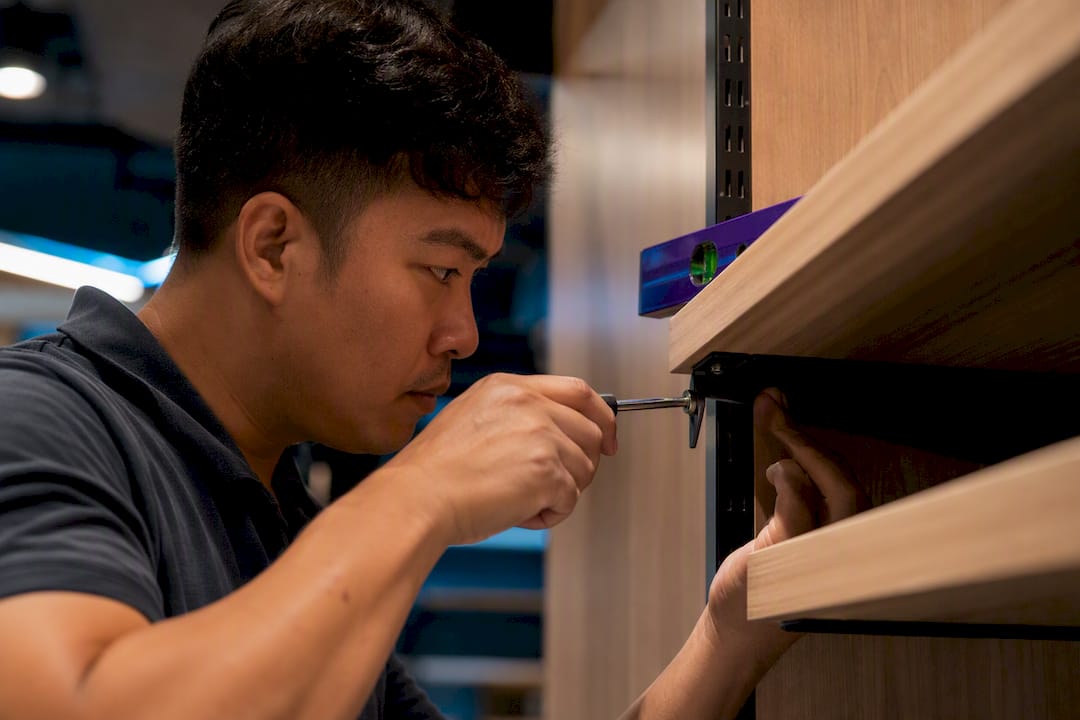
Beyond wiping surfaces, build a light structural check into your routine. Tighten loose brackets and re-level adjustable shelves every few months, since gradual load shifting is normal on any modular system and left unchecked it accelerates wear at connection points. Refresh finish touch-ups on high-traffic edges and corners before scuffing spreads across the whole panel. For refrigerated or high-humidity shelving, check gaskets and drainage more frequently, since moisture damage compounds faster than dust ever does.
A simple rule holds across every material: clean on a schedule, not just when it looks dirty. Fixtures that get wiped down weekly last visibly longer than ones cleaned only when stock rotates.
What Real Client Projects Taught Us About Shelving
One-shelf mock-ups look like an extra step, but they’re the cheapest insurance in the entire process, since a single approved module catches fit problems before they multiply across twenty units. Test every layout with your actual packaged SKUs, not placeholder boxes, before committing to a full production run.
— Seth Wayne
Get a Custom Shelving Consultation From Monarch Carpenters
Off-the-shelf gondola runs and modular kits solve a lot of problems, but they can’t always match a brand’s exact footprint, product mix, or finish vision. Monarch Carpenters is the alternative for retailers who want fixtures designed around their actual packed-product measurements and store layout, not a generic size chart, with one in-house team handling design and build so nothing gets lost between the sketch and the install. Many clients report positive feedback on the finished result alongside modest costs, making custom work more accessible than typically expected.

If you’re weighing a mock-up shelf, an endcap redesign, or a full boutique fitout, start with a consultation and design & build discussion to scope measurements, materials, and lead time before committing to a full order. For fabrication-ready specs, our guide on shop drawings for custom carpentry is a useful next read before you brief a fitter.
Sources
FAQ
What Are the Different Types of Retail Shelving?
The main types are gondola shelving, wall units, slatwall, etagere or open shelving, display cases, and endcaps, each suited to different merchandise and floor layouts.
What Are Some Creative Shelf Design Ideas for My Shop?
Vary shelf heights to create focal points, use endcaps for promotional items, mix open shelving with wall units for texture, and consider modular fixtures that can be reconfigured for seasonal resets. A design-build studio like Monarch Carpenters can turn these ideas into custom fixtures built around your actual product line.
How Do You Organize Retail Shelves?
Group products by story or category, leave visible negative space rather than packing every inch, and place high-margin or promotional items at eye level near endcaps for maximum visibility.
How Tall Should Retail Shelves Be?
There’s no single fixed height. It depends on the product category, sightline goals, and ADA accessibility needs, but varying heights across a run generally works better for discovery than one uniform height throughout.
Recommended
Measuring packed products before choosing fixtures is a practical reminder that shelving should fit the merchandise, not the other way around. The sightlines and weight-rating points are especially useful for avoiding costly redesigns. I’ve been using https://vrew.pro/what-is-vrew
Measuring packed products before choosing fixtures is a practical point retailers often overlook, especially when weight and customer flow affect the layout. I’ve been using https://loomly.online
Measuring packed products before choosing fixtures is a practical point many retailers overlook, especially when weight and sightlines affect both safety and flow. I’ve been using https://lumalabs.pro
Measuring packed products before choosing fixtures is such a practical starting point, especially when weight and sightlines shape the entire layout. I’m going to try this approach with our next refresh—I've been using https://byteplusai.site/models/z-image-turbo
Measuring packed products before choosing fixtures is such a practical priority—it prevents cramped layouts and wasted shelf space. I’ve been using https://wavespeed.pro