
What Is Built-In Furniture? A Singapore Homeowner's Guide

TL;DR:
Built-in furniture is permanently integrated into a home’s structure, maximizing space efficiency and architectural cohesion. It often enhances property value and durability but requires careful planning and higher upfront investment. In Singapore’s limited and irregularly shaped homes, custom-built solutions effectively optimize space and provide long-term functionality.
If you’ve ever looked at a cramped HDB bedroom or a narrow condo corridor and thought, “there has to be a better way to use this space,” you’ve already started thinking about what is built-in furniture and why it matters. Built-in furniture refers to fixtures and cabinetry constructed as a permanent, integrated part of your home’s structure. Unlike the freestanding bookshelf you can drag to another room, built-ins are designed around your specific walls, corners, and architectural features, making them one of the most space-efficient and visually cohesive choices available to homeowners in Singapore.
Table of Contents
Key Takeaways
Point | Details |
Built-ins are permanent fixtures | They are integrated into your home’s architecture and cannot be moved after installation. |
Space efficiency is a primary benefit | Built-ins maximize every corner, including awkward nooks that standard furniture cannot fit. |
They add measurable property value | Buyers recognize quality built-ins as a high-end feature that improves both utility and style. |
Planning with professionals matters | Working with a skilled carpenter or designer produces better functional and aesthetic outcomes. |
Multi-functionality is a growing trend | Modern built-ins like Murphy beds with integrated storage adapt rooms for flexible everyday use. |
What is built-in furniture: definition and key traits
Built-in furniture is defined as fixtures or cabinetry constructed as an integral and permanent part of a structure. Once installed, they are immovable. They are not placed against a wall. They become the wall, or at least a deliberate extension of it.
This distinction matters more than most people realize. Freestanding furniture is designed to fit many rooms and many owners. Built-in furniture is designed for one space, one lifestyle, and one set of dimensions. That specificity is both its greatest strength and the reason it requires more careful planning upfront.
Here are the defining characteristics that separate built-ins from every other furniture category:
Permanent integration: Built-ins are integrated during construction or renovation to align with architectural elements like walls, ceilings, and floor layouts.
Custom dimensions: They are cut and fitted to the exact measurements of your space, including sloped ceilings, awkward alcoves, and non-standard wall widths.
Material and craftsmanship focus: Because built-ins are a long-term investment, material quality matters significantly. Solid timber, moisture-resistant laminates, and quality hardware are standard considerations.
Architectural cohesion: Clean visual lines and seamless integration between furniture and architecture are a hallmark of well-executed built-ins.
Common forms: Wardrobes, kitchen cabinets, built-in shelving, window seats, Murphy beds, media walls, and under-stair storage are among the most popular expressions of this furniture type.
What is custom cabinetry, then? It falls squarely within the built-in category. Custom cabinetry refers to storage or display pieces built to exact specifications for a particular space, rather than manufactured in standard sizes and sold off the shelf. Think of it as built-in furniture with a particular focus on storage function and finish quality.
Advantages and disadvantages for Singapore homes
Singapore’s housing context makes this conversation especially relevant. HDB flats, condominiums, and terraced homes in Singapore typically feature limited square footage, irregular layouts, and shared walls that create nooks standard furniture simply cannot address. This is where the advantages of built-in furniture become concrete rather than theoretical.
The benefits worth knowing
Space maximization is the most immediate gain. Custom built-in furniture maximizes every inch, turning awkward corners into reading nooks or wine bars rather than dead zones collecting clutter. In a 700 sq ft condo, that difference is the entire mood of the apartment.
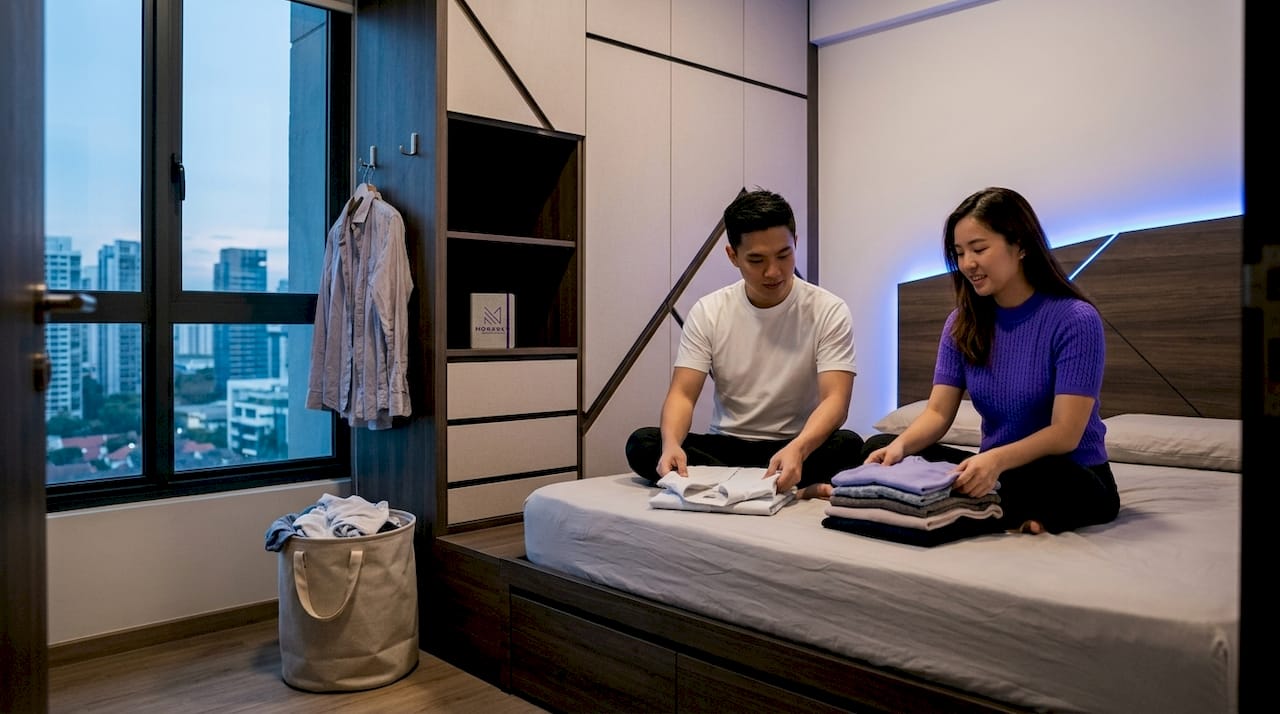
Property value is another measurable upside. Built-ins can significantly boost property value because potential buyers see them as high-end features that add utility and style. A well-crafted media wall or a bespoke wardrobe system signals quality throughout the home.
Durability and lower maintenance round out the practical case. Built-in furniture reduces maintenance compared to freestanding pieces because quality materials and fixed integration mean less wear from movement, shifting, or accidental tipping.
The trade-offs to consider honestly
No furniture decision is without compromise. Built-ins come with real drawbacks you should weigh:
Higher upfront cost: Custom work requires skilled labor and quality materials, which carry a premium over flat-pack alternatives.
Permanence limits flexibility: If your household composition changes, or you sell the property, built-ins cannot simply move with you.
Renovation dependency: Adding or modifying built-ins after the initial installation typically requires a new round of carpentry work and associated disruption.
Here is a side-by-side comparison to make the decision clearer:
Factor | Built-in furniture | Freestanding furniture |
Space optimization | Maximizes every corner and wall | Limited by standard sizes and shapes |
Aesthetic cohesion | Seamlessly integrated with architecture | Varies by piece and style |
Upfront cost | Higher due to custom work | Lower with off-the-shelf options |
Durability | Generally higher with quality materials | Varies widely by brand and price point |
Flexibility | Fixed after installation | Easily moved or replaced |
Property value impact | Positive, adds perceived quality | Minimal to none |
Pro Tip: If you are renting your home in Singapore, built-ins are generally not a practical option. But if you own the property and plan to stay for five or more years, the investment almost always pays back through both livability and resale appeal.
Popular built-in furniture designs and trends
The best built-in furniture ideas today are not just about storage. They are about creating rooms that work harder, look cleaner, and adapt to how people actually live.
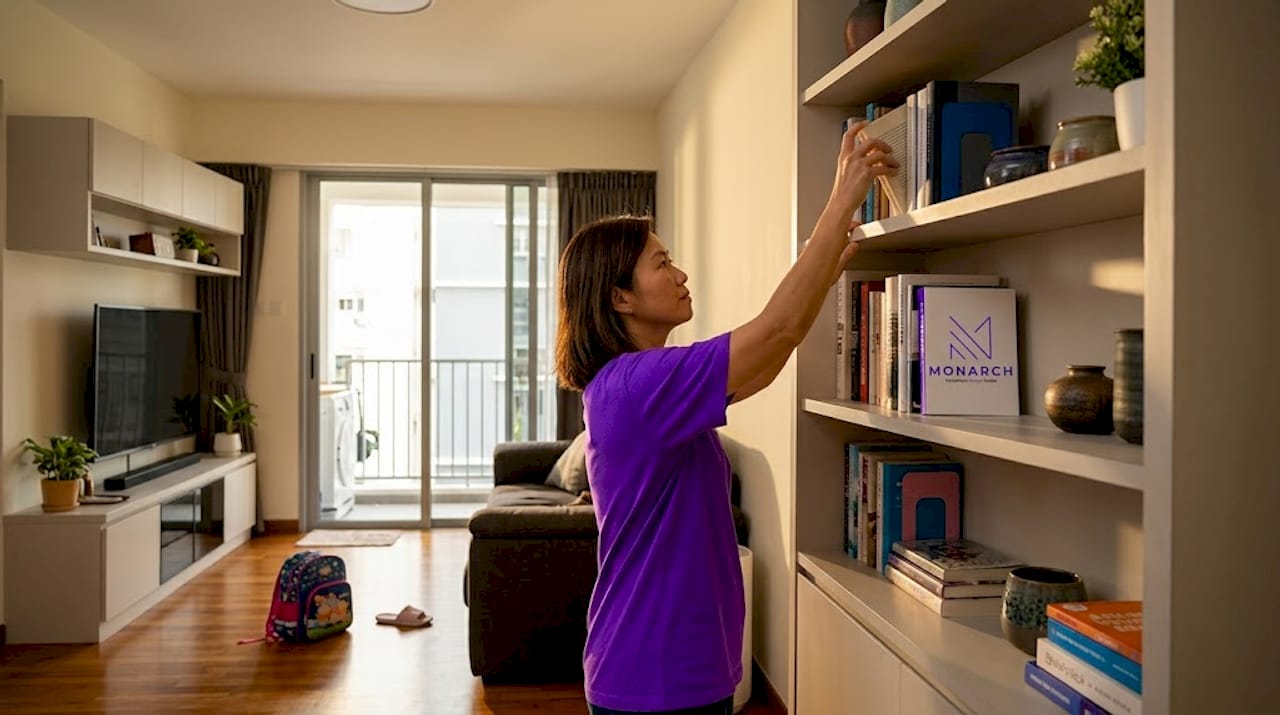
Shelving systems and media walls remain the most requested built-in design in Singapore homes. A floor-to-ceiling shelving unit with integrated TV panel and concealed cable management does three jobs at once: it provides display space, houses entertainment electronics, and creates a focal point that makes the whole living room feel intentional.
Built-in window benches and seating turn dead perimeter space into functional living area. The minimum functional depth for built-in seating starts at 18 inches, with a width of at least 24 inches for comfortable use. In Singapore’s older apartments, bay windows are a prime candidate for this treatment, transforming a structurally awkward feature into a favorite spot in the home.
Murphy beds with integrated storage have matured well beyond their utilitarian origins. Modern Murphy beds now include integrated desks, nightstands, and storage, allowing a single room to shift between a home office by day and a guest bedroom by night. For those working with a one-bedroom condo or a study that doubles as guest accommodation, this is one of the most practical built-in furniture ideas available.
Multi-functional built-in trends are also reshaping how designers approach smaller homes. The trend toward multi-functionality in built-in furniture reflects a broader shift in how urban residents use space. Rooms are no longer dedicated to a single purpose. A living room might need to become a dining room, a yoga space, or a homework zone within the same day. Built-ins designed with this flexibility in mind, featuring fold-down surfaces, concealed storage, and modular shelving configurations, give homes a kind of adaptability that freestanding furniture rarely achieves.
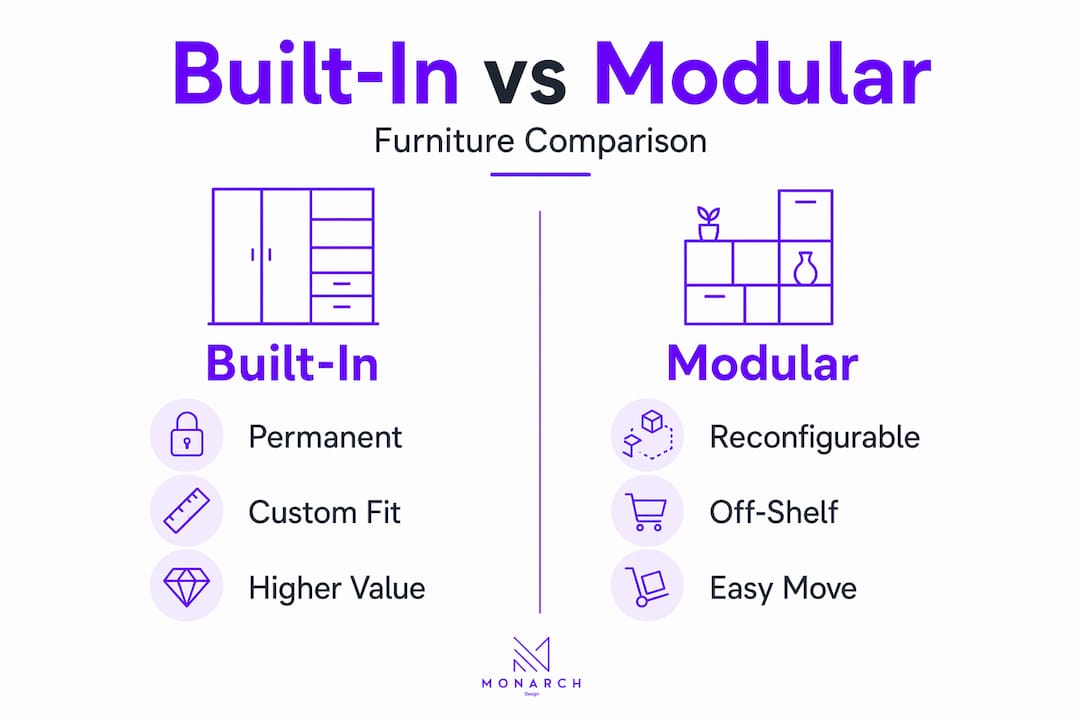
Built-in vs modular furniture is a question that comes up frequently in this context. Modular furniture, like shelving systems sold in configurable panels, sits somewhere between freestanding and fully built-in. It offers more flexibility than true built-ins but less precision fit. For homeowners who want the look of built-ins without full commitment, modular systems can be a reasonable starting point. But for genuine spatial optimization and long-term value, a fully custom solution wins every time.
Pro Tip: When planning built-in designs, think in terms of zones rather than individual pieces. A bedroom built-in zone, for example, might combine a wardrobe, a bedside niche, and an overhead storage bridge all in one continuous design, reducing visual clutter and unifying the room.
How to choose the right built-in furniture
Choosing built-in furniture well means thinking through several dimensions before a single board is cut. Here is a practical sequence to follow:
Assess your space’s architecture first. Measure ceiling heights, note where windows and doors interrupt wall runs, and identify any awkward corners or recesses. These features will define what is buildable, and they often reveal opportunities that a flat-pack catalog would never show you.
Prioritize by function, not aesthetics. Start with what you need the space to do: sleep, store, work, display, or all of the above. Function determines form. Once you know what the built-in must achieve, the design direction becomes much clearer.
Work with professionals for custom solutions. Planning with professionals ensures that architectural features, maintenance access, and adaptability are all considered. A skilled carpenter or interior designer will also catch practical issues, like swing clearance for cabinet doors or ventilation requirements for built-in AV units, that are easy to miss on paper.
Choose materials with maintenance in mind. High-moisture areas like kitchens and bathrooms require moisture-resistant substrates and finishes. Living areas and bedrooms offer more material flexibility, though solid wood and quality laminates consistently outperform budget alternatives over time. Careful selection of materials and craftsmanship is what separates a built-in that lasts decades from one that shows its age within a few years.
Plan for the future, not just today. If you have young children, consider designs that can adapt as they grow. If you work from home, plan cable routing and power access into any desk or shelving built-in from the start. Built-ins are long-term commitments, and the best ones are designed with five to ten years of life changes already anticipated.
My perspective on built-in furniture in modern homes
By Seth Wayne
I’ve spent years watching homeowners wrestle with the same tension: they want their homes to feel like they were designed on purpose, but they hesitate at the cost and commitment of built-in furniture. What I’ve found, consistently, is that the hesitation usually comes from seeing built-ins treated as a luxury rather than a structural decision.
Here is what I actually think: in Singapore’s housing context, built-ins are not a nice-to-have. They are often the only realistic path to making a compact home feel spacious, calm, and genuinely livable. When a 90 sq meter apartment has three people, two home-office setups, and a guest who visits twice a year, freestanding furniture cannot solve that problem. Thoughtful built-ins can.
The misconception I see most often is that built-ins are purely about storage. They are really about spatial control. When you remove the visual noise of mismatched freestanding pieces and replace it with one continuous, considered design, the whole room changes. The ceiling feels higher. The floor space feels larger. The home feels more like a home.
What concerns me is the tendency to cut corners on craftsmanship when budgets get tight. A poorly built wardrobe that sags in three years is not a bargain. A well-crafted one that still looks and operates perfectly in fifteen years is. I’ve seen both, and the difference is not only in the timber. It’s in the joinery, the hardware, the finishing, and the experience of whoever builds it.
If you’re considering built-ins for your Singapore home, plan carefully, choose your maker deliberately, and invest in quality where it counts most.
— Seth Wayne
Transform your space with Monarch carpenters
If this article has given you a clearer picture of how built-in furniture could work in your home, the natural next step is seeing what thoughtful craftsmanship actually looks like in practice.

At Monarch carpenters, we have built a strong reputation in Singapore for delivering bespoke built-in furniture designs that combine quality materials, precise carpentry, and genuinely modest pricing. Our clients consistently highlight how closely our team works with them through every stage, from the first space assessment to the final coat of finish. The result is furniture that feels like it was always part of the home, because in a very real sense, it was designed to be. Browse our past built-in projects to see the range of styles and solutions we have delivered across Singapore homes, and reach out to start a conversation about your space.
FAQ
What is the built-in furniture definition?
Built-in furniture refers to fixtures and cabinetry permanently integrated into a home’s structure, designed to align with specific architectural dimensions and features. Unlike freestanding furniture, built-ins cannot be moved after installation.
What are the main advantages of built-in furniture in Singapore?
Built-ins maximize space in compact homes, create visual cohesion, and can add measurable property value. They also tend to be more durable than freestanding alternatives due to quality materials and fixed integration.
How is built-in furniture different from modular furniture?
Modular furniture consists of configurable panels or units that can be rearranged or moved, while built-in furniture is custom-fitted and permanently fixed to the home’s architecture. Built-ins offer greater precision fit and spatial optimization.
How do I choose built-in furniture for my home?
Start by assessing your space’s architecture and prioritizing functional needs, then work with a professional carpenter or designer who can plan for materials, maintenance access, and long-term adaptability.
Can built-in furniture increase my home’s resale value?
Yes. Potential buyers recognize well-crafted built-ins as a quality feature that adds both utility and visual appeal, which supports higher perceived value at resale.
Recommended
Comments