
Pros Avoid Rework: Soft Close Hinges for Homeowners & Installers

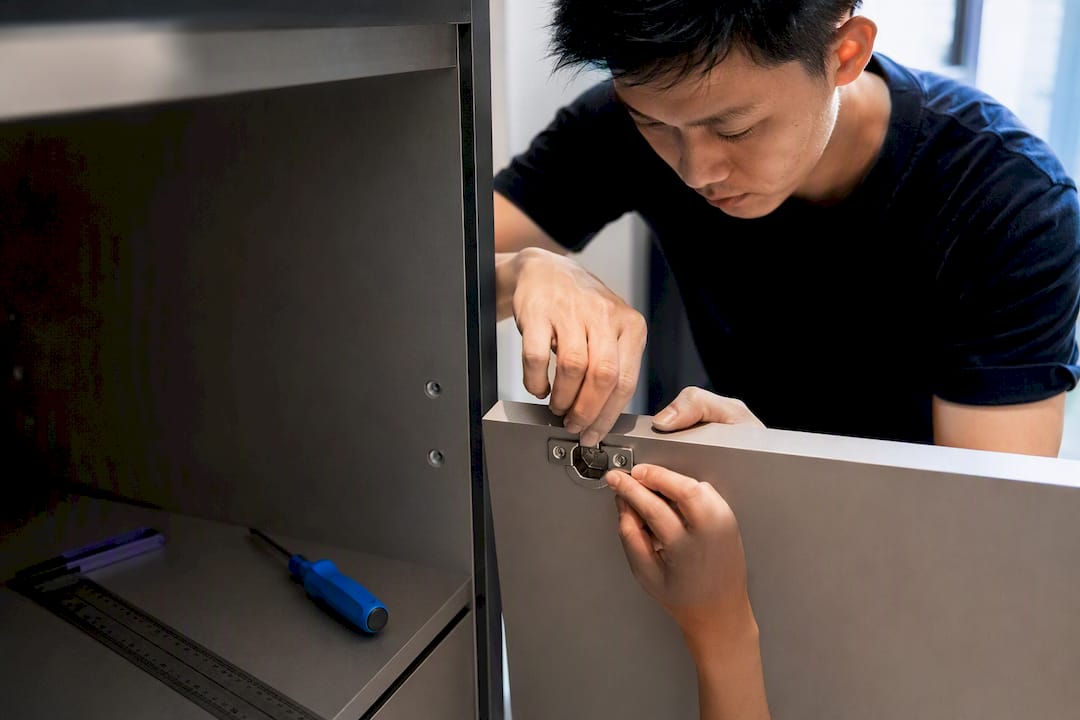
If your cabinets are slamming, sagging, or just plain loud, a soft close hinge upgrade is the fix. For most kitchens, the Blum CLIP top BLUMOTION is the strongest all-around pick because its damping is built into the hinge arm and backed by wide US availability. Contractors doing volume retrofits do well with a 50-pack bulk pack off Amazon, and installers who want adjustable deceleration should look at the Salice Silentia+. The comparison below breaks down specs, pricing, and where to buy each.
TL;DR:
Integrated soft-close hinges, like Blum CLIP top BLUMOTION, provide consistent damping and are suited for long-term use in high-traffic kitchens, costing about $8 to $18 per hinge.
Proper installation requires precise measurement of cup diameter, boring depth, and door thickness; incorrect setup can cause doors to slam, misalign, or not close properly.
For bulk or DIY projects, 50-pack hinges from Amazon or third-party sellers offer affordability but lack the warranty and exact specs of branded options.
Cold weather can temporarily weaken damping performance in hydraulic dampers, leading to slower closing or incomplete latching, which usually recovers with temperature rise.
Specifying hinge models early during design prevents rework; choosing between integrated and add-on dampers depends on long-term durability needs and project scope.
Table of Contents
What Are Soft Close Hinges and How Do They Work?
A soft close hinge uses a small hydraulic damper or spring inside the hinge body to slow a cabinet door in the final stretch of its swing, usually the last 20 to 30 degrees before it shuts. That’s the mechanical answer to “how soft close hinges work,” and it explains why a soft close door never bangs. Instead, it eases into the frame with a controlled, almost silent motion, which is gentler on cabinet finishes and quieter for the whole house.
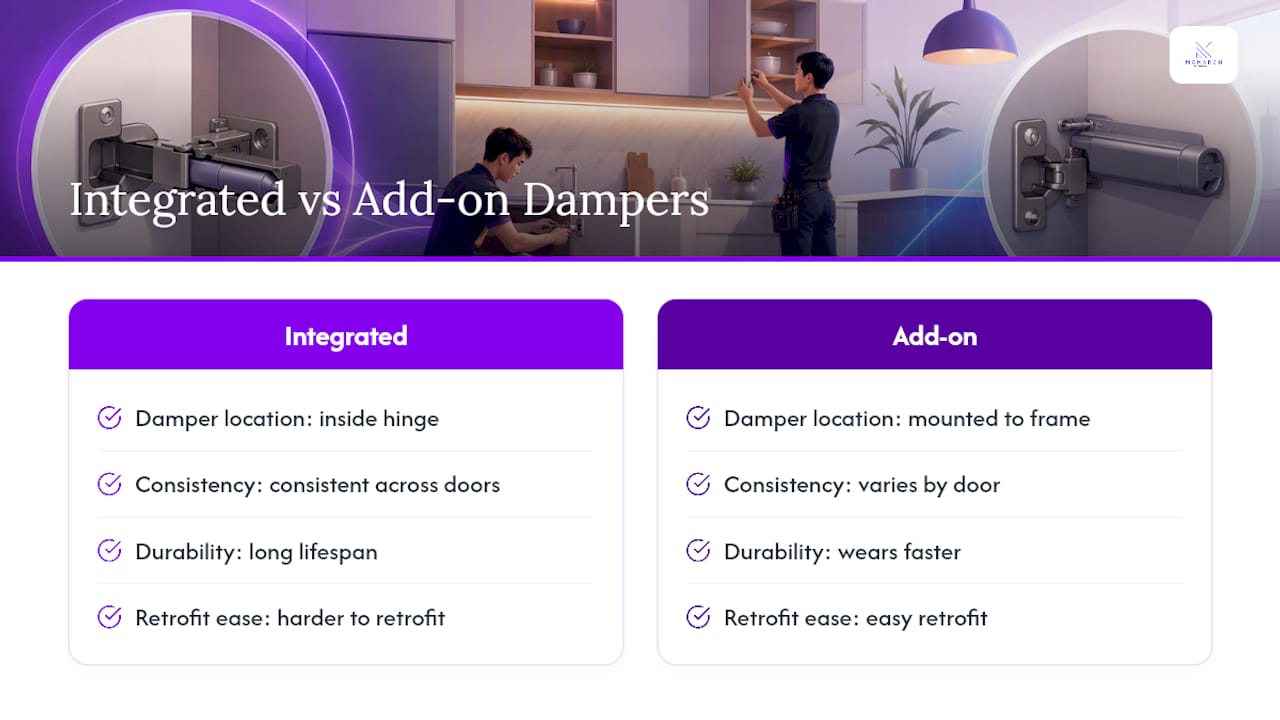
There are two ways manufacturers build that damping in. Integrated systems, like Blum’s BLUMOTION and Salice’s Silentia+, house the damper directly inside the hinge cup or arm. Add-on dampers are separate plastic-and-piston units you screw to the inside of the cabinet frame, and they push against the door as it closes rather than living inside the hinge itself.
The distinction matters more than most buyers realize. Integrated hinges tend to hold consistent damping strength across different door weights and sizes, and they’re built for the long haul. Add-on dampers are cheaper and easy to retrofit onto hinges you already own, but they wear out faster and the closing feel can vary from door to door. If you’re outfitting a kitchen you plan to live with for fifteen years, integrated is the smarter buy. If you’re patching a rental unit on a weekend budget, an add-on damper gets the job done.
Comparing the Top Soft Close Hinge Options
Before picking a model, it helps to see how the main contenders stack up on the details that actually affect your install: damping type, opening angle, door compatibility, and where you can actually buy them in the US.
Hinge | Soft-close mechanism | Opening angle | Door compatibility | Adjustability | Price range / pack size | US availability |
Blum CLIP top BLUMOTION | Integrated | 110° | Overlay, inset, frameless | 3-way, on/off switch | $8 to $18 per hinge | Manufacturer dealers, specialty retailers |
Salice Silentia+ Series 700 | Integrated (twin damper) | 110° | Overlay, frameless | 3-way, deceleration switch | $8 to $18 per hinge | Specialty hardware distributors |
Blum BLUMOTION retail kit (Rockler) | Integrated | 110° | Inset, frameless | 3-way, on/off switch | Sold as pairs, roughly $25 to $35 per pair | Rockler and other specialty retailers |
Contractor 50-pack (Amazon/third-party) | Integrated or add-on, varies by listing | Typically 110° | Overlay, some inset | Usually 2-way or 3-way | $80 to $250 per 50-pack | Wide ecommerce availability |
Blum BLUMOTION soft-close hinges (general line) | Integrated | 95° to 170° depending on model | Overlay, inset, frameless | 3-way, on/off switch | Varies by model and cup size | Manufacturer dealers, specialty retailers |
Blum CLIP top BLUMOTION earns its reputation as the professional standard because the damper lives inside the hinge arm, not bolted on as an afterthought. It offers tool-free clip-on removal for cleaning or door swaps, three-way adjustment for fine-tuning reveals, and a switch that lets you deactivate BLUMOTION on one or both hinges if a lighter door is slamming shut too gently. That switch is a small feature with an outsized payoff. On a lightweight door, full damping on both hinges can make the door feel like it’s fighting to close; toggling one hinge off restores natural motion without losing soft close entirely.
Salice Silentia+ Series 700 is the Italian alternative worth knowing about, especially if you want more control over how aggressive the damping feels. It packs twin silicone-oil dampers into the cup itself, with an adjustable switch to dial deceleration strength up or down, and it’s built for 110-degree opening and door thicknesses between 16 and 26 millimeters. Installers who’ve worked with both brands often pick Silentia+ when a client complains that a previous soft close installation felt too slow or too abrupt, since the twin-damper design gives more room to tune that feel.
Blum BLUMOTION retail kit sold through Rockler solves a real problem for DIYers: buying a genuine manufacturer hinge without going through a commercial dealer account. Rockler stocks Blum BLUMOTION pairs specifically for frameless and inset cabinet configurations, sold with clear spec sheets and installation instructions. That documentation matters more than it sounds. A surprising number of DIY hinge failures trace back to someone guessing at cup depth or K-distance instead of reading the datasheet, and a retail kit with printed specs removes that guesswork entirely.
Contractor 50-pack soft-close hinges from Amazon and similar marketplaces are the budget workhorse for anyone replacing hardware across a whole kitchen or a batch of rental units. Prices swing from around $80 to $250 per 50-pack depending on finish and whether the damping is integrated or add-on, and Amazon aggregates dozens of brands and configurations under this search. The tradeoff is real: these packs are cost-effective for bulk jobs, but they often skip the brand warranty and precise cup specs you get from a manufacturer-authorized product, so double-check the listing’s cup diameter and overlay type before you order fifty of anything.
Blum BLUMOTION soft-close hinges, as a broader product line beyond the CLIP top series, cover opening angles from 95 degrees up to 170 degrees across different cup sizes and mounting styles. That range makes the BLUMOTION line the one to check first if your project includes an unusual application, like a narrow blind-corner cabinet or a wide pantry door that needs extra swing clearance.
How Do You Pick the Right Soft Close Hinge for Your Cabinets?
Getting this right starts with knowing your cabinet construction, not with browsing a parts catalog. Here’s the order to work through it:
Identify your cabinet type. Face-frame cabinets have a frame around the box opening; frameless (also called full-access or European-style) cabinets don’t. This changes which hinge series fits.
Confirm your overlay. Full overlay doors cover the whole cabinet edge, half overlay doors share a hinge side with a neighboring door, and inset doors sit flush inside the frame. Each overlay type needs a different hinge or mounting plate.
Measure door thickness. Most concealed hinges are built for doors in the 5/8 inch to 1 inch range, but always check the model’s rated thickness before ordering.
Decide on opening angle. Standard is 110 degrees, but tight kitchen layouts near walls or appliances sometimes call for a 95-degree or blind-corner hinge instead.
Check the cup size and boring distance. Nearly all concealed European hinges use a 35mm cup, but the K-distance (how far the cup sits from the door edge) and cup depth vary by manufacturer, so match these to your specific model before drilling.
Door height decides how many hinges you need. Doors up to 24 inches tall generally need just two hinges. Once you’re in the 24 to 36 inch range, add a third for support and even closing pressure. Anything over 36 inches, especially tall pantry or wardrobe doors, calls for four hinges or a specialty hinge system with a center support, or the door will sag over time.
Pro Tip: If you’re building or renovating a whole kitchen, specify your hinge model during the design phase, not on installation day. Cup depth and mounting plate style vary enough between brands that switching hinges mid-project can mean re-drilling every door.
Integrated soft-close makes the most sense for kitchens, bathrooms, or any cabinet that gets opened dozens of times a day, since the damping strength stays consistent for years. Add-on dampers are a reasonable patch for a single problem door or a tight budget, but expect to replace them sooner.
Installing and Adjusting Soft Close Hinges the Right Way
Cup boring is where most DIY installs go wrong. Confirm your hinge’s cup diameter (35mm is standard, but always verify) and its exact boring depth before you touch a drill, and measure the K-distance from the door edge to the cup center using the manufacturer’s template rather than eyeballing it. A drill press or a purpose-built hinge jig prevents the tear-out that a hand drill often causes on the door’s front face.
Screw-on mounting plates offer the widest adjustment range and suit face-frame cabinets best.
Snap-on plates install faster and work well for frameless cabinet runs where speed matters more than fine-tuning.
On a three-hinge door, center the middle hinge and keep top and bottom hinges roughly 3 to 4 inches from each edge.
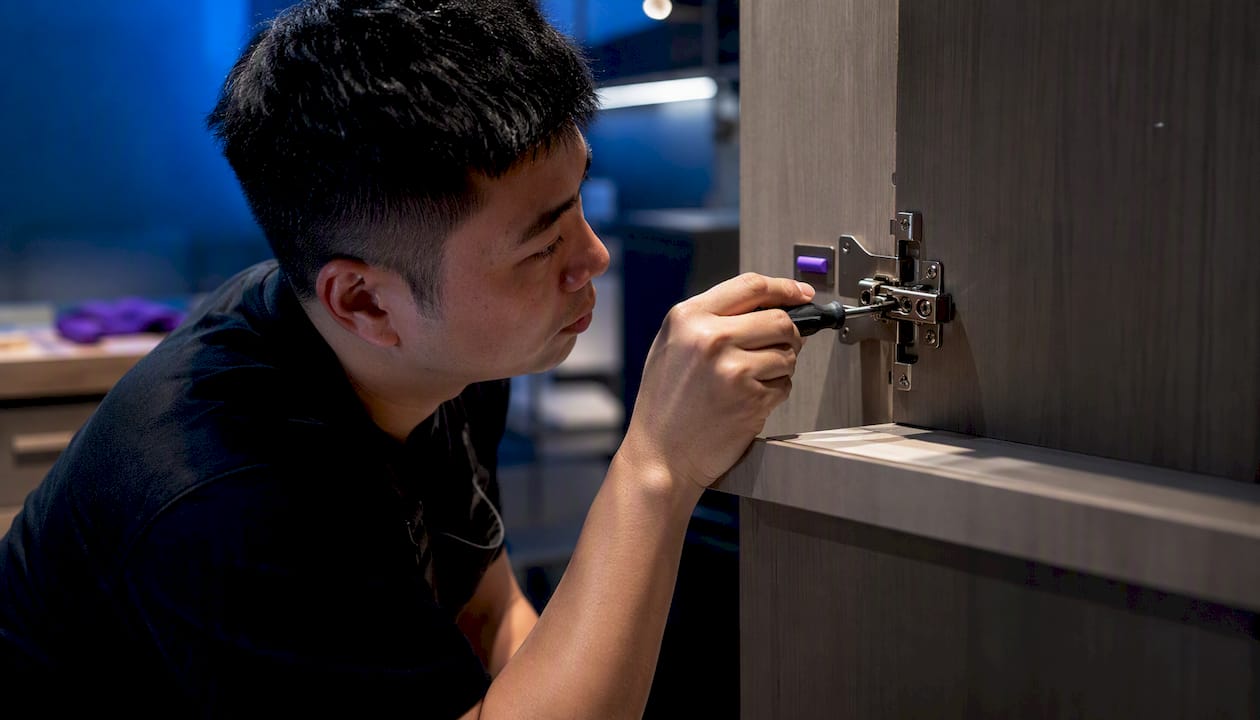
Once hinges are mounted, three-way adjustment does the fine-tuning. The side screw controls the gap between the door and cabinet frame. The height screw levels the door so reveals stay even across the whole cabinet run. The depth screw adjusts how far the door sits over the cabinet face, correcting overlay issues. Turn each screw in small increments and recheck the door after every adjustment rather than cranking it all at once.
If a lightweight door swings shut too gently with full soft-close engaged, use the damping speed switch (standard on both BLUMOTION and Silentia+ models) to soften the effect, or deactivate soft-close entirely on one hinge and leave the other engaged.
Pro Tip: Adjust one hinge at a time and close the door after each turn. Chasing an even reveal by adjusting both hinges simultaneously almost always leads to overcorrection.
Why Won’t My Soft Close Hinge Close Properly?
Most soft close hinge complaints trace back to one of a handful of causes, and nearly all of them are fixable without buying a replacement.
Door slams instead of closing softly. This usually means the damper has failed or the door is heavier than the hinge is rated for. Test with a known-good hinge from another cabinet; if the new hinge damps normally, the original hinge needs replacing.
Door closes too slowly or won’t latch. Often caused by an obstruction in the cabinet interior, or a mounting plate set too far forward. Check clearance first, then adjust the depth screw.
Door doesn’t sit flush, gap looks uneven. This is a three-way adjustment issue, not a damper problem. Work through side, height, and depth screws in that order.
Damping feels weaker in winter. Cold temperatures thicken the hydraulic fluid inside dampers, so expect slightly slower or stiffer closing action in unheated spaces during colder months. This is normal and usually self-corrects as temperatures rise.
One hinge feels loose or the door sags. Tighten the mounting screws first. If the cabinet material has stripped out around the screw holes, particularly common in MDF, you’ll need to reset with slightly larger screws or a plate with different screw spacing.
Where to Buy Soft Close Hinges and What They Cost
Premium single hinges from Blum or Salice generally run $8 to $18 each depending on the model and cup size. Retail pairs, like the BLUMOTION kits sold through Rockler, land around $25 to $35 per pair. Contractor 50-packs on Amazon range from roughly $80 to $250 depending on finish, material, and whether the damping is integrated or add-on.
Where you buy shapes what you get, not just what you pay.
Manufacturer-authorized dealers are the best source when you need exact specs, warranty coverage, and confidence the hinge matches your shop drawings.
Specialty hardware retailers like Rockler carry genuine branded kits with clear documentation, ideal for one-off DIY replacements.
Big ecommerce marketplaces like Amazon offer the lowest per-unit cost for bulk jobs, but selection quality varies by seller.
Big-box home improvement stores offer convenience and same-day pickup, useful when a single hinge fails and you need a fix today.
Before ordering anything, confirm the listing states soft-close is integrated (not just “soft-closing” language on a standard hinge), lists the correct cup diameter and overlay type, includes mounting plates and screws, and has a workable return policy in case the boring pattern doesn’t match your cabinets.
How Monarch Carpenters Design Studio Specifies Hinges
We select hinge models during the shop-drawing stage of every project, not after doors are built, because boring dimensions and mounting plate choices need to be locked in early to avoid costly rework. For bespoke cabinetry, we typically specify integrated soft-close for its quieter, longer-lasting performance. After installation, we walk clients through basic care: wipe cups clean, avoid oiling the damper, and call us if a reveal shifts.
— Seth Wayne
Get Custom Cabinetry Without the DIY Guesswork
Picking the right hinge is only half the job. Getting the boring, mounting plates, and reveals dead-on across a whole kitchen is where most DIY projects lose time and money. Monarch carpenters is the alternative to trial-and-error hardware shopping: our in-house designers and carpenters spec every hinge, cup size, and mounting plate at the shop-drawing stage, so your cabinets close evenly and quietly from day one, at a modest cost that’s earned us strong reviews and feedback from clients across Singapore for combining thoughtful design with real craftsmanship.

If you’re planning a kitchen renovation, a built-in wardrobe, or custom joinery for a commercial space, our consultation and design & build services cover everything from concept to installed hardware. Reach out through our info page to schedule a consultation and get a project quote tailored to your space.
Manufacturer and Retailer Resources Worth Bookmarking
Before you buy, cross-check specs against the source. Blum’s CLIP top BLUMOTION product page is the reference for cup sizes and adjustment ranges. Salice’s Silentia+ Series 700 page covers door thickness limits. Home Depot’s cabinet hinge overview is a solid plain-language primer for first-time buyers comparing hinge types.
Sources
FAQ
Can You Add Soft Close Hinges to Existing Cabinets?
Yes, in most cases. If your cabinets already use standard concealed European hinges with a 35mm cup, you can usually swap in a soft close version without new drilling, as long as the cup diameter and mounting plate match. Face-frame cabinets with older non-European hinge styles may need new boring or an add-on damper instead.
Can Regular Hinges Be Converted to Soft Close?
You can add a separate soft-close damper unit to many standard concealed hinges without replacing the hinge itself. These add-on dampers mount to the cabinet frame and press against the door as it closes, though they typically don’t match the consistency of an integrated system like BLUMOTION.
What Are the Most Common Problems with Soft Close Hinges?
The most frequent issues are doors slamming due to damper failure, uneven reveals from misaligned three-way adjustment, and slower closing in cold weather as hydraulic fluid thickens. Most of these are fixable with adjustment screws rather than a full hinge replacement.
How Do I Know What Soft Close Hinges I Need?
Start by identifying your cabinet type (frameless or face-frame), your door overlay (full, half, or inset), and your door thickness. From there, match the hinge’s cup size, opening angle, and door thickness rating to your cabinets before ordering.
Does Monarch Carpenters Install Soft Close Hinges as Part of a Renovation?
Yes. Monarch carpenters specifies and installs soft-close hardware as part of full design and build projects, selecting hinge models at the shop-drawing stage for consistent reveals and correct boring. Current pricing for consultation and design services is available on our info page.
Recommended
Comments