
Kitchen Cabinet Customisation Singapore: 2026 Homeowner's Guide


TL;DR:
Custom kitchen cabinets in Singapore are tailored to fit specific space layouts, materials, and lifestyle habits, ensuring functionality and durability. Plywood is preferred over MDF due to its resistance to humidity, and quality hardware like Blum or Hettich enhances longevity. The full customization process takes two to three weeks and requires careful planning of needs, dimensions, and storage solutions.
Kitchen cabinet customisation in Singapore is the process of designing and building cabinetry to fit your exact kitchen dimensions, lifestyle habits, and aesthetic preferences, rather than buying off-the-shelf units. For Singapore homeowners, this matters more than most realize. HDB flats, condos, and landed homes each present unique spatial constraints, and Singapore’s year-round humidity demands materials that can handle the climate. Done right, bespoke kitchen cabinetry turns a cramped or generic kitchen into a space that works precisely the way you live. Monarch carpenters has built a strong reputation in Singapore for delivering exactly that, with thoughtful design and modest pricing that clients consistently praise.
What materials and hardware are used in kitchen cabinet customisation Singapore?
Material choice is the single biggest factor in how long your custom kitchen cabinets will last in Singapore’s climate. The wrong material will swell, warp, or delaminate within a few years. The right one will hold up for a decade or more.
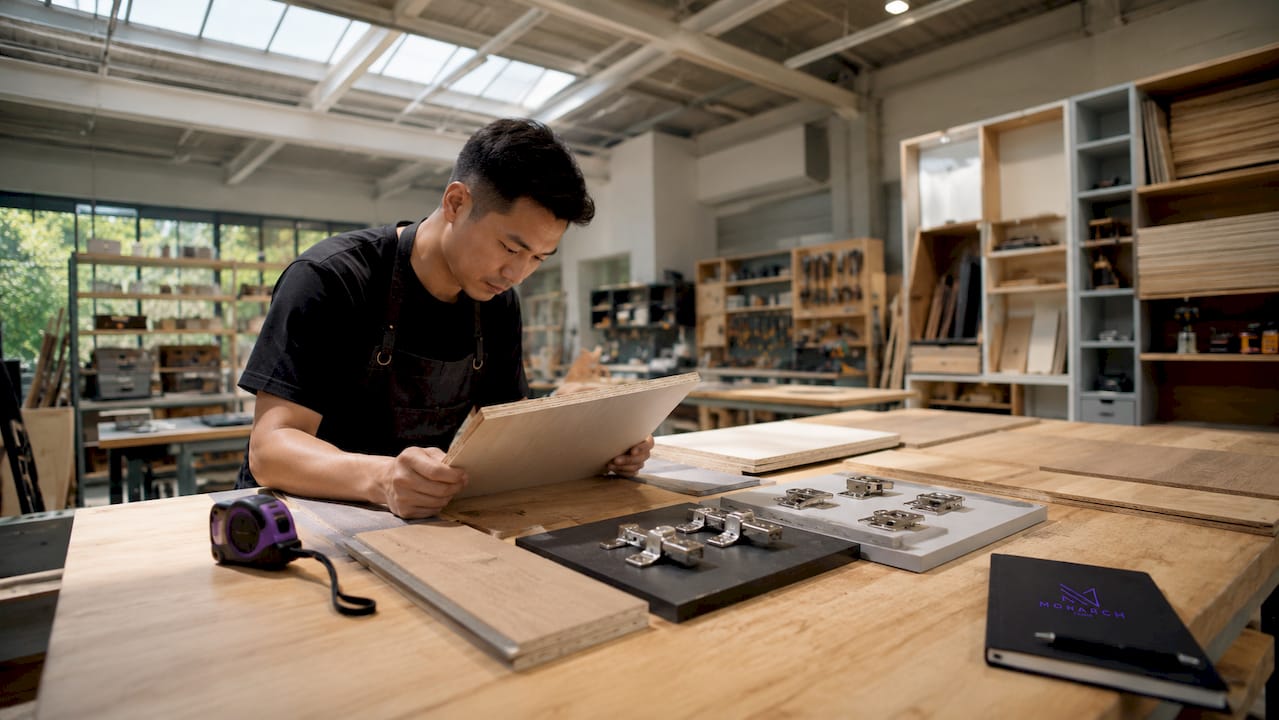
Plywood outperforms MDF in Singapore’s humid conditions because it resists moisture absorption far better. MDF is denser and cheaper, but it swells when exposed to humidity over time, which is a real risk in any Singapore kitchen. Plywood accepts laminate, melamine, and veneer finishes effectively, giving you design flexibility without sacrificing durability. Plywood carcass installation typically runs S$480–S$680 per foot.
For door finishes, the most popular choices are:
High-pressure laminate (HPL): Scratch-resistant, easy to clean, and available in hundreds of colors and textures. Best for busy kitchens.
Melamine: A budget-friendly option with decent durability. Works well for interior cabinet surfaces.
Solid wood doors: Premium look and feel, but require more maintenance in humid conditions. Best paired with a dehumidifier or air-conditioned kitchen.
Lacquer paint finish: Gives a sleek, modern look. Prone to chipping if the underlying substrate is low quality.
Hardware is where many homeowners cut corners and regret it. Soft-close hardware from brands like Blum or Hettich adds roughly S$180–S$380 to the total cost for an average HDB kitchen. That investment pays off in kitchens designed to last seven or more years, since quality hinges and drawer runners prevent the slamming and misalignment that wear out cheaper fittings fast.
Pro Tip: Always specify the hardware brand in your contract. Generic soft-close fittings vary widely in quality, and the difference shows within two years of daily use.
For countertops, quartz worktops dominate the mid-tier market at S$120–S$180 per foot installed. Natural granite and marble are less popular due to maintenance demands, while solid surface and engineered stone options sit at the higher end.
How to plan your kitchen cabinet customisation
Planning is where bespoke kitchen design either succeeds or fails. Most homeowners rush this stage, and the result is a kitchen that looks good but does not function well for how they actually cook and live.
Design professionals identify early-stage lifestyle discovery as the most critical step in creating an intuitive kitchen layout. Understanding your daily routines, cooking frequency, and storage habits directly shapes where cabinets go, how deep they are, and what internal fittings you need.
Follow this planning sequence before committing to any design:
Audit your current kitchen pain points. List what frustrates you now: not enough counter space, poor lighting, awkward corner cabinets, or lack of pantry storage. This list becomes your brief.
Map your kitchen footprint accurately. Measure ceiling height, window positions, door swings, and utility points. Singapore HDB kitchens often have fixed wet and dry zone configurations that affect cabinet placement.
Define your cooking habits. A household that cooks daily needs deep base cabinets for pots and pans, pull-out drawers for spices, and a dedicated prep zone. A household that rarely cooks can prioritize storage over workspace.
Consider smart storage solutions for compact layouts. Corner carousels, pull-out pantry towers, and overhead cabinets that reach the ceiling all recover space that standard cabinetry wastes.
Align the design with your home’s architecture. Fully bespoke kitchen design creates every element in direct response to the home’s unique characteristics, including ceiling height and natural light flow. This is what separates true bespoke work from high-end modular systems.
For Singapore homes specifically, ventilation placement matters. Kitchens positioned away from windows need cabinet layouts that do not block airflow from exhaust fans. Landed home kitchens often have more ceiling height, which opens up options for full-height cabinetry that dramatically increases storage without expanding the floor footprint. For compact spaces, types of compact kitchen layouts can guide your spatial planning before you finalize any design.
What does kitchen cabinet customisation cost in Singapore?
Pricing for custom kitchen cabinets in Singapore follows a linear foot model, not a per-cabinet count. Singapore contractors price cabinetry by linear foot along the floor footprint, with separate line items for top cabinets, base cabinets, and countertops. This method gives you precise control over your budget at each stage.
The four cost layers that build your total are panel material, edge banding, internal hardware, and running length in feet. Here is how typical costs break down:
Component | Typical Cost Range |
Plywood carcass (per foot) | S$480–S$680 |
Soft-close hardware upgrade (Blum/Hettich) | S$180–S$380 total |
Quartz countertop (per foot installed) | S$120–S$180 |
Full kitchen set (standard, smaller kitchens) | From S$3,000–S$5,000 |
Full kitchen set (mid-range, standard scope) | From S$6,500 |
Custom kitchen installation starts at approximately S$3,000–S$5,000 for smaller kitchens, with standard sets priced from S$6,500 depending on materials and scope. The gap between those figures comes down almost entirely to material grade and hardware quality.
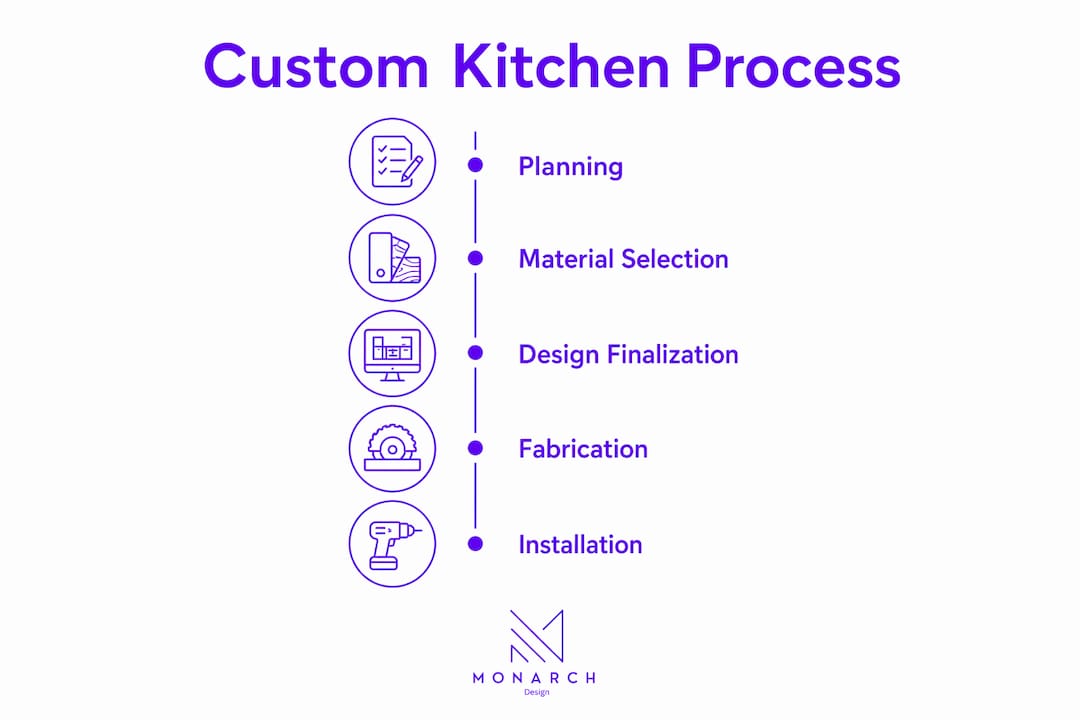
The full customisation process takes 2–3 weeks from design confirmation to final handover. That timeline covers design sign-off, demolition of existing cabinetry, any plumbing or electrical adjustments, fabrication, installation, and commissioning. Homeowners who need to coordinate with other renovation trades should factor this into their overall kitchen renovation timeline from the start.
The most common budget mistake is underestimating the cost of upgrades. Soft-close hinges, internal drawer organizers, and pull-out fittings each add to the base price. Budget for them upfront rather than adding them mid-project, when they become more expensive to integrate.
What mistakes should you avoid when customising kitchen cabinets?
The most expensive mistakes in kitchen cabinetry renovation happen before a single cabinet is built. They happen in the planning stage, and they are almost always avoidable.
The most common pitfalls are:
Skipping a proper needs analysis. Choosing a design based on photos without assessing your actual storage needs and cooking habits produces a kitchen that looks right but works poorly. A proper bespoke design process starts with understanding how you live, not how you want your kitchen to look.
Ignoring humidity and ventilation. Singapore’s climate is unforgiving. Cabinets installed near the stove or sink without adequate ventilation trap moisture and accelerate material degradation. Specify moisture-resistant edge banding and confirm your exhaust setup before finalizing cabinet positions.
Choosing hardware by price alone. Cheap hinges and drawer runners fail within two to three years of daily use. The cost difference between generic fittings and quality brands like Blum or Hettich is small relative to the total project cost, but the longevity difference is significant.
Underestimating the ceiling-to-floor opportunity. Most Singapore kitchens leave a gap between the top of wall cabinets and the ceiling. That gap collects grease and dust. Full-height cabinetry eliminates it and adds meaningful storage.
Not confirming dimensions after demolition. Wall surfaces in older HDB flats are rarely perfectly square. Always get final measurements taken after demolition, not before, to avoid gaps and misaligned panels.
Pro Tip: Ask your carpenter to provide a 3D rendering before fabrication begins. Seeing the layout in three dimensions reveals clearance issues and workflow problems that flat drawings miss entirely.
Key Takeaways
Successful kitchen cabinet customisation in Singapore requires matching material choices to the local climate, planning around your actual lifestyle, and budgeting for quality hardware from the start.
Point | Details |
Choose plywood over MDF | Plywood handles Singapore’s humidity far better and accepts all standard finishes. |
Budget by linear foot | Singapore pricing uses a linear foot model; budget separately for top cabinets, base cabinets, and countertops. |
Invest in quality hardware | Blum or Hettich soft-close fittings add S$180–S$380 but extend cabinet life significantly. |
Plan lifestyle first, design second | Map your cooking habits and storage needs before committing to any layout or style. |
Allow 2–3 weeks for the full process | From design confirmation to handover, the full customisation timeline runs 2–3 weeks. |
Why I always tell homeowners to start with the brief, not the mood board
Most homeowners arrive at their first design consultation with a folder of Pinterest images and very little else. I understand the impulse. Visuals are inspiring, and it feels productive to have references ready. But in my experience, the kitchens that end up working best are the ones where the homeowner spent time writing down how they actually use their kitchen before they thought about how it should look.
The architectural harmony of a bespoke kitchen only emerges when the design responds to the space and the people in it. A kitchen designed around ceiling height, natural light, and daily cooking routines will always outperform one designed around a trend. That is not a philosophical point. It shows up in how the drawers are positioned, where the prep zone sits relative to the stove, and whether the overhead cabinets are actually reachable.
What I have also seen consistently is that homeowners who work with experienced carpenters offering genuine design consultation, not just fabrication, get far better results at comparable cost. Monarch carpenters is one of the studios in Singapore that operates this way, with an in-house team that works through the brief collaboratively before a single measurement is taken. The client feedback reflects that: the praise is almost always about how well the finished kitchen fits the way the family lives, not just how it looks.
My honest advice is to book a consultation before you finalize any budget or timeline. A good carpenter will tell you what is realistic for your space and your money. A great one will also tell you what you do not need.
— Seth Wayne
Monarch carpenters’ custom kitchen cabinet solutions for Singapore homes
Monarch carpenters brings together in-house designers and skilled carpenters to deliver bespoke kitchen cabinetry that fits your home, your habits, and your budget. Every project starts with a thorough design consultation, not a catalog selection.

Clients consistently highlight Monarch carpenters’ ability to deliver thoughtful, well-crafted kitchens at modest cost, with the design quality and material choices that typically come at a much higher price point. Whether you are renovating an HDB flat, a condo, or a landed home, the team works closely with you from brief to installation. Explore Monarch carpenters’ full range of custom kitchen cabinet solutions and book a consultation to see what is possible for your space.
FAQ
What is kitchen cabinet customisation in Singapore?
Kitchen cabinet customisation in Singapore is the process of designing and fabricating cabinetry to your exact kitchen dimensions, material preferences, and storage needs, rather than using standard modular units.
How much does custom kitchen cabinetry cost in Singapore?
Custom kitchen cabinets in Singapore start at approximately S$3,000–S$5,000 for smaller kitchens, with standard full-kitchen sets priced from S$6,500 depending on materials and scope.
How long does kitchen cabinet customisation take?
The full process from design confirmation to final handover typically takes 2–3 weeks, covering fabrication, installation, and any required plumbing or electrical adjustments.
Is plywood or MDF better for Singapore kitchen cabinets?
Plywood is the better choice for Singapore kitchens because it resists humidity far better than MDF, which is prone to swelling in the local climate.
What hardware brands are recommended for custom kitchen cabinets?
Blum and Hettich are the most recommended soft-close hardware brands for Singapore kitchen cabinets, offering reliable longevity and smooth operation for kitchens designed to last seven or more years.
Recommended
Comments