
15 Minute Service Access: Aircon Trunking Concealment for US Homes

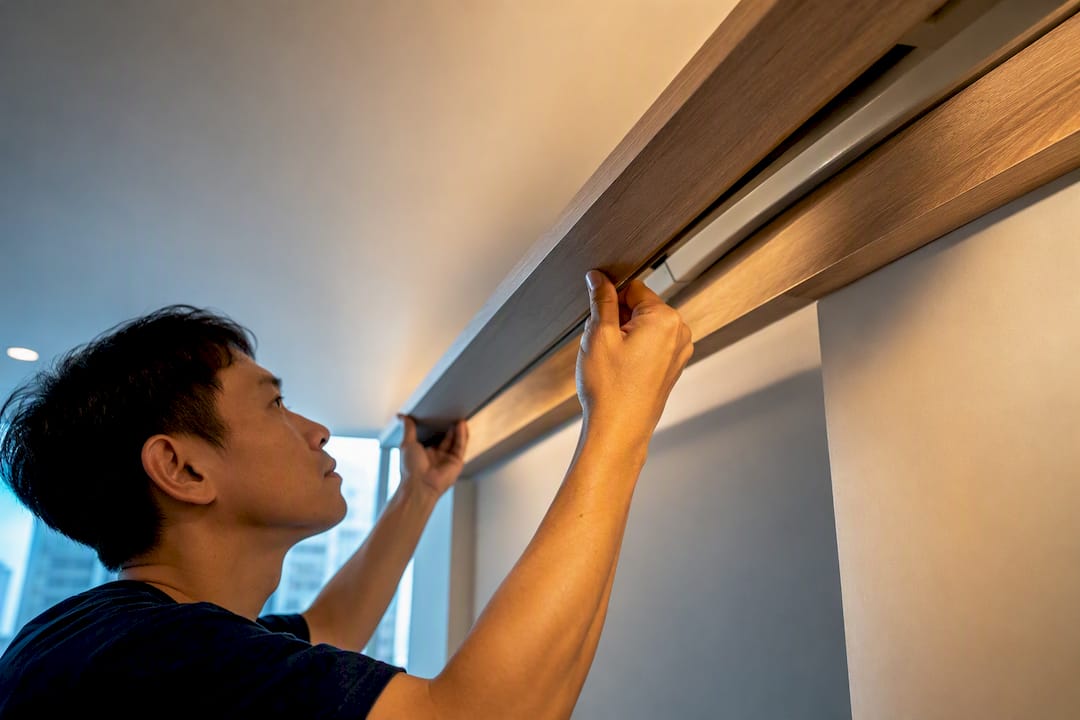
The best approach to aircon trunking concealment depends entirely on your renovation timeline. If you’re mid-remodel, a carpentry box-up or false-ceiling route gives you the cleanest, most durable finish. If you’re retrofitting an existing home, slim painted casing is faster and cheaper. Either way, the real decision isn’t appearance versus none. It’s appearance versus access, since every concealed run still needs a way in for repairs.
TL;DR:
A carpentry box-up requires planning during renovation, using moisture-resistant materials if near humidity-prone areas, and must include accessible panels for maintenance.
False-ceiling routing is suitable when sufficient plenum space exists, especially in rooms with dropped ceilings, but in-wall concealment is only practical during full wall openings.
Proper trunking sizes are crucial; undersized casings can impair cooling performance, while larger PVC or aluminum materials are recommended for external or multi-line runs.
Concealment solutions should consider future access and maintenance, with design features like removable panels and strategic placement to prevent moisture buildup.
Hybrid routing often balances aesthetics and serviceability, hiding trunking in visible areas while leaving utility spaces more accessible for repairs.
Table of Contents
What Are the Main Ways to Conceal Aircon Trunking?
Homeowners generally choose from four practical routes, and the right one depends on your budget, your renovation stage, and whether you own or rent the space.
Slim profile trunking: Paintable PVC or aluminum casing that matches your wall color. This is the fastest, lowest-cost fix and works well for rentals or light retrofits.
Carpentry box-up: Custom bulkheads, L-boxes, or cabinetry that fully integrates the piping into the room’s architecture. Best during a remodel when walls are already open.
False-ceiling routing: Running trunking through ceiling voids where there’s enough plenum space. Common in condos and homes with dropped ceilings already planned.
In-wall concealment: Burying trunking inside the wall cavity. Only realistic during a full gut renovation, since it means opening drywall and studs.
When none of these fit the layout, some designers lean toward decorative strategies instead, treating the trunking as a deliberate design line rather than something to hide.
What Trunking Sizes and Materials Work Best?
Getting the size right matters more than most homeowners expect. Standard domestic split systems typically run through 60x60mm or 75x75mm trunking, while cassette or multi-split units often need something closer to 100x60mm to fit the extra refrigerant lines and drainage. Undersizing the casing is one of the more common mistakes, because it compresses the insulation around the refrigerant piping, which quietly erodes cooling performance over time.
Material choice depends entirely on where the run lives.
Location | Recommended Material | Why |
Indoors, visible | Standard white PVC | Lightweight, paintable, low cost |
Outdoors, exposed to sun | UV-stable PVC or aluminum | Standard PVC degrades under UV exposure |
Multi-split or cassette runs | Larger PVC trunking (100x60mm+) | Fits multiple pipes and drain lines |
Premium finish, color-matched | Manufacturer-grade trunking systems |
If a run sits on an exterior wall or balcony, don’t cut corners on UV resistance. Standard trunking left in direct sunlight will chalk, warp, and crack within a few seasons.
How Does a Carpentry Box-Up Actually Work?
A box-up is really just carpentry wrapped around a mechanical problem, which is why it’s the option Monarch carpenters get asked about most. There are three common versions: shallow boxing that hugs the wall, an L-box that turns a corner cleanly, and fully integrated cabinetry that swallows the trunking into a wardrobe or shelving unit. In moisture-prone areas like bathrooms or laundry rooms, we lean toward moisture-resistant board or sealed marine ply rather than standard MDF, since condensate lines nearby will eventually introduce humidity.
The rule we never break: every box-up needs a way back in.
Build in a removable access panel, not a permanently sealed cap.
Position panels directly over service points, valves, and condensate lines.
Seal joints around drain lines to prevent moisture from tracking into the cavity.
Coordinate the box dimensions with the HVAC layout before carpentry starts, not after.
Pro Tip: Ask your carpenter to mark access panel locations on the drawing before installation day. Once drywall or paint covers a bulkhead, finding the exact service point again by memory is a guessing game nobody wins.
Box-ups are far easier to plan during a renovation than to retrofit later, largely because walls and ceilings are already open. A coordinated design-build workflow, where the cabinetry and HVAC layout teams work closely, can cut out the back-and-forth that usually stalls these projects. You can see how that carpentry integration philosophy carries through in our approach to home carpentry design.
Should You Route Trunking Through a False Ceiling or Wall?
Concealed routing looks the cleanest of any option, but it comes with real trade-offs worth understanding before you commit.
False-ceiling routing works when there’s enough plenum depth above the ceiling line to fit the trunking without crushing insulation. It’s a strong option in condos or rooms already getting a dropped ceiling for lighting.
In-wall concealment only makes sense during a full renovation, since it requires opening the wall cavity. It also means leak detection and repairs take longer and cost more, because a technician has to trace the problem through a closed wall instead of a visible run.
Hybrid routing conceals trunking in the living room, bedroom, or hallway where it’s seen daily, while leaving casing exposed in utility areas, store rooms, or behind furniture where a quick repair matters more than the view.
That third option is the one most designers quietly default to, because it solves the aesthetic problem where it counts without creating a maintenance headache everywhere else.
Which Parts of This Job Are DIY, and What Needs a Professional?
Some of this is genuinely doable on a weekend. Painting existing PVC trunking to match your wall color, fitting slim casing over an already-installed line, and adding simple trim work are all reasonable DIY tasks. What’s not reasonable is cutting into or modifying refrigerant lines yourself, since that’s both a safety issue and, in most cases, a licensing issue.
Hire a professional for carpentry box-ups, false-ceiling routing, in-wall concealment, and anything that requires sign-off from your HVAC installer on clearances or serviceability.
Before hiring, ask any contractor these questions:
Will the design include a removable access panel, and where will it sit?
What warranty covers the carpentry work versus the HVAC components?
Do you use moisture-resistant materials near condensate lines?
Have you handled aircon trunking concealment specifically, not just general cabinetry?
Can I see photos or references from a similar project?
Planning concealment early, during the renovation rather than after the AC is already installed, consistently saves money and rework, according to renovation guides that track these projects.
How Do You Maintain Concealed or Boxed-Up Trunking?
Concealment only works long term if servicing stays easy, which means maintenance planning has to happen at the design stage, not after something fails.
Schedule technician checks on insulation condition, the condensate drain, and joint seals at regular service intervals.
Place access panels directly above or beside every valve, joint, and drain point, not just wherever looks convenient.
Watch for ceiling or wall staining, bubbling paint, or a musty smell, since these usually mean a slow leak or a blocked drain hiding behind the casing.
Respond quickly to any staining. What starts as a $50 drain clear can turn into a full bulkhead replacement if it sits for months.
Boxing trunking without planned access can trap moisture and turn a five-minute service call into a demolition job. That single design decision, made or skipped at the framing stage, is usually what separates a box-up that ages well from one that gets torn out in three years.
What Design Tricks Make Trunking Disappear (or Look Intentional)?
You don’t need full concealment to get a high-end look. Color-matching the casing to your wall paint, aligning runs with existing architectural lines like door frames or ceiling coves, and integrating trunking into the underside of shelving all read as intentional rather than incidental. Narrow timber reveals or cladding strips can dress up an exposed run without the cost of a full box-up, especially in a study or built-in shelving wall like the ones covered in our study room carpentry guide.
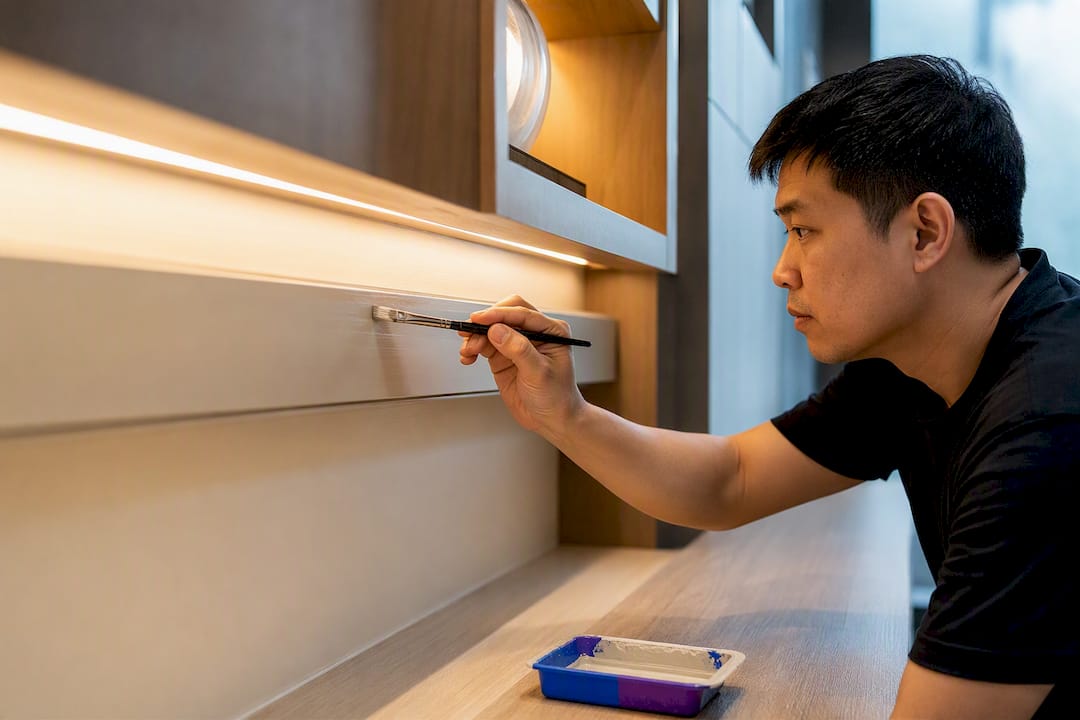
Sometimes the better move is to stop hiding it. A contrasting trim color or a deliberate reveal line around the trunking can turn a utility element into a design detail, particularly in a modern or industrial-style room where clean, visible lines already fit the aesthetic.
Why Access Beats Perfection Every Time
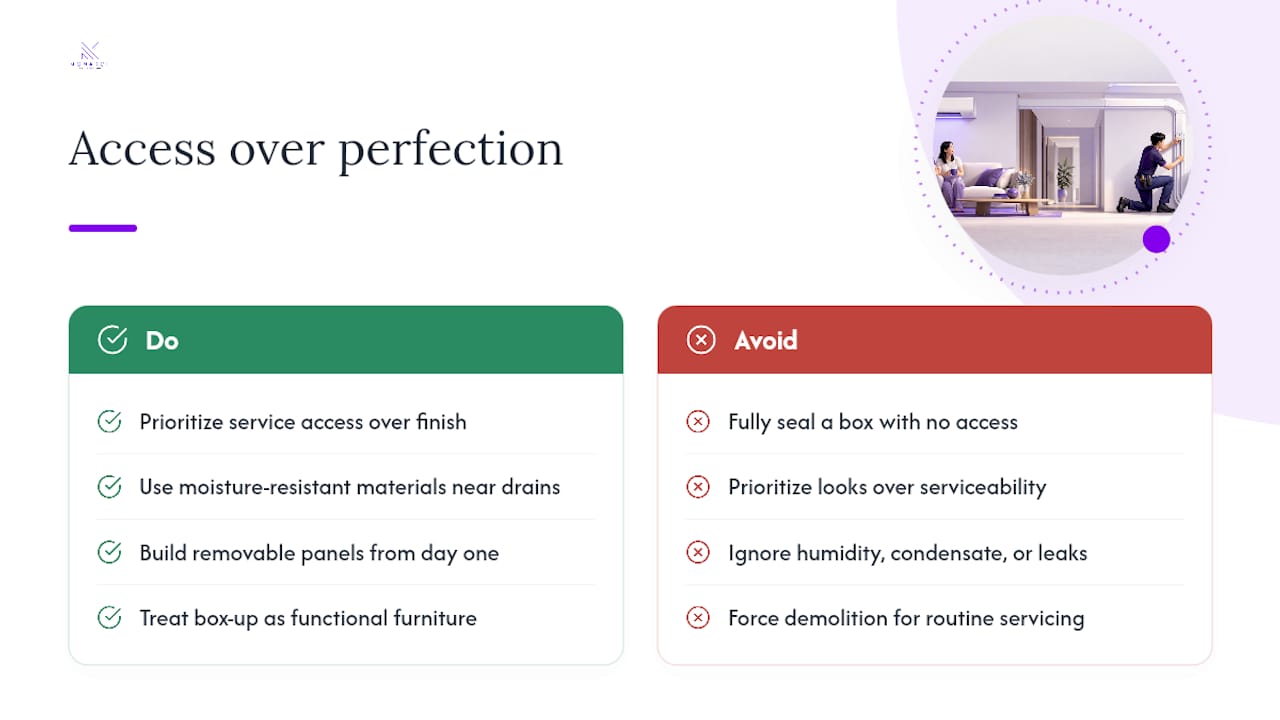
Every homeowner wants the wall to look like the trunking was never there. That instinct is understandable, but it’s also how most concealment projects go wrong. We’ve seen far more damage caused by a beautifully sealed bulkhead with no way in than by a slightly visible casing run that a technician can service in ten minutes.
The trade-off is real: moisture near condensate lines, humidity swings, and the occasional refrigerant leak are physical realities, not design problems, so the design has to accommodate them. That’s why Monarch carpenters treats every box-up as a piece of functional furniture first and a decorative element second, choosing moisture-resistant materials near drain lines and building removable panels into the plan from day one. Clients tell us the difference shows up years later, not on installation day, when a service call takes fifteen minutes instead of an afternoon of demolition.
— Seth Wayne
Get a Concealment Plan Built Around Your Renovation
Some carpentry studios offer trunking concealment solutions that look custom-built but are designed to be cost-effective. An in-house design-build team can plan access panels, moisture-resistant materials, and carpentry finishes together from the first sketch, contributing to clients leaving positive reviews for design quality delivered at a modest cost.

If you’re planning a renovation and want trunking handled properly the first time, rather than boxed in and forgotten, get in touch through our carpentry design studio to talk through your layout and get a straightforward quote.
Sources
FAQ
How Do I Hide an Aircon Cable Along a Wall?
Run the cable inside slim PVC or aluminum trunking that matches your wall color, or route it through a shallow carpentry box-up if it runs alongside pipework that also needs concealing.
What Can I Use to Hide My Air Conditioner Unit?
Indoor units can sit behind a false-ceiling bulkhead or an open-slat cabinet panel that allows airflow, while outdoor condenser units are typically screened with slatted timber or metal louvers rather than fully boxed in, since airflow around the unit has to stay unobstructed.
Is There a Quick Rule for Aircon Servicing Timing?
Some HVAC technicians use short diagnostic checks after startup to confirm a unit is running normally, but this is a servicing guideline rather than a concealment rule. It doesn’t change how trunking should be planned, since access for these checks still has to be built in regardless of the concealment method.
Does Concealing Trunking Always Cost More Than Leaving It Exposed?
Generally yes. Concealed trunking costs more upfront and makes repairs slower to diagnose than a well-finished exposed casing, which is why many homeowners choose a hybrid approach instead of concealing every run in the home.
Recommended
Comments