
Natural Light Home Design: A Singapore Homeowner's Guide

TL;DR:
Natural light enhances health, mood, and energy efficiency in homes, especially in Singapore’s tropical climate. Proper daylighting design involves careful window placement, effective shading, reflective surfaces, and strategic interior finishes from the start. This approach optimizes natural illumination, reduces energy costs, and improves interior comfort and aesthetics.
Natural light home design, known in architecture as daylighting, is the practice of placing and sizing windows, skylights, and reflective surfaces to fill living spaces with sunlight throughout the day. The role of natural light in home design goes well beyond aesthetics. It shapes how healthy, comfortable, and energy-efficient your home feels every single day. For Singapore homeowners working with compact urban lots and a year-round tropical sun, getting daylighting right from the start is one of the highest-return decisions you can make.
What are the main benefits of incorporating natural light in your home?
Natural light delivers three distinct categories of benefit: physical health, psychological well-being, and energy savings. Each one compounds the others, making daylighting one of the few design choices that pays off on every level.
Physical health and sleep quality
Morning daylight exposure of just 10 to 20 minutes after waking regulates your circadian rhythm, boosts serotonin, and improves sleep quality. That means a bedroom or kitchen with east-facing windows is not just pleasant. It is actively supporting your body clock every morning. Homes that block morning light with heavy curtains or poor orientation quietly undermine the health of everyone living in them.
Mood, focus, and cognitive performance
Biophilic design research confirms that naturally lit spaces improve mood and cognitive performance compared to spaces lit only by artificial sources. This matters for Singapore homeowners who work from home or have children studying indoors. A well-lit study or living area is a genuine productivity asset, not a luxury.
Energy savings that add up fast
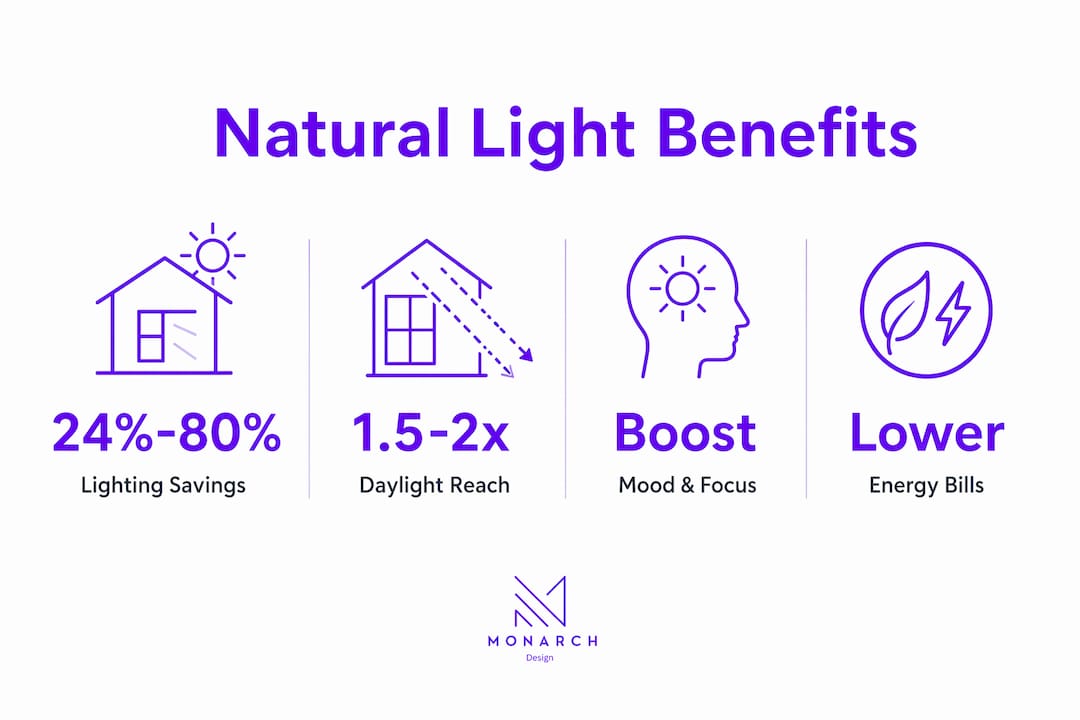
Daylighting strategies can reduce artificial lighting electricity use by 24% to 80% and cut total building energy consumption by 20% to 30%. In Singapore, where air conditioning and lighting run year-round, those reductions translate directly into lower utility bills. The savings are largest in homes where daylight replaces electric lighting during peak daytime hours.
Aesthetic impact on your interior
Natural light reveals the true color of materials, from timber grain to stone finishes, in ways that artificial lighting cannot replicate. It also makes rooms feel larger by softening shadows and creating depth. Spaces that feel cramped under fluorescent light often feel open and airy the moment sunlight enters at the right angle.
How does daylighting design integrate with home architecture?
Effective daylighting is not simply adding more windows. It requires spatial planning using light shelves, clerestory windows, and reflective surfaces to spread light evenly without glare or heat gain.
Window orientation: the most critical decision
Window Orientation | Light Quality | Key Consideration |
North-facing | Soft, even, consistent | Best for studios, bedrooms, and reading areas |
South-facing | Strong, direct | Requires shading to prevent overheating |
East-facing | Warm morning light | Ideal for kitchens and breakfast areas |
West-facing | Intense afternoon heat | Needs external shading or low-E glazing |
North-facing windows provide even, diffused light throughout the day, making them the most reliable choice for living areas in Singapore. South-facing windows deliver stronger light but require external shading devices or deep overhangs to prevent solar heat gain. East and west orientations bring variable heat that needs careful management.
How far does daylight actually reach?
Daylight penetrates a depth of roughly 1.5 to 2 times the window height. A window that is 1.2 meters tall will naturally light a zone about 1.8 to 2.4 meters deep. Beyond that zone, light drops off sharply. This is why open-plan layouts, clerestory windows positioned high on walls, and light shelves that redirect sunlight toward the ceiling are so effective in deeper rooms.
Interior finishes that multiply light
Light-colored walls in white or pale gray reflect daylight further into a room. Matte finishes scatter light softly, while high-gloss surfaces can create unwanted glare. Polished concrete floors and pale timber veneers both extend daylight reach without the harshness of mirror-like surfaces. Reflective surfaces, including mirrors placed opposite windows, are among the lowest-cost, highest-impact tools available to any homeowner.
Pro Tip: Place a large mirror on the wall directly opposite your main window. It doubles the apparent depth of daylight in the room at zero structural cost.
The most common daylighting mistake is neglecting window orientation and placement during the floor plan stage. Retrofitting windows into an existing structure is expensive and rarely achieves the same result as planning for daylight from the beginning. If you are renovating or building new, read Monarch carpenters’ guide on space planning in renovation before finalizing your layout.
What practical strategies work for Singapore homeowners?
Singapore’s tropical climate creates a specific set of conditions: intense equatorial sun, high humidity, and dense urban surroundings that can block light from neighboring buildings. The strategies that work here are not identical to those used in temperate climates.
1. Choose glazing suited for tropical heat
Standard clear glass transmits solar heat directly into your home. Low-emissivity (low-E) glazing reflects infrared heat while allowing visible light to pass through. For Singapore homes, low-E double-glazed units are the most practical choice for any window larger than 1 square meter. They reduce cooling loads without darkening the room.
2. Use skylights with professional installation
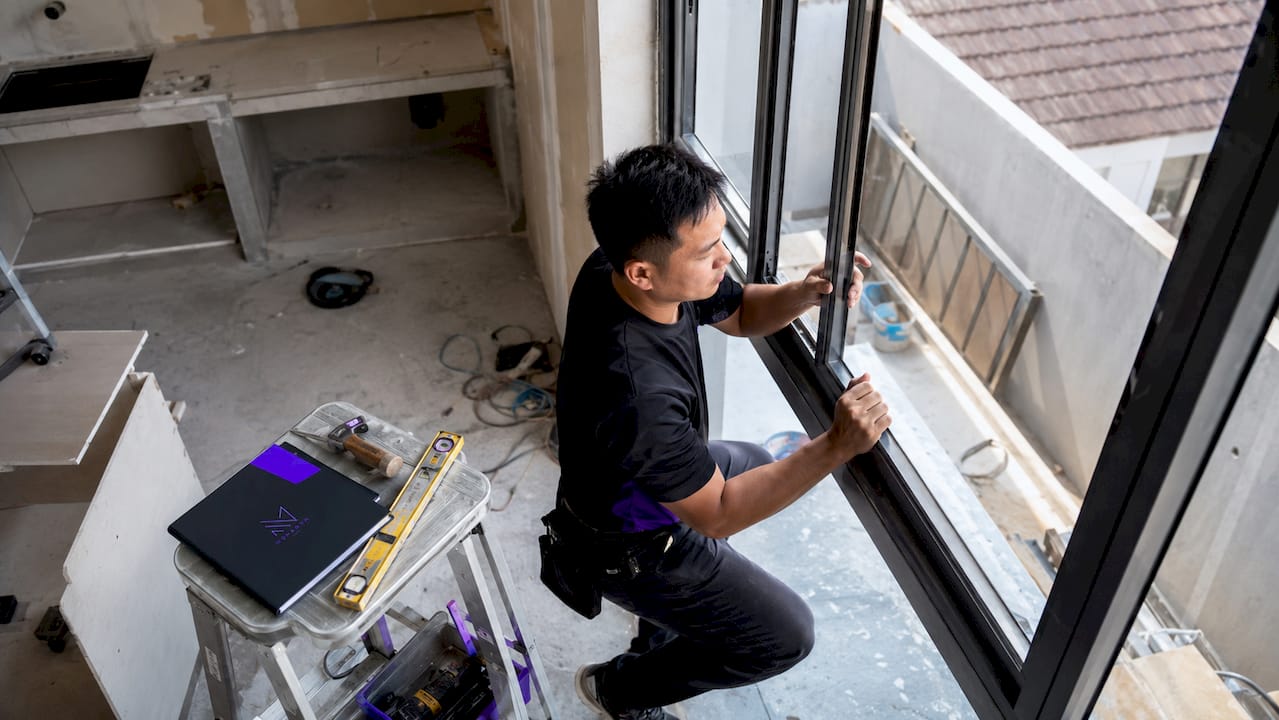
Skylights can bring daylight into interior rooms that no wall window can reach, such as bathrooms, corridors, and deep kitchens. In Singapore’s humid climate, they must be installed by professionals using high-performance, low-E glazing and proper flashing to prevent leaks. A poorly installed skylight creates more problems than it solves.
3. Position furniture to work with daylight, not against it
Tall bookshelves and dark wardrobes placed near windows block light before it reaches the center of the room. Keep the zone within 2 meters of any window clear of tall, dark furniture. Use low-profile sofas, glass-topped tables, and light-colored rugs to keep the floor plane reflective.
4. Add external shading before internal curtains
External shading devices, such as timber louvres, perforated aluminum screens, or deep overhangs, block solar heat before it enters the glass. Internal curtains stop light after the heat is already inside. For west-facing windows in Singapore, external shading is far more effective than any interior treatment.
5. Borrow light between rooms
Internal glazed panels, borrowed light windows between rooms, and open shelving units instead of solid walls all allow daylight to travel from a well-lit room into an adjacent darker one. This technique is particularly useful in HDB flats and terrace houses where only one or two walls face the exterior.
Pro Tip: For new home interior planning, Monarch carpenters’ guide on interior design planning covers how to map daylight zones before committing to a furniture layout.
What challenges come with natural light and how do you solve them?
Daylighting brings real challenges. Ignoring them leads to homes that are bright but uncomfortable, or well-designed but impractical.
Glare on screens: Direct sunlight hitting a television or monitor makes it unusable. Position screens perpendicular to windows, never facing them directly. Diffusing window film reduces glare without blocking light.
Heat gain in west-facing rooms: Afternoon sun through west-facing glass raises room temperature significantly. External louvres, deep eaves, or deciduous planting outside the window are the most effective solutions.
Privacy in dense urban areas: Frosted or textured glass maintains privacy while still transmitting daylight. Clerestory windows positioned above eye level bring in light without any privacy compromise.
Structural limits in existing homes: Adding a new window opening in a load-bearing wall requires structural assessment and is costly. In these cases, solar tubes (also called light tubes or sun tunnels) offer a less invasive way to bring daylight into dark interior spaces.
Balancing artificial and natural light: The goal is not to eliminate artificial lighting but to design it as a complement. Warm-toned LED fixtures at 2700K to 3000K color temperature sit closest to natural daylight and create the least jarring transition as evening falls.
Key Takeaways
Natural light is the single most cost-effective tool for improving a home’s aesthetics, health outcomes, and energy performance, and it must be planned from the floor plan stage to work properly.
Point | Details |
Plan orientation early | Window placement and orientation must be decided at the floor plan stage. Retrofits are expensive and less effective. |
North-facing windows are best | North-facing glass provides even, diffused light all day without the heat gain of south or west exposures. |
Daylight has a reach limit | Natural light penetrates 1.5 to 2 times the window height. Use clerestory windows and light shelves for deeper rooms. |
Low-E glazing is non-negotiable | In Singapore’s tropical climate, low-E glazing controls heat gain while preserving visible light transmission. |
Mirrors and light finishes multiply light | Placing mirrors opposite windows and using pale interior finishes extends daylight reach at minimal cost. |
What I’ve learned designing daylit homes in Singapore
By Seth Wayne
Most homeowners I speak with think daylighting means adding more windows. That instinct is understandable but incomplete. The homes that truly succeed with natural light are the ones where the designer thought about sunlight before thinking about furniture, finishes, or even room sizes.
The detail that surprises people most is how little daylight actually travels from a window. That 1.5 to 2 times window height rule is not a guideline. It is physics. A standard HDB window rarely lights more than 2 meters into a room without help from reflective surfaces or supplemental architectural features. Once homeowners understand that, they start making smarter decisions about layout.
The other thing I have seen consistently is that quality carpentry makes a measurable difference in how a daylit home performs. Custom joinery that keeps storage low and away from windows, built-in light shelves above eye level, and carefully finished pale timber surfaces all extend the reach of natural light in ways that off-the-shelf furniture simply cannot. The craftsmanship is not decorative. It is functional.
My honest advice: if you are planning a renovation or a new build in Singapore, treat daylighting as a structural decision, not a styling one. Get your window orientations and room layout right first. Everything else, the finishes, the furniture, the fixtures, follows from that foundation.
— Seth Wayne
How Monarch carpenters can help you design for natural light
Monarch carpenters has built a reputation among Singapore homeowners for delivering beautifully lit, thoughtfully designed interiors at a cost that does not require a compromise on quality. Clients consistently highlight the studio’s ability to translate a modest budget into spaces that feel genuinely considered, with bespoke carpentry that works in harmony with daylight rather than against it.

The in-house team at Monarch carpenters combines spatial planning expertise with hands-on carpentry craftsmanship, so your daylighting strategy is built into the structure of the space, not added as an afterthought. From custom light shelves to low-profile joinery that keeps windows clear, every detail is designed to make your home brighter, healthier, and more beautiful. Visit Monarch carpenters to see how the studio can bring natural light into your home.
FAQ
What is daylighting in home design?
Daylighting is the practice of using windows, skylights, and reflective surfaces to fill a home with natural sunlight. It reduces reliance on artificial lighting and improves both aesthetics and occupant well-being.
How much can natural light reduce my energy bills?
Daylighting strategies can reduce artificial lighting electricity use by 24% to 80% and total building energy consumption by 20% to 30%, depending on the home’s design and orientation.
Which window orientation is best for Singapore homes?
North-facing windows provide the most consistent, glare-free daylight for Singapore homes. South-facing windows deliver stronger light but require external shading to prevent heat gain in the tropical climate.
Can I improve natural light in an existing home without major renovation?
Yes. Placing mirrors opposite windows, switching to pale interior finishes, removing tall furniture near windows, and adding diffusing window film are all low-cost methods that meaningfully increase daylight reach without structural changes.
How do skylights perform in Singapore’s humid climate?
Skylights work well in Singapore when installed professionally with high-performance low-E glazing and proper waterproofing. Without expert installation, they risk moisture infiltration and excessive heat gain.
Recommended
Comments