
Why Hire an Interior Designer for Your Singapore Home


TL;DR:
Hiring a licensed interior designer can save homeowners 15 to 30 percent of renovation costs while increasing property value by up to 20 percent. They prevent costly mistakes by coordinating trades, managing schedules, and curating decisions, which reduces stress and saves time during renovations. The right designer’s experience and clear communication ensure functional, cohesive spaces that enhance livability and resale appeal.
Hiring an interior designer is defined as engaging a licensed professional to plan, coordinate, and execute the full design and construction of your home, covering everything from spatial layout to material selection and contractor management. For Singapore homeowners, this decision directly affects renovation costs, project timelines, and the long-term livability of your space. Professional designers save homeowners 15–30% of total project costs by preventing expensive mistakes and accessing trade-only pricing. They also increase property value by 6–20% through cohesive, well-executed design. Whether you are renovating an HDB flat or a private condominium, the benefits of hiring an interior designer go well beyond aesthetics.
Why hire an interior designer to save money and prevent costly mistakes?
Professional interior designers protect your renovation budget in ways most homeowners do not anticipate. The most direct financial benefit is trade-only access. Designers purchase materials, fixtures, and furniture through commercial suppliers at prices unavailable to the public. These trade-only discounts cover commercial-grade, durable products that outlast standard retail options, meaning you spend less on replacements over time.
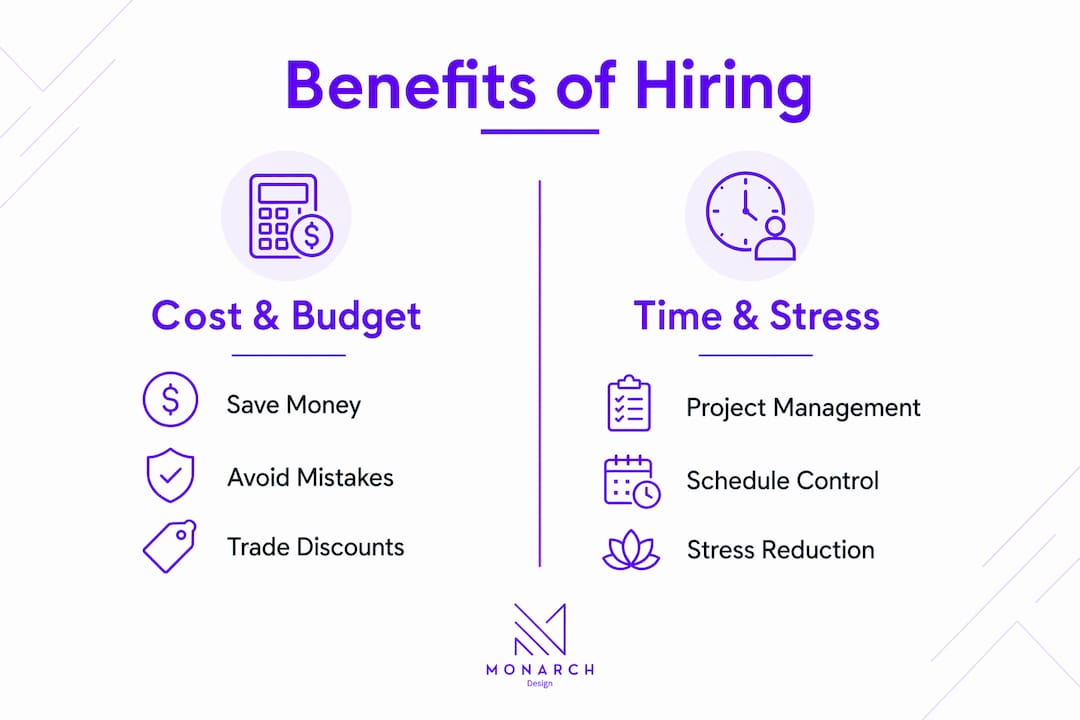
The second financial benefit is mistake prevention. Renovation errors are far more expensive to fix after construction than to plan around before it begins. Fixing post-renovation mistakes always costs more than the upfront design fee, and most DIY errors only surface months later when walls are closed and tiles are set.
Common costly mistakes that designers prevent include:
Wrong furniture scale. Ordering a sofa that blocks a doorway or a dining table that cannot fit six chairs in the actual room dimensions.
Poor lighting placement. Installing ceiling lights that create shadows over work surfaces or leave reading corners dark.
Incorrect material choices. Selecting floor tiles that chip under heavy foot traffic or bathroom fittings that corrode in Singapore’s humidity.
Missed spatial planning. Overlooking storage needs during layout design, forcing expensive retrofits later.
Change orders mid-construction. Altering plans after work has started triggers contractor fees and project delays that compound quickly.
Pro Tip: Before your first designer consultation, photograph every room and note what frustrates you about the current layout. Designers use this information to identify spatial inefficiencies you may not have articulated, which reduces revision rounds and keeps your budget on track.
How do interior designers save time and reduce renovation stress?
A Singapore renovation typically involves plumbers, electricians, carpenters, tilers, painters, and furniture suppliers, all working on overlapping schedules. Coordinating five or more trades simultaneously is a full-time job. Designers coordinate multiple trades to reduce scheduling delays and keep the project moving without gaps or conflicts.
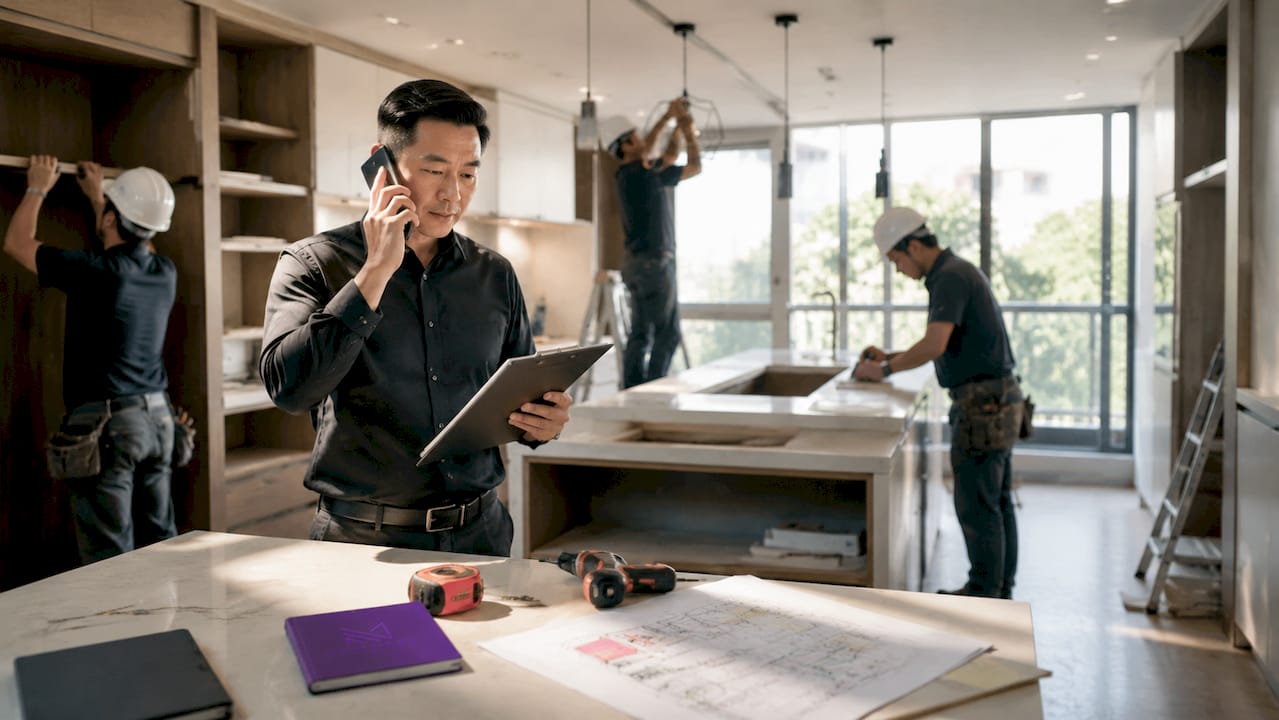
Beyond scheduling, designers manage deliveries, permits, and contractor workflows so you do not have to take time off work to supervise. This is especially relevant for Singapore homeowners with demanding careers who cannot be on-site daily. The project management phase of interior design is, in practice, the most time-intensive service a designer provides, and it directly prevents the delays that inflate renovation costs.
The second major stress reducer is decision fatigue management. A typical renovation requires hundreds of choices, from tile grout color to cabinet handle profiles. Designers reduce decision fatigue by curating a shortlist of well-researched options that match your brief, budget, and style. You make fewer decisions, and each one is better informed.
A structured approach to managing renovation complexity looks like this:
Brief and scope definition. The designer documents your lifestyle needs, budget, and timeline before any work begins.
Concept and space planning. Layouts are tested on paper before a single wall is touched.
Material and vendor selection. The designer presents a curated shortlist, not a catalog of 500 options.
Trade coordination. All contractors receive a unified schedule and set of drawings, reducing miscommunication.
Site supervision. The designer checks work quality at each stage, catching errors before they are buried in the next layer of construction.
Pro Tip: Ask your designer for a weekly progress report during construction. A brief written update with photos keeps you informed without requiring daily site visits, and it creates a paper trail if disputes arise with contractors.
What impact does professional design have on home value and livability?
Quality interior design improves a home’s daily function and its market appeal. Good design supports how a home works for your specific lifestyle, addressing layout and flow inefficiencies that homeowners often overlook because they have grown accustomed to them. A designer will identify that your kitchen triangle is inefficient, that your living room lacks a natural traffic path, or that your bedroom storage forces you to use the floor.
For Singapore’s compact urban homes, space planning is where professional design delivers the clearest return. A well-planned 900-square-foot HDB flat can feel more functional than a poorly planned 1,200-square-foot condominium. Designers achieve this through built-in storage, multi-purpose furniture, and deliberate circulation paths that make every square foot count.
The table below compares typical outcomes between DIY renovation and professionally designed projects:
Outcome | DIY renovation | Professional design |
Budget control | Frequent overruns from unplanned changes | Costs managed through pre-construction planning |
Material quality | Retail-grade, standard durability | Trade-grade, longer-lasting finishes |
Spatial efficiency | Layout based on existing furniture | Layout planned for lifestyle and flow |
Resale appeal | Inconsistent style and finish quality | Cohesive design that photographs and shows well |
Property value impact | Minimal or neutral | 6–20% increase documented by industry data |
Cohesive design also matters at resale. Singapore’s property market is competitive, and buyers respond to homes that feel considered and complete. A professionally designed interior photographs better, shows better, and commands stronger offers.
How to choose the right interior designer for your Singapore home
Choosing the right designer is as important as deciding to hire one. The wrong fit wastes time and money just as surely as skipping professional help altogether. Start by reviewing portfolios for projects similar in scale and style to yours. A designer who specializes in minimalist condominiums may not be the right choice for a landed property with traditional elements.
Key criteria to evaluate when selecting a designer:
Relevant project experience. Look for completed projects in the same property type, whether HDB, condominium, or landed.
Client reviews and references. Ask for direct references from past clients, not just testimonials on a website.
Clear communication style. Your designer should explain decisions in plain language, not industry jargon.
Transparent fee structure. Understand whether fees are flat, percentage-based, or hourly before signing anything.
Project management capability. Ask specifically how they handle contractor coordination and site supervision.
Budget alignment. A good designer works within your budget rather than pushing you toward a higher spend.
During your first consultation, ask the designer to walk you through a past project from brief to handover. This reveals how they handle problems, communicate with clients, and manage timelines. For new homeowners, understanding the designer’s role in early planning is especially important, as decisions made before construction begins have the greatest impact on the final outcome.
Common misconceptions about hiring an interior designer
The most persistent myth is that interior designers are a luxury for large budgets. Interior design is a professional service essential for functional, viable home spaces, not a decorative add-on for wealthy homeowners. The fee is typically offset by trade discounts, mistake prevention, and the time value of not managing a renovation yourself.
A second misconception is that designers impose their own style on your home. Professional designers work from your brief. Their job is to translate your lifestyle needs into a spatial and material solution, not to create a portfolio piece at your expense.
Other myths worth addressing:
“I can find everything I need online.” Online inspiration does not account for your specific floor plan, ceiling height, structural constraints, or Singapore’s building regulations.
“Designers only handle the look, not the build.” Experienced designers manage the entire renovation process, including contractor selection, material procurement, and site supervision.
“Hiring a designer means losing control.” A well-structured designer-client relationship gives you more control, not less, because every decision is documented and deliberate.
“The best value of hiring an interior designer often lies in preventing expensive errors and managing renovation complexities rather than purely aesthetic improvements.” — 24 West Studio
Key takeaways
Professional interior designers deliver measurable financial, functional, and emotional value that consistently outweighs their fees for Singapore homeowners undertaking renovation projects.
Point | Details |
Cost savings are real | Designers save 15–30% of total project costs through trade pricing and mistake prevention. |
Property value increases | Quality design raises home value by 6–20%, improving both livability and resale appeal. |
Project management matters most | Coordinating trades and preventing change orders is where designers save the most time and money. |
Decision fatigue is a hidden cost | Designers curate choices to a manageable shortlist, reducing errors from overwhelm. |
Choosing the right fit is critical | Match the designer’s experience, communication style, and fee structure to your specific project. |
What I have learned from watching Singapore homeowners renovate
From my experience observing renovation projects across Singapore, the homeowners who regret not hiring a designer share one common story. They managed the project themselves, made confident early decisions, and then spent the last quarter of their budget fixing problems that a designer would have caught in week one. A misaligned kitchen cabinet run. A bathroom layout that required moving a waste pipe. A living room that looked perfect in photos but felt cramped with actual furniture in it.
What strikes me about Monarch carpenters is how their approach addresses exactly these pain points. Their in-house team of designers and carpenters works as a single unit, which means the design and the build are aligned from day one. Clients consistently highlight that Monarch carpenters delivered refined, thoughtful spaces at a cost that felt fair and transparent. That combination of quality and modest pricing is rare in Singapore’s renovation market, and it shows up clearly in their client feedback.
The other thing I have noticed is that homeowners who work with experienced studios like Monarch carpenters tend to feel calmer throughout the process. They are not chasing contractors or second-guessing material choices at midnight. They trust the team, and the results reflect that trust. For Singapore homeowners considering their first renovation, that peace of mind is worth more than most people budget for.
— Seth Wayne
Work with Monarch carpenters on your Singapore renovation

Monarch carpenters is a design and carpentry studio based in Singapore, known for delivering bespoke residential interiors that balance craftsmanship with cost-effectiveness. Their in-house team handles both design and build, which means your project stays cohesive from concept to handover. Clients across Singapore consistently praise Monarch carpenters for producing refined, well-considered spaces at pricing that respects real-world budgets. If you are planning a renovation and want a team that brings both design expertise and carpentry precision to the table, explore Monarch’s services and book a consultation to discuss your project.
FAQ
How much do interior designers typically cost in Singapore?
Interior designer fees in Singapore vary by project scope and fee structure, but the cost is typically offset by trade discounts and mistake prevention that save homeowners 15–30% of total project costs.
Do interior designers handle contractor coordination?
Yes. Designers coordinate multiple trades including plumbing, electrical, carpentry, and tiling, reducing scheduling conflicts and keeping the renovation timeline on track.
Is hiring an interior designer worth it for a small HDB flat?
Professional design delivers the clearest return in compact spaces, where spatial planning and built-in storage solutions make every square foot functional and livable.
What should I ask an interior designer in the first meeting?
Ask them to walk you through a completed project from brief to handover, covering how they handled problems, communicated with clients, and managed the construction timeline.
Can an interior designer work within a tight budget?
A good designer works within your stated budget by prioritizing high-impact decisions and sourcing materials through trade channels that offer better value than retail pricing.
Recommended
Comments