
Why New Homeowners Need an Interior Designer in Singapore

TL;DR:
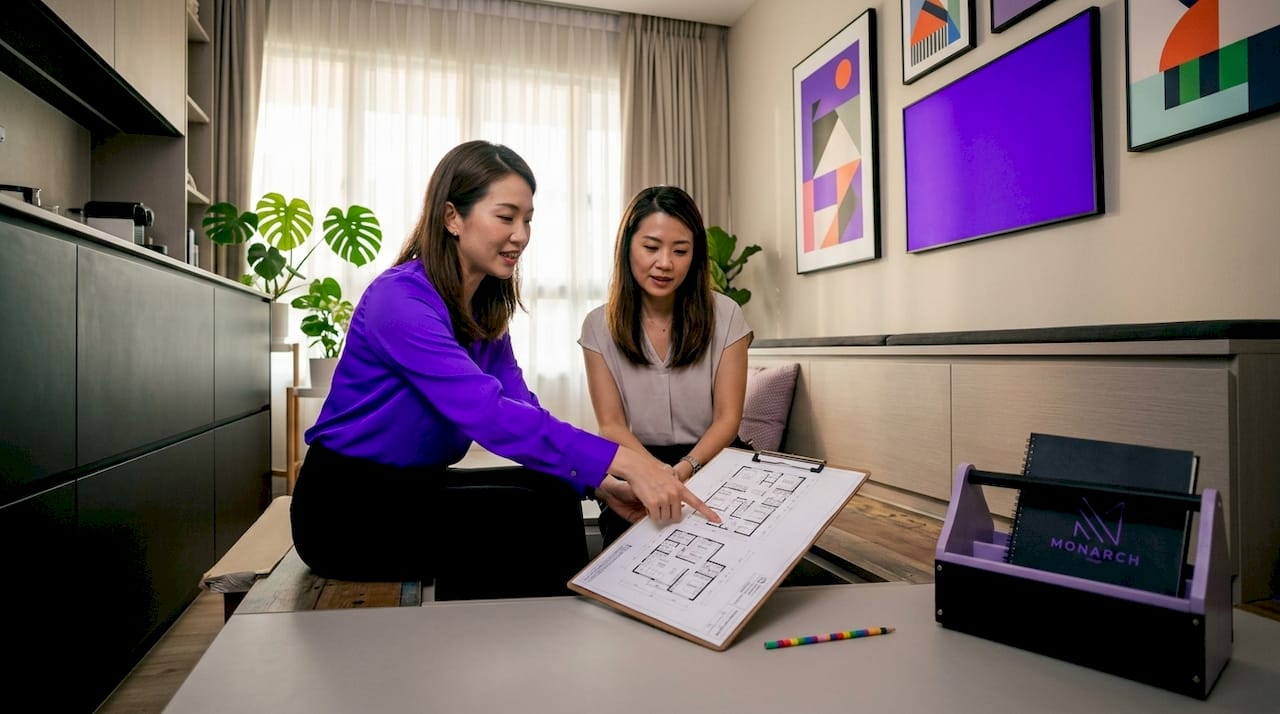
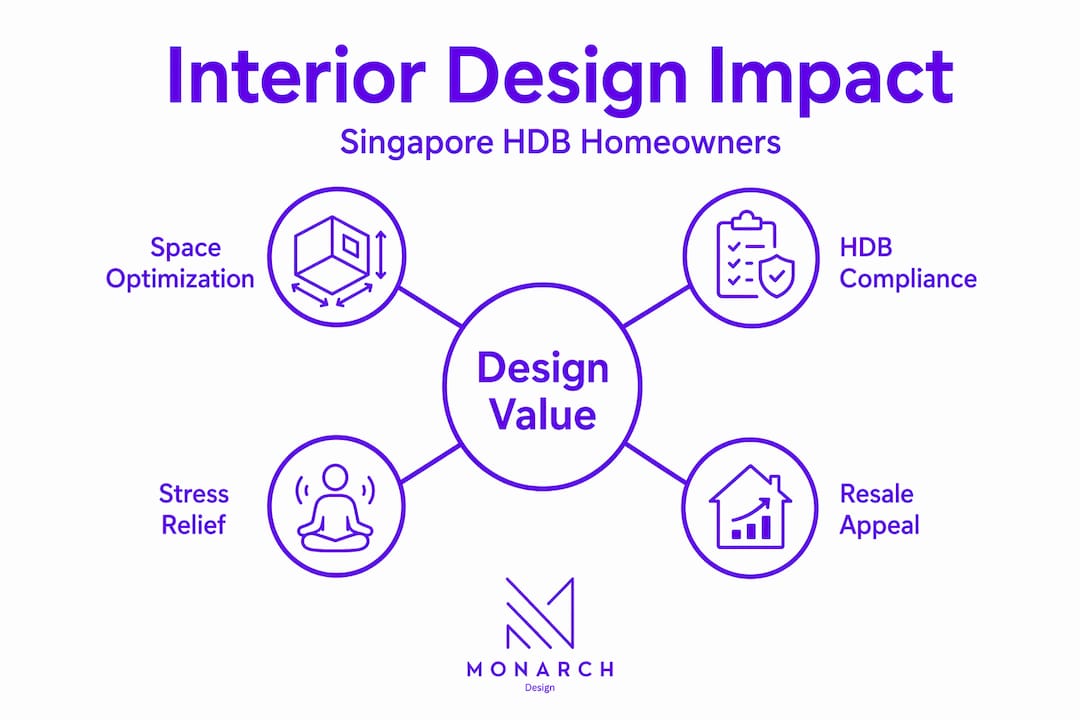
Most new homeowners in Singapore need interior designers to navigate the strict renovation rules and optimize space within compact flats. Engaging a professional early ensures permit approvals, better contractor access, and cost-effective solutions tailored to HDB requirements. Their expertise guarantees a smoother renovation process, a cohesive home design, and enhanced property value upon resale.
Most new homeowners in Singapore ask the same question after collecting their keys: do I really need to hire a professional, or can I just figure it out myself? The answer matters more here than almost anywhere else, because why new homeowners need an interior designer goes well beyond aesthetics. Singapore’s HDB renovation rules, compact floor plans, and tight contractor schedules create a set of challenges that good intentions alone cannot solve. A qualified interior designer, the industry’s standard term for a licensed design professional who manages both the visual and functional aspects of a space, can be the difference between a smooth renovation and a costly, stressful one.
Table of Contents
Key Takeaways
Point | Details |
Hire early for best results | Engage a designer 3–6 months before key collection to secure permits, materials, and contractors on time. |
Local HDB expertise protects you | Designers with HDB knowledge prevent permit rejections, structural violations, and expensive rework. |
Design fees often pay for themselves | A single consultation can save an average of $1,600 by preventing furniture and material mistakes. |
Written budgets double satisfaction | Homeowners who plan budgets in writing before starting are twice as likely to be happy with the outcome. |
Full-service coordination reduces stress | A single point of contact handles vendors, timelines, and quality control so you do not have to. |
Why new homeowners need interior designers for Singapore HDB flats
Singapore’s HDB flats are unlike apartments anywhere else in the world. They come with a specific set of renovation guidelines that govern everything from which walls you can hack to how many hours contractors are permitted to make noise each day. HDB-specialist knowledge is not optional knowledge for a designer working here. It is the baseline.
General contractors without interior design training may not fully understand these rules, and the consequences of getting it wrong are real. Rejected permit applications delay your move-in date by weeks. Unauthorized structural changes can result in mandatory reinstatement at your own expense. An experienced interior designer who has handled dozens of HDB projects knows exactly what is permissible, what requires a permit, and how to sequence the work so nothing gets rejected.
Beyond compliance, the importance of interior design for new homes in Singapore is deeply tied to space. Most HDB flats range from around 65 to 110 square meters. Fitting a full household’s worth of furniture, storage, and lifestyle into that footprint requires deliberate spatial planning, not just good taste. A trained designer approaches your floor plan as a functional system, not just a canvas.
HDB renovation rules cover wall hacking, wet work, flooring materials, and permitted working hours
Designers coordinate with HDB-licensed contractors to prevent non-compliant work from being carried out
Space planning for compact layouts involves built-in joinery, multifunctional furniture, and traffic flow mapping
Local knowledge of common BTO flat types speeds up the planning process significantly
Pro Tip: Before your first designer meeting, download the HDB renovation guidelines from the HDB InfoWEB. Bringing this document shows you are prepared, and it helps your designer confirm scope and permit needs faster.
The right time to bring a designer in
Timing is one of the most underappreciated factors in a smooth renovation. Many new homeowners contact a designer only after collecting their keys, which puts everyone under pressure from the start. Engaging a designer 3–6 months before your key collection date is the standard recommended window for BTO and HDB projects in Singapore.
Here is why that timeline works so well:
Design planning comes first. Your designer uses those early months to develop a full concept, create floor plans, and select materials before a single contractor sets foot in your flat. You make considered decisions instead of rushed ones.
Permit applications take time. Some renovation works require HDB approval before they can begin. Submitting applications early means approvals land before your contractors are scheduled to start, avoiding costly idle time.
Good contractors book out fast. Reputable HDB-licensed contractors often have waiting lists of two to three months. Your designer’s existing trade relationships mean you access this network ahead of the general public.
Material lead times are real. Custom joinery, imported tiles, and specific light fixtures often have lead times of four to eight weeks. Proper timing and coordination with your designer prevents last-minute substitutions that compromise the final result.
Budget decisions are clearer. Early planning means you have firm quotes before spending begins, not estimates that balloon once work is underway.
Pro Tip: Check the upcoming BTO key collection dates for 2026 and work backwards six months to identify when you should start your designer search. That date is probably sooner than you think.
Understanding interior design costs for new homeowners
One of the most persistent myths about professional design is that it is only for people with very large budgets. The reality is more practical. Interior design cost for beginners in Singapore varies by service model, and there are options at almost every price point.
Pricing Model | Typical Cost | Best For |
One-time consultation | $150 – $300 per session | Homeowners who want expert input on a specific room or decision |
Flat-rate design fee | $3,000 – $8,000+ | Projects with a defined scope and fixed deliverables |
Percentage-based fee | 10–20% of total project cost | Full-service renovations where the designer manages everything |
Design-and-build packages | Varies by scope | Homeowners who want design and contractor coordination bundled |
The case for even a single consultation is compelling. A consultation can save homeowners an average of $1,600 by preventing purchasing mistakes on furniture and materials. A designer reviewing your floor plan for two hours can tell you which sofa dimensions will actually fit, which flooring material will not show every footprint in a high-traffic hallway, and which contractor quote contains unnecessary markup.
Beyond the one-session scenario, the advantages of hiring an interior designer on a full-service basis include a detailed design plan that gives every decision a logical home. Homeowners who set a written budget before design projects begin are twice as likely to report satisfaction with the final result. A designer helps you build that written plan and stick to it.
Budget by room and function, not as a single total number
Prioritize permanent fixtures like joinery and flooring over furniture, which can be updated later
Ask designers to break quotes into design fees, materials, and labor so you can compare accurately
Factor a 10–15% contingency into every project budget for unexpected site conditions
Real benefits beyond the obvious
The practical benefits of professional design go further than most first-time buyers expect. Interior designers excel at maximizing storage and creating multifunctional furniture solutions, which matters enormously when you are working with 80 square meters and need it to function as a living room, dining area, home office, and guest space.
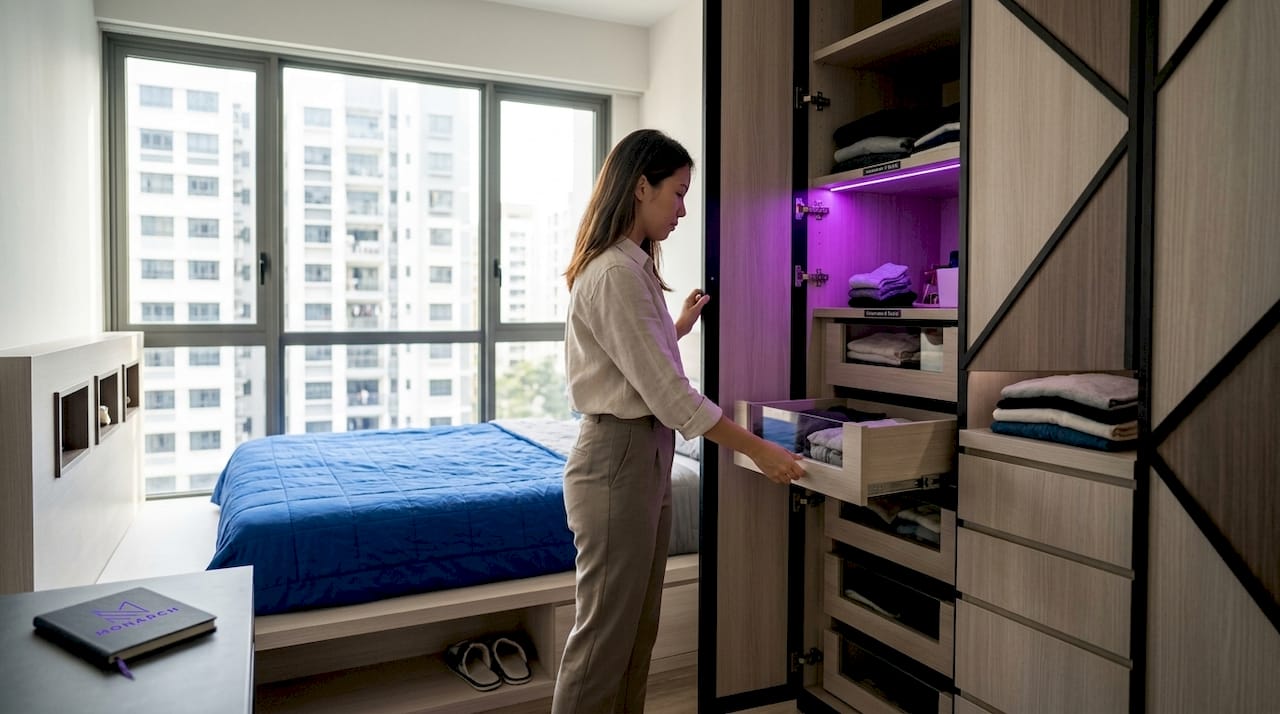
Storage is where bespoke carpentry truly earns its place in a Singapore home. Custom built-in wardrobes, platform beds with concealed drawers, and floor-to-ceiling cabinetry in the kitchen can double a flat’s effective storage capacity compared to freestanding furniture. These are not luxury add-ons. They are practical responses to the reality of compact urban living.
A cohesive design also affects your daily experience in ways that are harder to quantify but genuinely felt. When your color palette, materials, lighting, and furniture speak the same visual language, your home feels intentional and calm rather than assembled over time from different impulses. You can explore contemporary design concepts for Singapore homes to understand how local designers achieve this coherence within HDB contexts.
Turnkey interior design services reduce stress by handling all vendors and materials through a single team, preventing the miscommunication and scheduling conflicts that multiply when homeowners manage multiple contractors independently. The emotional value of not fielding calls from three different tradespeople at once is real, and underestimated.
There is also a resale dimension. Professional finishes, well-designed joinery, and a space that photographs beautifully hold their value in Singapore’s property market, where buyers form opinions quickly and often base decisions on first impressions.
How to choose the right interior designer
Finding the right professional is where many new homeowners stall, because the market is large and the range of quality is wide. Here is how to approach the search with clarity.
Verify HDB experience specifically. A designer with a strong portfolio of condominium work is not automatically qualified to handle HDB renovation permits and rules. Ask directly how many HDB projects they have completed in the last two years.
Understand the service level you are buying. Some firms offer consultation only, others offer partial service covering design documentation without contractor management, and others offer full-service or design-and-build packages. Know what you are getting before signing anything.
Check reviews from verified past clients. Look beyond the testimonial page on a company’s own website. Search Google reviews, Houzz, and local forums like HardwareZone for unprompted feedback on communication, timelines, and post-handover support.
Request a portfolio matched to your flat type. If you are renovating a 4-room BTO, ask to see completed 4-room BTO projects. The spatial constraints are different from a 3-room or an executive flat, and the solutions should reflect that.
Assess communication style early. How quickly does a designer respond to your initial inquiry? Are they asking good questions about how you actually live, or are they already pitching a style? A designer who listens well before speaking is worth more than one with a beautiful Instagram page.
You can also use tools like an interior design mood board to prepare your own visual brief before your first meeting, which makes the conversation far more productive and helps a designer understand your taste without guesswork.
My honest take on hiring a designer as a first-time homeowner
I have watched enough first-time homeowners in Singapore go through renovations without professional help to recognize the pattern. It almost always starts with confidence, moves through confusion, and ends somewhere between regret and expensive rework.
The most common mistake I have seen is treating interior design as the last step rather than the first. People spend months researching appliances and furniture on Taobao, then call a designer two months before they want to move in. At that point, the designer is managing chaos rather than preventing it.
What I have learned is that the permit process alone justifies early involvement. HDB’s renovation rules catch a lot of homeowners off guard, particularly around wet areas, load-bearing walls, and noise restrictions. A designer who has navigated these rules hundreds of times does not just prevent mistakes. They move faster because they already know the path.
The other thing I believe strongly is that budget transparency with your designer is non-negotiable. The homeowners I have seen get the best results are the ones who share their real budget on day one, not an inflated number meant to test the designer. When a designer knows your actual constraints, they make smart trade-offs. When they are guessing, they either overshoot or play it too safe.
If you are a new homeowner weighing the cost of professional help against the cost of figuring it out yourself, the math usually favors the professional. Not because design is complicated, but because local renovation rules, contractor relationships, and material knowledge take years to build. Paying for that expertise up front is simply a faster, cheaper path to a home you will actually love.
— Seth Wayne
Why Monarch carpenters is the right partner for your first home
At Monarch carpenters, we work specifically with Singapore homeowners on HDB, BTO, and condominium projects, bringing together in-house designers and carpenters under one roof for genuinely cohesive project delivery. Our clients consistently highlight two things in their reviews and feedback: the quality of the craftsmanship and the honesty of the pricing. We do not believe great design should come with an unpleasant surprise at the end of a project.
Our design-and-build model means you have one team managing your entire renovation, from the initial space planning and permit coordination through to the final coat of paint and the last piece of bespoke joinery. That single point of accountability matters enormously when you are renovating for the first time and do not yet know which questions to ask.
We offer flexible consultation options for homeowners who are still in the early stages of planning, as well as full-service packages for those ready to move forward. Visit Monarch carpenters to explore our portfolio, read what past clients have shared about their experience, and book a consultation that fits your timeline and budget.
FAQ
Why do new homeowners in Singapore need an interior designer?
New homeowners in Singapore benefit from professional design guidance because HDB renovation rules, compact floor plans, and contractor coordination all require specialist knowledge that most first-time buyers do not yet have.
How much does hiring an interior designer cost in Singapore?
Consultation fees typically range from $150 to $300, while full-service design fees run between 10 and 20 percent of total project cost. A single consultation can save an average of $1,600 by preventing costly purchasing mistakes.
When should I hire an interior designer for my BTO flat?
The ideal time is 3 to 6 months before your key collection date. This window allows enough time for design planning, permit applications, contractor scheduling, and material procurement without any rushed decisions.
What are the main advantages of hiring an interior designer?
The key advantages include optimized space usage, HDB permit compliance, access to vetted contractors, stress-free vendor coordination, and a cohesive finished result that holds resale value.
How do I choose the right interior designer for my HDB flat?
Look for a designer with verified HDB project experience, transparent pricing, strong client reviews on independent platforms, and a communication style that prioritizes listening to your needs before presenting solutions.
Recommended
Comments