
BTO Interior Design Timeline: A Singapore Homeowner's Guide


TL;DR:
A BTO interior design timeline typically spans 6 to 12 weeks, depending on the flat’s size and renovation complexity. Homeowners should plan early, make decisions on schedule, and coordinate furniture procurement with construction to avoid delays. Proper management and understanding cultural factors ensure timely move-in and a smooth renovation process.
An interior design timeline for a BTO flat is a structured schedule that maps every renovation phase, from the first design brief to the final styling, helping you plan your project without costly surprises. For Singapore homeowners, understanding what is an interior design timeline BTO means knowing that a standard renovation runs 6–12 weeks, depending on flat size, permit requirements, and the scope of carpentry work. HDB permit approvals, bespoke carpentry installation, and construction sequencing all shape how long your project takes. Getting this right from the start is the difference between moving in on schedule and living out of boxes for months longer than you planned.
What are the key phases of a BTO interior design timeline?
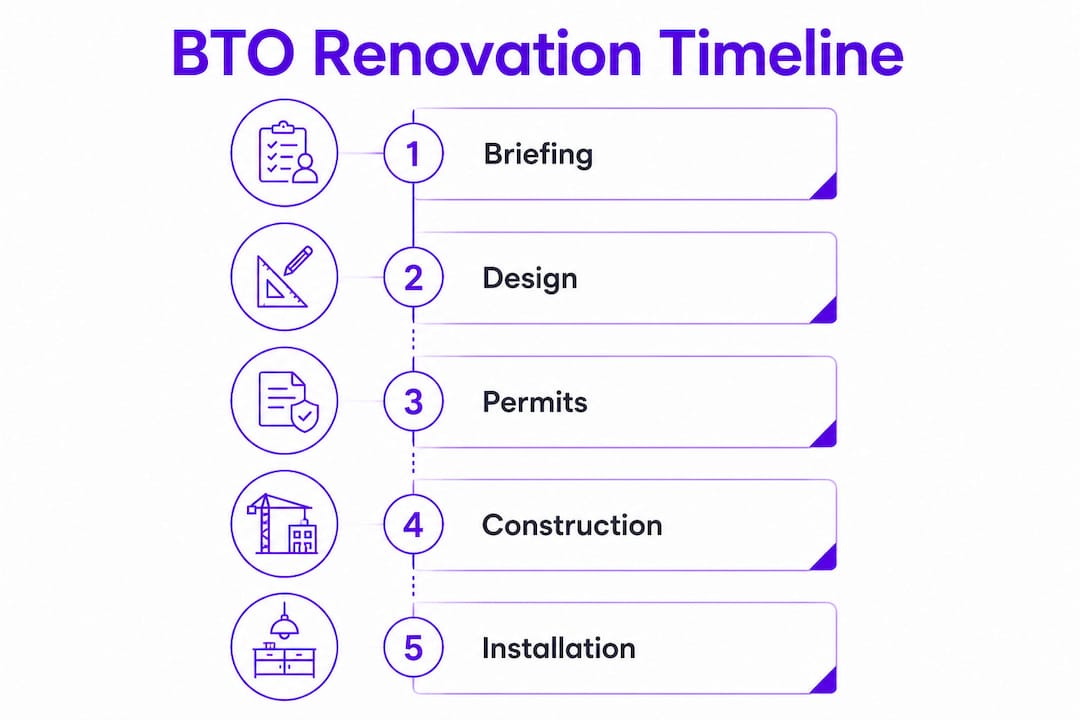
A well-run BTO design project timeline follows five distinct stages, each with its own duration and deliverables. Skipping or rushing any stage creates problems that compound later.
1. Briefing and concept development (1–2 weeks)
The process starts with a detailed briefing session where you share your lifestyle needs, budget, and aesthetic preferences with your designer. Your designer then develops a concept, including mood boards, space planning sketches, and a preliminary material palette. This stage sets the direction for every decision that follows.
2. Design development and documentation (2–3 weeks)
This is where concept becomes construction-ready. Detailed drawings and material schedules are produced during this phase, and they prevent costly mid-project changes. Your designer finalizes layouts, carpentry specifications, electrical points, and tile selections. Approvals from you at this stage lock in the scope and protect the schedule.
3. HDB permit application and approvals (1–2 weeks)
HDB requires permits for most structural and electrical works in BTO flats. Your contractor or designer submits the application, and processing typically takes one to two weeks. No construction can legally begin until permits are granted, so delays here push everything back.
4. Construction phase (4–8 weeks)
Construction follows a strict sequence: hacking and demolition, followed by electrical and plumbing rough-ins, then tiling, carpentry, painting, and finally fixture installation. Each trade must complete its work before the next begins. The typical interior design project moves through briefing, documentation, construction, and final styling as staged phases, each building on the last.
5. Final installation and touch-ups (1–2 weeks)
Loose furniture arrives, light fixtures are installed, and any defects from the construction phase are rectified. This stage also includes cleaning and final styling before handover.
Pro Tip: Lock in your material selections before construction begins. Late changes to tiles or carpentry finishes are the single most common cause of schedule overruns on BTO projects.
How do flat size and renovation complexity affect the BTO timeline?
Flat size is the most reliable predictor of how long your renovation will take. A 4-room BTO flat typically requires 8–10 weeks, while a 5-room flat or one with heavy custom carpentry needs 10–12 weeks. That two-week gap reflects the additional surface area for tiling, more carpentry runs, and greater coordination between trades.
Custom carpentry work adds time in two ways. First, bespoke pieces require longer fabrication lead times than off-the-shelf furniture. Second, fitting custom cabinetry into a space demands precise site measurements and often minor adjustments on installation day. If your design includes a full feature wall, a built-in study, and a custom kitchen, budget for the longer end of the timeline. The role of carpentry in home design is not just aesthetic; it directly shapes your project schedule.
Minimal renovations are not exempt from time constraints. Even light renovations require at least 6 weeks due to mandatory curing times for tiling and the administrative processing of HDB permits. Many homeowners underestimate these technical minimums and plan to move in too early, only to find the grout is still curing or the permit is still pending.
Cultural and seasonal factors add another layer of complexity specific to Singapore:
Chinese New Year: Contractors and suppliers typically shut down for one to two weeks. Projects that run into this period can add 1–2 weeks to the overall schedule.
Feng shui date selection: Many homeowners choose auspicious dates for hacking or moving in, which can shift the start or end of a project by days or weeks.
Public holidays: Singapore’s calendar includes multiple public holidays that cause unavoidable work stoppages. Planning buffers around these dates keeps your completion date realistic.
Year-end peak season: Renovation demand spikes toward the end of the year, stretching contractor availability and material lead times.
What practical steps can homeowners take to manage their renovation schedule?
Managing your BTO home design stages well comes down to preparation, communication, and timely decisions. Homeowners who treat the renovation as a passive process consistently experience longer timelines and higher costs.
Engage your designer early. Engaging designers shortly after key collection can enable renovation to start within one to two weeks. Every week you delay the briefing is a week added to your move-in date.
Submit HDB permit applications without delay. Your designer or contractor handles the paperwork, but you need to provide accurate flat details and sign off promptly. Delays in submission push the entire construction phase back.
Make decisions on schedule. Poor decision timing and miscommunication are major causes of timeline overruns. When your designer asks you to confirm a tile or a carpentry finish, respond within the agreed window.
Conduct regular site visits. Weekly visits let you catch issues early, before they require expensive corrections. Bring your designer’s drawings and compare what you see on site against the plan.
Build in a buffer. Add two weeks to whatever timeline your contractor quotes. This absorbs permit delays, material back-orders, and the occasional public holiday shutdown without derailing your move-in date.
Pro Tip: Keep a shared document or messaging thread with your designer and contractor where all decisions are recorded in writing. Verbal agreements are the root cause of most “I thought we agreed” disputes on renovation sites.
For a detailed checklist covering every stage, the kitchen renovation planning checklist from Monarch carpenters is a practical reference that applies well beyond the kitchen.
How does furnishing and final styling fit into the BTO design schedule?
Construction completion and move-in readiness are not the same thing. Many homeowners are surprised to find that their flat is “done” but still unlivable because furniture has not arrived yet.
Furniture procurement and final styling typically take 2–4 weeks and can overlap with the late stages of construction to speed up completion. Smart scheduling means ordering furniture and loose fittings while tiling and painting are still underway, so delivery coincides with the end of construction rather than following it.
The table below shows how the furnishing phase fits into the broader interior design schedule:
Phase | Typical duration | Can overlap with |
Design and documentation | 2–3 weeks | Permit application |
HDB permit processing | 1–2 weeks | Final design sign-off |
Construction | 4–8 weeks | Furniture procurement |
Furniture delivery and styling | 2–4 weeks | Late construction touch-ups |
Final handover and defect checks | 1 week | Styling and cleaning |
Effective project management during concurrent procurement and construction phases minimizes idle time and accelerates move-in readiness. The key is coordinated scheduling, where your designer tracks both the construction progress and the furniture delivery window simultaneously. When these two tracks fall out of sync, you end up waiting weeks after construction ends for a sofa to arrive.
Key Takeaways
A BTO interior design timeline runs 6–12 weeks for construction alone, and homeowners who engage designers early, make decisions on schedule, and overlap furniture procurement with late construction consistently move in faster and within budget.
Point | Details |
Minimum timeline is 6 weeks | Even light renovations need 6 weeks for curing times and HDB permit processing. |
Flat size drives duration | 4-room flats average 8–10 weeks; 5-room or high-customization flats need 10–12 weeks. |
Cultural factors add time | Chinese New Year and feng shui date selection can add 1–2 weeks to any project. |
Early engagement shortens the wait | Briefing a designer right after key collection can start construction within 1–2 weeks. |
Overlap procurement with construction | Ordering furniture during construction cuts 2–4 weeks off your total move-in timeline. |
What I’ve learned from watching BTO timelines go wrong
By Seth Wayne
After observing dozens of BTO renovations, the pattern that stands out most is not contractor delays or permit backlogs. The biggest timeline killer is homeowner indecision, and it happens at the worst possible moment: during the design documentation phase, when every day of delay pushes the construction start back by exactly one day.
Homeowners often treat the design phase as low-stakes because nothing physical is happening yet. That is the wrong way to think about it. Thorough documentation and design clarity are what prevent costly mid-project modifications. Every week you spend deliberating over a tile color during the documentation phase is a week added to your move-in date, not subtracted from it.
The second thing I have noticed is that homeowners consistently underestimate cultural timing factors. Feng shui date selection is not a minor consideration for many Singapore families. It is a genuine scheduling constraint that your designer needs to know about from day one, not week six. The same applies to Chinese New Year. If your project runs from december into february, plan for a two-week gap and build it into your expectations from the start.
My honest recommendation is to hire a professional design and carpentry studio that manages the full project, not just the aesthetics. Studios like Monarch carpenters, which handle both design and carpentry in-house, eliminate the coordination gap between designer and contractor that causes most of the delays I have seen. When one team owns the whole project, accountability is clear and the schedule holds.
— Seth Wayne
How Monarch carpenters keeps your BTO project on schedule
Monarch carpenters brings together design and bespoke carpentry under one roof, which means your project moves from concept to construction without the handoff delays that slow most BTO renovations down.

Homeowners across Singapore consistently praise Monarch carpenters for delivering quality design at modest cost, with timelines that match the original schedule. The in-house team handles everything from HDB permit coordination and space planning to custom carpentry fabrication and final styling, so nothing falls through the gaps. If you are planning a BTO renovation and want a clear, realistic schedule backed by a team that has delivered it before, explore Monarch carpenters’ full range of design services and see why so many Singapore homeowners trust them with their first home.
FAQ
What is a BTO interior design timeline?
A BTO interior design timeline is a structured schedule covering all renovation phases, from design briefing and HDB permit approvals through construction and final styling, typically spanning 6–12 weeks.
How long does a BTO renovation take in Singapore?
A 4-room BTO flat renovation typically takes 8–10 weeks, while a 5-room flat or one with extensive custom carpentry requires 10–12 weeks from construction start to handover.
Why does even a minimal BTO renovation take at least 6 weeks?
Tiling requires mandatory curing time and HDB permit processing adds administrative lead time, meaning even light renovations cannot be completed in less than 6 weeks.
Can Chinese New Year affect my BTO renovation timeline?
Yes. Chinese New Year closures and feng shui date selection can add 1–2 weeks or more to a renovation schedule, so homeowners should build these gaps into their planning from the start.
When should I order furniture for my BTO flat?
Order furniture during the construction phase, not after it ends. Furniture procurement and final styling take 2–4 weeks, and overlapping this with late construction cuts weeks off your total move-in timeline.
Recommended
Comments