
The Role of Lighting in Interior Spaces: 2026 Guide

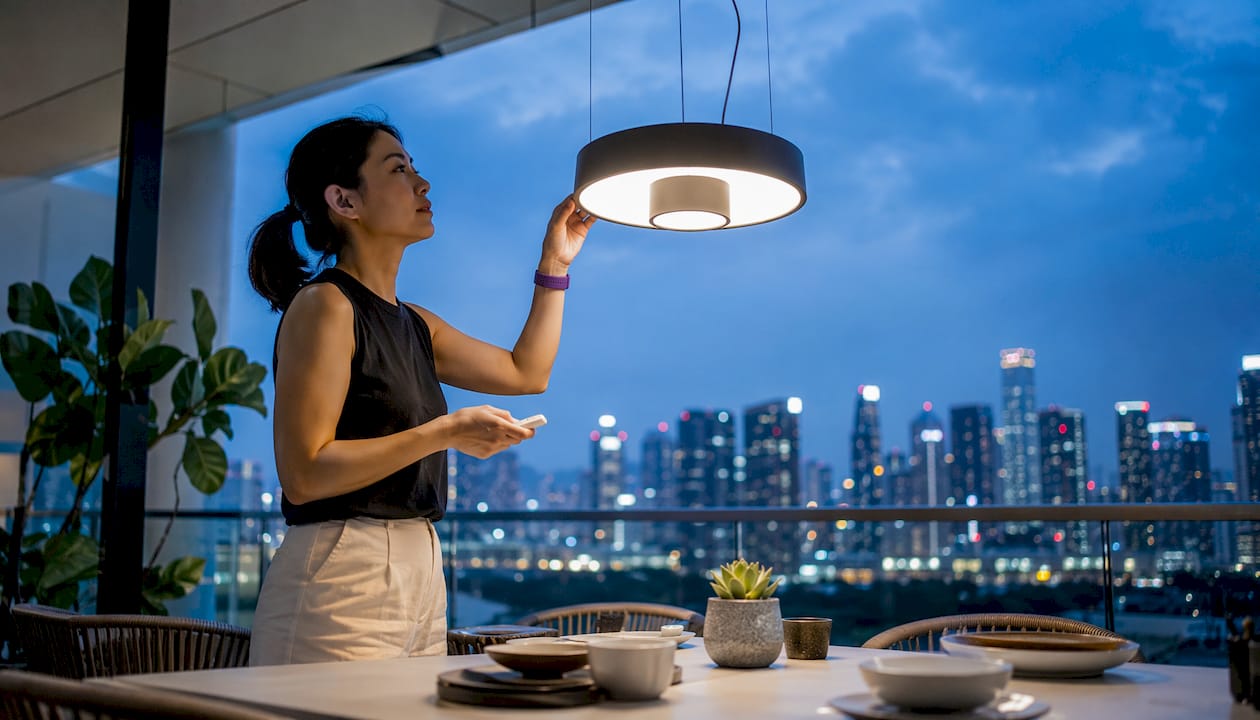
How lighting shapes every interior space you inhabit
Lighting is the single most powerful design tool in any interior, and it works whether you plan it or not. A poorly lit room feels cramped and uninviting regardless of how carefully the furniture was chosen or how much was spent on finishes. Get the lighting right, and even a modest space reads as considered, comfortable, and alive. The role of lighting in interior spaces goes far beyond visibility. It shapes mood, directs attention, supports daily tasks, and defines the character of every room.
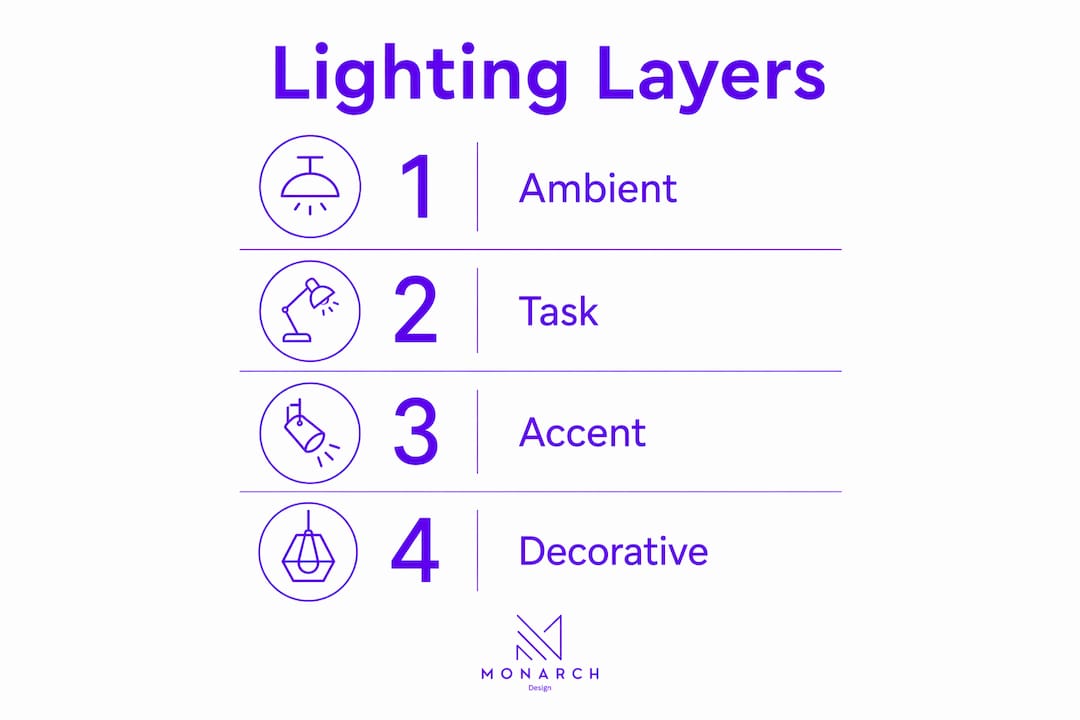
Professional lighting design organizes illumination into four functional layers: ambient, task, accent, and decorative. Each layer serves a distinct purpose, and a well-designed interior uses all four in careful balance. Natural light adds a fifth dimension, one that shifts throughout the day and connects occupants to the rhythms of the outside world. The interaction between these sources, and how they fall across surfaces, textures, and materials, is what transforms a room from functional to genuinely beautiful.
Ambient lighting provides the base level of illumination for safe movement and general orientation
Task lighting delivers focused light where specific activities happen
Accent lighting highlights architectural features, artwork, or textures
Decorative lighting contributes aesthetic character through fixture design itself
Natural light integrates with all four layers, shifting the mood and energy of a space throughout the day
What are the four main types of interior lighting?
Understanding the types of interior lighting is the foundation of any effective design plan. Each type has a defined role, and confusing them, or relying on just one, is the most common mistake homeowners make.
Ambient lighting is the general layer that fills a room with enough light to move safely and comfortably. Recessed downlights, flush-mount ceiling fixtures, and cove lighting all serve this function. Without adequate ambient light, a space feels cave-like no matter how many accent pieces are present.
Task lighting delivers higher-intensity, focused illumination to areas where specific work happens. Under-cabinet LED strips in kitchens, swing-arm reading lamps beside beds, and vanity lights flanking a bathroom mirror are all task applications. The Illuminating Engineering Society (IES) recommends 30–40 foot-candles for general kitchen work and 50–75 foot-candles for detailed tasks like recipe reading.
Accent lighting creates visual interest by drawing the eye to specific objects or surfaces. The standard principle is that accent fixtures should be at least three times brighter than the surrounding ambient level to register as a focal point. Track lights aimed at artwork, uplights washing a textured stone wall, and recessed adjustable fixtures spotlighting a sculpture all qualify.
Decorative lighting refers to fixtures chosen primarily for their visual contribution rather than their output. A statement chandelier, a cluster of hand-blown pendants, or a sculptural sconce adds personality and signals design intent. These pieces work best when they complement the ambient layer rather than replace it.
Together, these four layers create dimensional lighting that supports both function and atmosphere. Relying on a single overhead fixture for all four roles is the design equivalent of using one paint color for every surface in a room.
How does natural light affect your interior environment?
Natural light is the most dynamic and desirable illumination source available, and it changes everything it touches. The color of daylight shifts from a cool, energizing blue-white in the morning to a warm amber by late afternoon, and that shift affects how colors read, how spaces feel, and how occupants perform throughout the day.
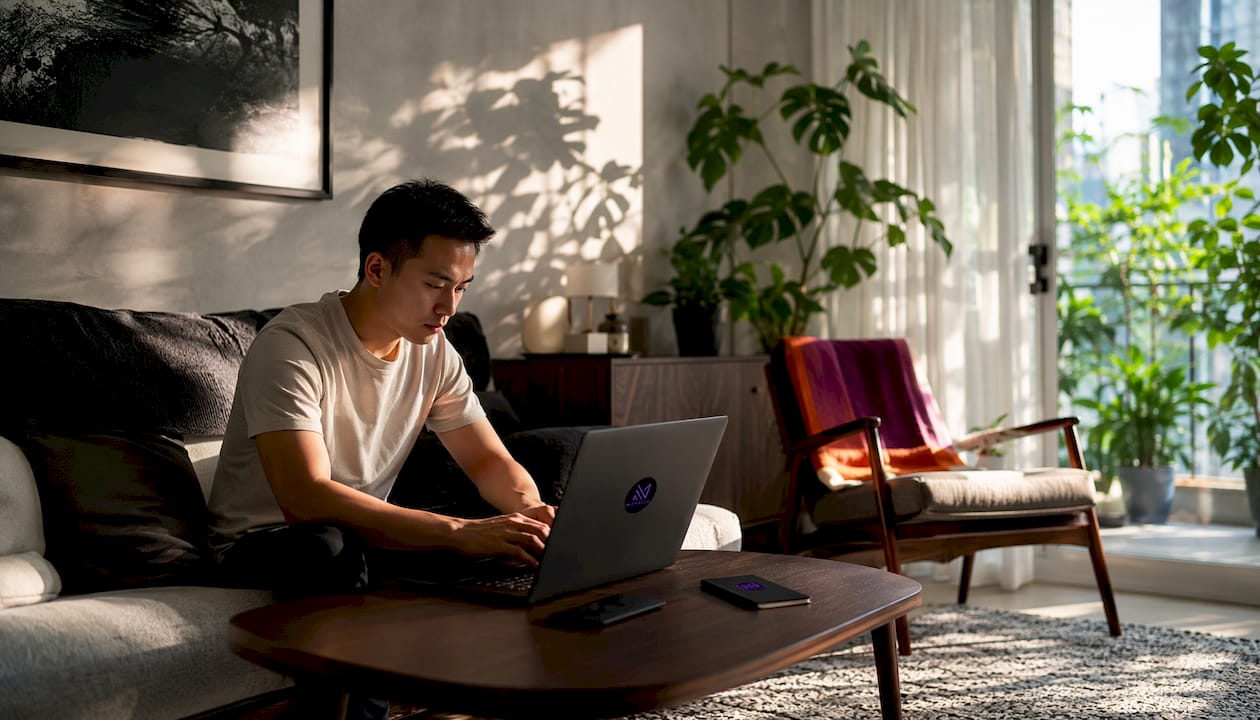
Human-centric lighting is the design discipline that takes this seriously. It considers timing, spectrum, and intensity together, adapting artificial light to support the body’s circadian rhythms when natural light is unavailable or insufficient. Research published in PMC confirms that bright daytime light improves alertness, mood, and cognitive performance, while low-intensity warm light in the evening supports healthy sleep. Since most Americans spend the majority of their time indoors, electric lighting carries a genuine responsibility for wellbeing, not just visibility.
Artificial lighting technologies have advanced considerably to meet this challenge. Tunable white LED systems can shift color temperature from an energizing 4000K in the morning to a warm 2700K in the evening, approximating the natural arc of daylight. This approach has gained traction in healthcare, senior living, and education settings, where the benefits to sleep quality and cognitive performance are measurable.
Exposure to bright, bluish light in the morning improves mood and reduces depressive symptoms
Warm, dim light in the evening signals the body to wind down
Light-colored walls and ceilings with high reflectance values bounce daylight deeper into a space
Placing desks perpendicular to windows reduces screen glare while maintaining outdoor views
Mirrors and reflective surfaces extend the reach of natural light without adding fixtures
Pro Tip: When designing a room that receives strong morning sun, pair sheer window treatments with warm-toned artificial fixtures. The sheers diffuse harsh direct light while the warm bulbs maintain visual continuity as the day shifts to afternoon.
How do you layer multiple light sources for depth and ambiance?
Layering is what separates a thoughtful lighting scheme from a room that simply has lights in it. The principle is straightforward: atmospheric lighting results from the interplay of light direction, shadows, surface textures, and brightness levels, not from fixtures alone. Shadows create intimacy and depth. A room lit entirely from above with uniform fixtures looks flat, and no amount of furniture arrangement will fix it.
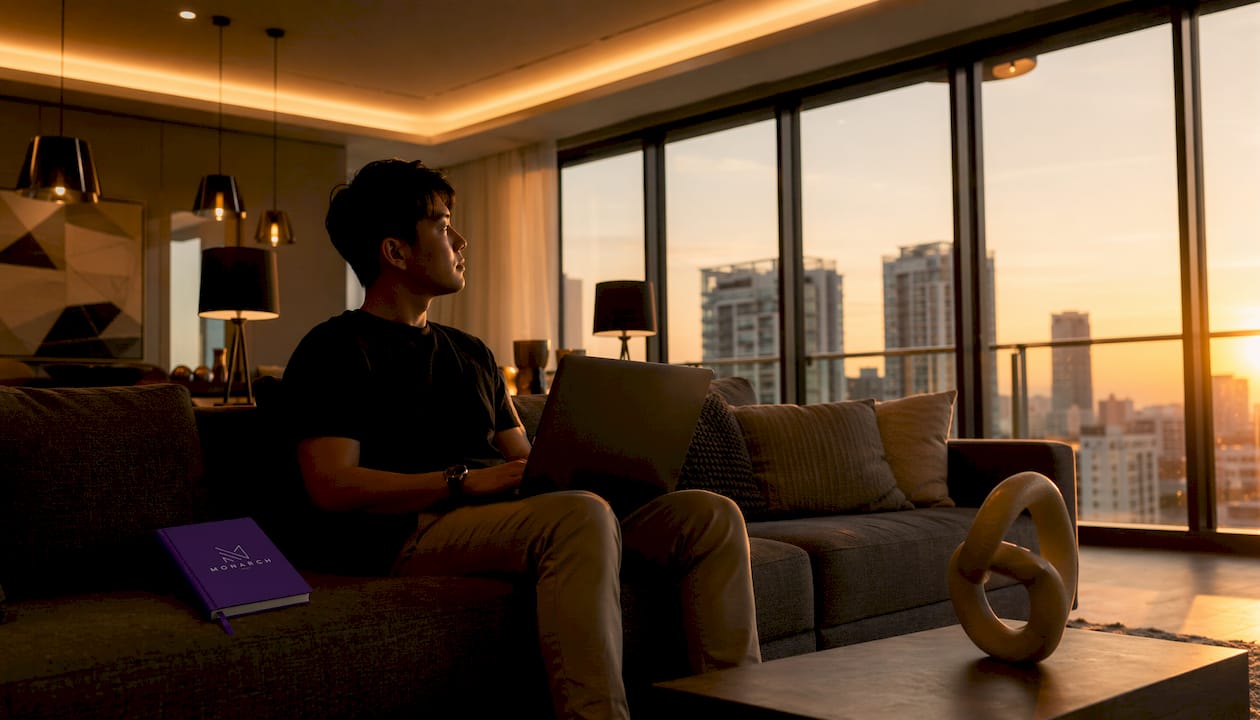
The practical approach is to build from the ambient layer outward. Start with enough general illumination for safe movement, then add task lighting where activities happen, then introduce accent lighting to create focal points and reveal texture. Each layer operates on its own circuit or dimmer, giving you control over the mood at any time of day.
Indirect lighting deserves particular attention. A balance of approximately 35%–65% indirect lighting enhances perceived room brightness and user preference better than focusing exclusively on horizontal surface illuminance. Lighting walls and ceilings rather than just work surfaces makes a room feel larger, reduces glare, and improves facial recognition, which matters in living rooms and dining spaces where people gather.
Put every circuit on a dimmer, including ambient fixtures most people leave on a standard switch
Group lights into zones so you can activate task, accent, or ambient layers independently
Use “islands of light” rather than uniform coverage to create hierarchy and draw the eye through a space
Combine direct and indirect sources in the same room for contrast and visual depth
Avoid over-lighting: three-zone lighting strategies reveal layers of interest and reduce cost compared to saturating a space with uniform fixtures
Pro Tip: Dynamic lighting scenes controlled by switches and dimmers offer an affordable way to shift mood and function without replacing fixtures. Grouping lights for scene control lets a space transition from task-focused to relaxed in seconds, at a fraction of the cost of smart lighting systems.
How do you choose the right fixtures, bulbs, and color temperature?
Fixture selection is where design intent meets technical reality. The style and placement of a fixture communicate as much as its light output, and the two need to work together. A beautifully designed pendant that casts poor light in the wrong direction is a decorative object, not a lighting solution.
Bulb type directly affects light quality and running cost. LED bulbs now dominate residential and commercial applications for good reason: they consume a fraction of the energy of incandescent equivalents, last far longer, and are available across the full range of color temperatures. The U.S. Department of Energy notes that LED lighting uses at least 75% less energy than traditional incandescent bulbs, a figure that compounds significantly across a whole-home installation. For energy-efficient lighting in residential settings, LEDs paired with dimmers represent the most cost-effective path.
Color temperature is measured in Kelvin (K) and has a direct effect on how a room feels. Warm white (2700K–3000K) suits bedrooms, dining rooms, and living areas where comfort and relaxation are the goal. Neutral white (3500K–4000K) works well in kitchens, bathrooms, and home offices where clarity matters. Cool white (5000K and above) is best reserved for task-heavy environments or spaces that receive little natural light.
Match color temperature to the room’s primary purpose, not just its aesthetic
Choose fixtures with a Color Rendering Index (CRI) of 90 or above for spaces where color accuracy matters, such as kitchens and art display areas
Specify dimmer-compatible LED drivers from the start; retrofitting later costs more
Consider beam spread: narrow spots (15°–25°) for accent work, wide floods (40°–60°) for ambient coverage
Factor in sustainability considerations: LED fixtures with long-rated lifespans reduce both replacement costs and waste over time
Can lighting genuinely improve mood and daily functionality?
The short answer is yes, and the research behind it is specific. Indoor lighting brightness, color temperature, timing, and rhythm affect human emotion through both visual and non-visual brain pathways. This is not a soft claim about ambiance. It is a measurable physiological response.
Lighting designers use brightness, color temperature, beam shaping, and dynamics to create distinct atmospheres. Research on atmosphere creation shows that warmer, softer beams with low general brightness produce cozy and relaxing moods, while sharper, higher-contrast accent lighting with dynamic variation creates exciting and activating atmospheres. The difference between a room that feels energizing and one that feels oppressive often comes down to color temperature and where the light falls, not how much of it there is.
Key insight from lighting research: “Brightness and color temperature are very important, but adding color, beam shaping, and dynamics to an atmosphere are crucial for creating different appealing atmospheres.” (Atmosphere creation and light characteristics, Zenodo, 2026)
Adjustable lighting schemes give occupants control over these variables throughout the day. A home office that transitions from a bright, neutral 4000K during work hours to a warm 2700K in the evening supports both productivity and recovery. Lighting that supports navigational clarity, such as well-placed pathway lighting and illuminated stair treads, also reduces accident risk, a practical benefit that often goes unmentioned in design discussions.
Best practices for adjustable schemes include:
Install dimmers on all primary circuits as a baseline
Use tunable white LEDs in spaces where occupants spend extended time
Layer accent and ambient controls separately so mood shifts don’t require changing every fixture
Plan for nighttime navigation with low-level pathway lighting that doesn’t disrupt sleep
How Monarch carpenters approach lighting design for real results
The most technically correct lighting plan still fails if it doesn’t account for how people actually live in a space. That’s the distinction Monarch carpenters brings to every project: a design process that integrates lighting decisions with carpentry, materials, and spatial planning from the start, rather than treating light as an afterthought.
Monarch carpenters has built a reputation in Singapore for delivering refined, well-considered interiors at a cost that doesn’t require a luxury budget. Clients consistently highlight the studio’s ability to translate modest investment into spaces that feel genuinely elevated, with lighting playing a central role in that outcome. The team’s approach draws on the same layering principles described throughout this article: ambient, task, and accent lighting planned together, with dimmability and zone control built into the design from day one.
“Lighting is not just about illumination. It is about crafting an experience, revealing the character of materials, and making a space feel intentional at every hour of the day. When we design a room, we are designing how it will feel at 7 AM, at noon, and at 10 PM.” — Monarch carpenters design team
Human-centric principles inform Monarch carpenters’ residential work in particular. The studio considers how natural light enters each room at different times of day, then designs the artificial layer to complement rather than compete with it. For home office spaces, this means task lighting positioned to eliminate screen glare while ambient fixtures maintain a comfortable overall brightness. For living and dining areas, it means warm, layered sources that shift easily from daytime functionality to evening atmosphere.
The feedback from clients reflects this attention to detail. Projects that Monarch carpenters completes are described as feeling considered and complete, spaces where the lighting works with the joinery and finishes rather than sitting apart from them. That integration, achieved at a price point accessible to homeowners rather than only commercial developers, is what sets the studio’s work apart. For commercial lighting design, the same layering principles apply, and Monarch carpenters brings that discipline to hospitality and retail projects as well.
Key Takeaways
Effective lighting design integrates ambient, task, accent, and decorative layers alongside natural light, with a balanced proportion of indirect lighting delivering strong gains in perceived brightness and spatial comfort.
Point | Details |
Four layers are non-negotiable | Ambient, task, accent, and decorative lighting each serve a distinct role; using all four creates depth and dimension. |
Indirect light transforms perception | A balance of 35%–65% indirect lighting improves perceived brightness, reduces glare, and makes rooms feel larger. |
Color temperature drives mood | Warm white (2700K–3000K) suits relaxation spaces; neutral white (3500K–4000K) supports task-heavy rooms. |
Dimmers are the highest-value upgrade | Every circuit benefits from dimmer control, enabling mood shifts without changing a single fixture. |
Human-centric design supports wellbeing | Adapting brightness and color temperature to time of day supports circadian rhythms, alertness, and sleep quality. |
FAQ
What is the role of lighting in interior spaces?
Lighting shapes how a space looks, feels, and functions by influencing mood, spatial perception, and the visibility of textures and surfaces. Effective design layers ambient, task, accent, and decorative sources to serve both practical and aesthetic goals.
How does color temperature affect a room’s atmosphere?
Warmer color temperatures (2700K–3000K) create relaxed, cozy moods suited to bedrooms and living rooms, while cooler temperatures (3500K–4000K) improve clarity and alertness in kitchens and workspaces.
What percentage of indirect lighting is recommended for interiors?
Research shows that a balance of approximately 35%–65% indirect lighting enhances perceived room brightness and user preference more effectively than direct horizontal illumination alone.
How does natural light support occupant wellbeing?
Daylight regulates circadian rhythms, improves mood, and supports cognitive performance. Human-centric lighting design uses tunable artificial sources to extend these benefits when natural light is limited.
Why do designers recommend putting lights on dimmers?
Dimmers allow a single lighting installation to serve multiple moods and functions throughout the day, from bright task-focused settings to intimate evening atmospheres, without requiring additional fixtures or rewiring.
Recommended
Comments