
7 Types of Balcony Renovation Ideas for Every Budget
- Monarch

- 16 hours ago
- 11 min read
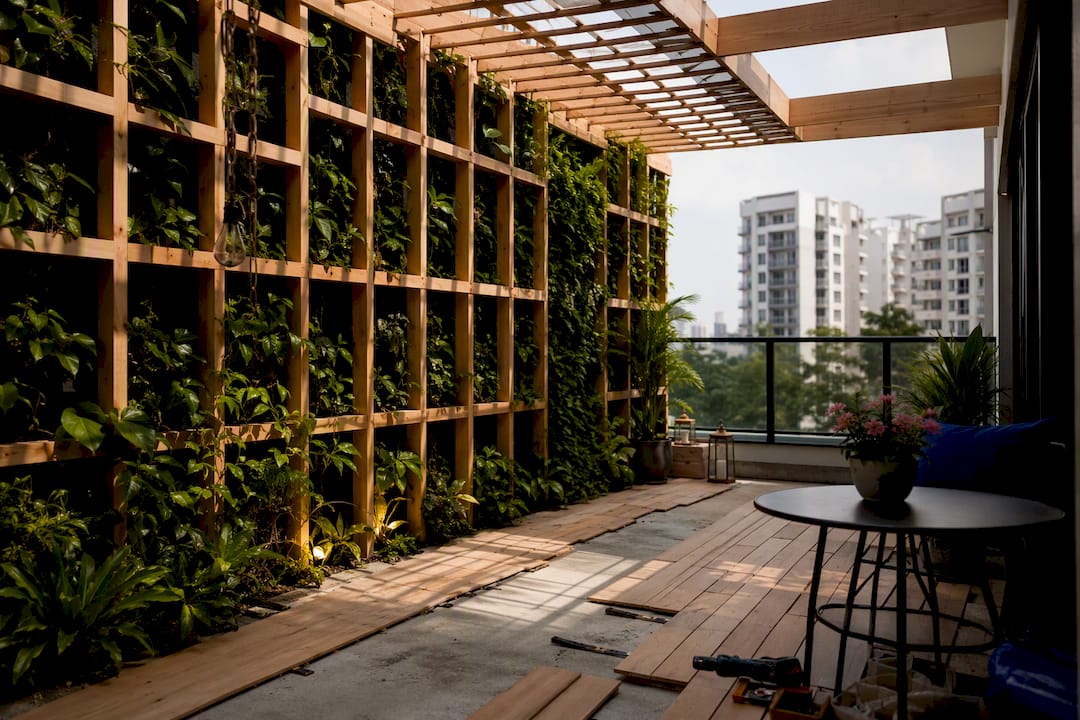
Seven idea types drive most balcony transformations: flooring, lighting and power, seating and furniture, privacy and vertical screening, container gardening, decor and finishes, and shade solutions. Every one of these has a renter-friendly version, from interlocking deck tiles you can lift up on moving day, to railing planters that need zero drilling.
Flooring: interlocking deck tiles or outdoor rugs over the existing surface
Lighting and power: solar string lights, plug-in lamps, or hardwired fixtures
Seating and furniture: folding, stacking, or multipurpose pieces
Privacy and vertical screening: bamboo panels, trellises, railing planters
Container gardening: lightweight pots matched to sun exposure
Decor and finishes: textiles, lanterns, and weatherproof accents
Pro Tip: If you only do one thing this year, replace the floor. It’s the single upgrade that changes how the entire space reads, and it’s the foundation every other idea sits on top of.
Key Takeaways
A successful balcony renovation follows a fixed sequence: resolve site constraints first, upgrade flooring before anything else, then layer lighting, furniture, privacy, and plants in that order.
Point | Details |
Confirm constraints first | Measure the space, check sun and wind exposure, and verify weight limits before buying anything. |
Floor first, always | Interlocking deck tiles or a UV-rated rug deliver the biggest visual change for the lowest cost. |
Match lighting to access | Choose solar or rechargeable lights when outlets or landlord approval are uncertain. |
Protect drainage and load | Keep scuppers clear and use lightweight soil mixes to avoid structural strain. |
Get a design-build quote | Monarch carpenters builds custom, modest-cost balcony features backed by strong client feedback. |
Table of Contents
Quick Planning Checklist Before You Buy Anything
Before you order a single tile, confirm five things: exact dimensions, sun and wind exposure, outlet access, your building or lease rules, and the balcony’s weight limit. These constraints decide almost everything downstream. No outlet nearby pushes you toward solar lighting. A strict no-drill clause rules out anchored trellises and points you to freestanding screens instead.
Measure width, depth, and door swing clearance
Note sun hours and prevailing wind direction
Check for outlets or approved wiring paths
Review lease or condo board restrictions in writing
Confirm the floor’s weight limit before adding soil, water, or furniture
Structural changes, roof balconies, or anything involving railings usually needs a licensed contractor and a permit, a point echoed in VELUX’s guidance on balcony renovations.
Pro Tip: Photograph the space from three angles and jot measurements on your phone. That five-minute habit saves an entire back-and-forth when you brief a contractor later.
Which Flooring Upgrade Gives the Best Return?
Flooring delivers the highest return of any single balcony upgrade, and it’s usually the first thing a visitor notices. Two documented renter-friendly balcony makeovers confirm this pattern; flooring came first in the sequence both times, and it did the most visual heavy lifting relative to cost.
Renters have real options. Interlocking deck tiles, the kind sold under names like IKEA RUNNEN, snap together with no adhesive and lift out clean when you move. Removable adhesive tiles work on smooth concrete. Outdoor rugs in UV-stable polypropylene handle sun without fading. Faux turf suits shaded balconies where real grass would rot.
Permanent tile, wood decking, or built-in systems make sense once you own the unit or plan to stay for years, but they raise structural questions a renter never has to answer.
Option | Warmth underfoot | Permanence | Weight | Weather resistance |
Interlocking deck tiles | High | Removable | Light | Good |
Outdoor rug | Medium | Removable | Very light | Good with UV-rated fabric |
Adhesive tiles | Medium | Semi-permanent | Light | Fair |
Permanent wood decking | High | Fixed | Heavy | Very good |
A basic tile set covers a small balcony for a modest cost. Mid-tier packages that add a rug layer or premium tile land between $300 and $1,000. Permanent decking or tile work can be more expensive once labor and structural review are included. Any added layer must preserve the original drainage slope, because water that can’t run off will find its way somewhere you don’t want it.
What’s the Safest Way to Add Lighting and Power?
Let outlet access and your landlord’s rules decide the lighting question before style does. Solar and rechargeable options are the safe default whenever wiring is uncertain, since they need nothing but sunlight and a hook.
Solar string lights: no wiring, easy to remove, weakest in low-light winters
Rechargeable lamps: portable, bring indoors during storms
Plug-in outdoor fixtures: need a weatherproof outlet cover
Hardwired sconces with dimmers: fixtures like Lutron Caseta give warm, adjustable light but require an electrician and, often, a permit or landlord sign-off
Hang string lights along the railing for ambient glow, then add one focused lamp near your seating for reading or dinner. Confirm any fixture carries a wet or damp-location rating, keep cords off walking paths, and bring battery lamps inside once temperatures drop.
How Do You Furnish a Small Balcony Without Crowding It?
Measure your clear floor area first, then place the largest piece before anything else. Multipurpose and foldable furniture wins on every small balcony because it does two jobs in the space of one.
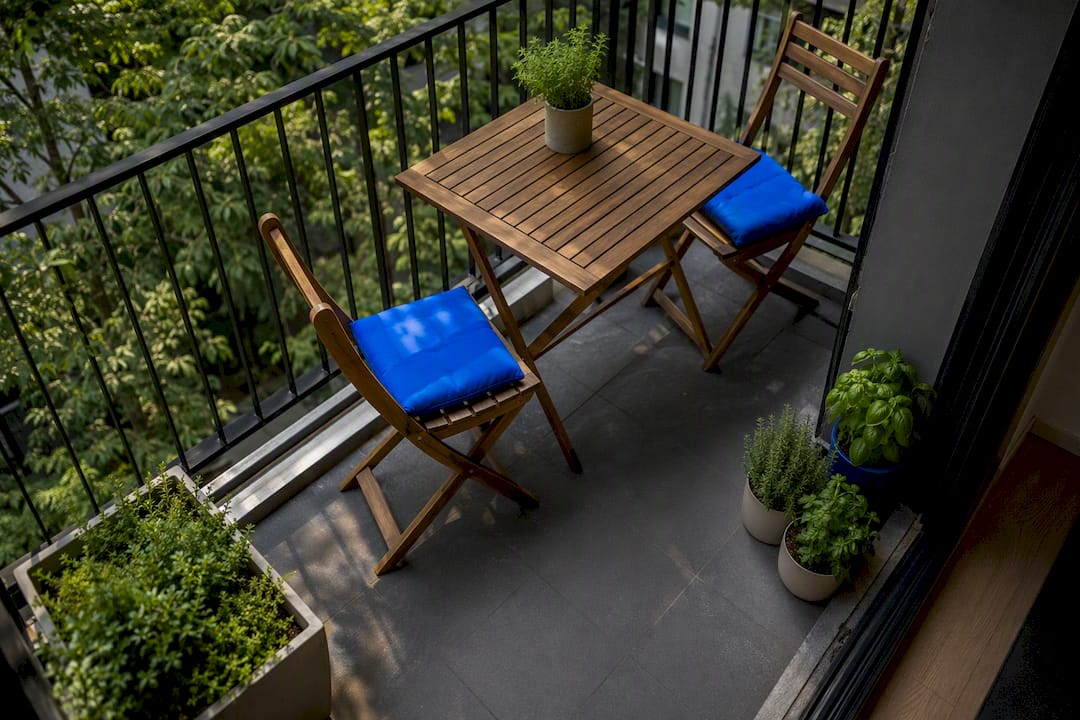
Folding bistro sets, the kind sold as Sunsdö by IKEA, tuck flat against a wall when not in use. Adjustable-height tables shift from coffee table to dining height in seconds. A bench with a lift-up seat hides cushions and hoses. Where the balcony is deep enough, a daybed or a hanging swing turns the space into a real lounge rather than a pass-through.
Keep at least 24 to 30 inches of clear circulation from the door, then build outward from there. Wall-mounted drop-leaf tables free up floor space entirely when folded down. Choose aluminum, teak, or HDPE resin wicker rated for outdoor use, not indoor pieces dragged outside. In windy, high-floor units, anchor lightweight chairs with removable outdoor-rated adhesive pads or weighted bases so a gust doesn’t send them over the rail.
How Do You Add Privacy Without Losing Floor Space?
Go vertical. Trellises, bamboo or reed screens, and railing-hung planters buy you privacy and visual height without eating into the floor plan you just carefully measured.
Freestanding bamboo screens: move with you, no attachment needed
Trellis with climbing vines: jasmine or clematis fill in over a season
Railing planter boxes: double as a soft privacy line and a garden bed
Vertical planter grids: stack greenery on a wall instead of the floor
Pro Tip: Pick screening that lets some light and air through rather than a solid wall. A fully blocked balcony feels smaller, not more private, and traps heat against the panel.
Renters should lean on freestanding units or rail-clip hardware and zip ties instead of drilled brackets, which keeps the whole setup fully reversible at move-out.
Which Plants Actually Survive on a Balcony?
Match the plant to your exposure and use lightweight soil, and you’ll avoid the two most common balcony-gardening failures: dead plants and overloaded floors.
For full sun, lavender, rosemary, and succulents tolerate heat and irregular watering. Partial shade suits ferns, begonias, and hostas. For railing color, trailing petunias or pothos spill nicely over the edge.
Exposure | Recommended plants | Container note |
Full sun | Lavender, rosemary, succulents | Terra cotta or ceramic fine |
Partial shade | Ferns, begonias, hostas | Deeper pots retain moisture |
Trailing/railing | Petunias, pothos | Lightweight rail planters only |
Trees and larger shrubs need deeper containers, and that depth adds up fast in wet weight. A soaked planter can weigh several times what it does dry, which is exactly why lightweight mixes using pumice or expanded shale matter on any balcony with a defined weight limit. Save heavy stone statuary for ground-floor patios, not upper-story balconies.
Pro Tip: Group pots on plant caddies with wheels. You can shift the whole cluster to chase sun in spring and tuck it against a wall before a storm.
What Decor Choices Make the Biggest Visual Difference?
Small decorative moves do outsized work. An outdoor rug, weather-resistant cushions, a lantern or two, and a piece of wall art can make a bare concrete slab feel like a finished room, echoing the idea of treating a balcony as a bite-size backyard.
UV-resistant polypropylene or polyester rugs and cushion covers
Removable adhesive tiles for a quick color layer underfoot
Faux turf where a green look matters more than a real lawn
One consistent color palette to avoid visual clutter in a tight footprint
Pick two or three colors and repeat them across textiles rather than mixing five unrelated patterns.
What’s the Best Order to Renovate a Balcony on a Budget?
Floor first, lighting second, furniture and privacy third, then plants and decor last. That order isn’t arbitrary. It follows the same sequence documented in real renter-friendly makeovers under $2,000, and it front-loads the change that has the most visual impact per dollar.
Measure and check constraints (weekend one)
Install deck tiles or a rug
Hang solar string lights or set a rechargeable lamp
Add a folding chair or bistro set
Layer in one or two potted plants
Budget tier | What it covers |
~$300 | Flooring only: deck tiles or a quality outdoor rug |
~$1,000 | Floor, lighting, seating, and a privacy screen |
~$2,000 | Full setup including plants, heaters, and finishing decor |
If money or time is tight, buy in that exact order and stop wherever your budget runs out. Tiles, lamps, and folding furniture all travel well if you move, which makes them a safer first purchase than anything fixed in place.
What Safety and Maintenance Rules Should You Never Skip?
Adding a floor layer, a heavy planter, or a fixed screen without checking drainage and load limits risks water pooling against your door or, worse, stress on the structure itself. The fix is boring but non-negotiable: confirm slope and weight before you commit to anything permanent.
Preserve the drainage slope and never block scuppers with tiles, rugs, or planters
Verify any railing-mounted hardware against your building’s rules
Anchor lightweight furniture and planters against wind
Follow fire-safety guidance for heaters, candles, or any open flame
Do a seasonal check twice a year: inspect drainage paths, bring cushions and battery lamps indoors before winter, and clear planter saucers so they don’t trap standing water. Technical guidance from the American Society of Concrete Contractors is worth a skim before any permanent flooring project.
Weatherproofing and Waterproofing Techniques
Water is the real enemy of a balcony, not sun. Every material you introduce needs a plan for what happens when it rains, because a beautiful setup that traps moisture underneath will rot, mold, or stain the surface below it within a season.
Start with the base. Interlocking deck tiles with slotted undersides let water pass through to the existing slope instead of pooling on top, which is why they outperform solid mats in wet climates. If you’re using an outdoor rug instead, choose one with a breathable weave and lift it periodically to let the concrete dry.
For furniture, look for teak, powder-coated aluminum, or HDPE resin wicker. Untreated wood and basic steel will warp, rust, or splinter within a year or two of direct exposure. Cushions need covers rated for outdoor use, typically a solution-dyed acrylic like Sunbrella, because standard upholstery fabric wicks moisture and grows mildew fast.
Planters need their own drainage plan. Elevate pots on small risers or feet so water doesn’t sit trapped against the tile surface, and use saucers you empty regularly rather than ones that hold standing water against the floor.
If you’re sealing any exposed wood trim or a built-in bench, use a marine-grade or exterior polyurethane sealant reapplied annually. Skipping this step is the single most common reason a promising balcony DIY looks tired within eighteen months. None of this requires a contractor, but it does require doing it before the first big storm, not after.
Seasonal Care and Protection Tips
A balcony that looks great in June needs a different routine by December, and skipping that shift is how good furniture gets ruined in one bad season.
Spring is reset season. Hose down tiles and rugs to clear winter grit, check planters for cracked pots from freeze-thaw cycles, and inspect any fabric for mildew that crept in over damp months. This is also the moment to re-anchor anything that shifted from wind.
Summer exposure is the toughest test for UV-rated fabrics and finishes. Rotate cushions periodically so fading is even, and water container plants more frequently since lightweight soils dry out faster than dense garden soil.
Fall is prep time. Bring in anything battery-powered, since cold weakens rechargeable lamp batteries fast. Trim back or relocate tender plants that won’t survive frost, and store cushions somewhere dry rather than leaving them out to absorb moisture.
Winter is about subtraction, not addition. Remove or store furniture that isn’t rated for freezing temperatures, empty and store ceramic planters that can crack when wet soil freezes, and clear drainage paths of leaves and debris before ice has a chance to form and block runoff.
Treat this cycle as maintenance, not a chore list you might skip. A ten-minute check each season protects the investment you made in flooring, furniture, and plants across the rest of the year, and it’s far cheaper than replacing a cracked planter or a moldy cushion.
Incorporating Shade Solutions (Awnings, Umbrellas)
A balcony without shade is only usable half the day in summer, which makes shade one of the highest-value additions after flooring and lighting.
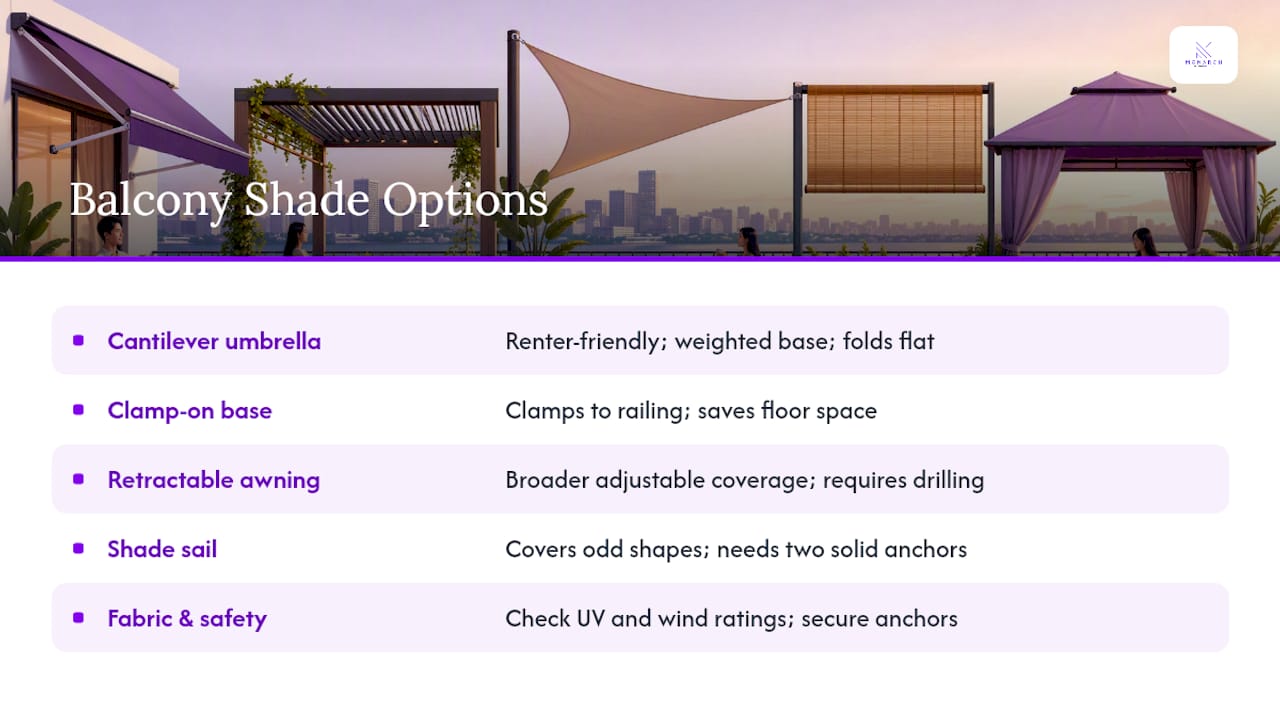
Cantilever or market umbrellas are the simplest renter-friendly option. A weighted base means no drilling, and most fold down flat for winter storage. For balconies with railings, a clamp-on umbrella base skips the weighted stand entirely and saves floor space.
Retractable awnings mounted to the building wall or window frame above the balcony give broader coverage and can often be adjusted by angle through the day, but they typically require drilling into the facade, which puts them firmly in landlord-approval or ownership territory rather than a weekend DIY project.
Shade sails stretched between two anchor points offer a modern look and cover an oddly shaped balcony better than a single umbrella can, though they need two solid attachment points and work best on balconies with railings, walls, or posts on opposite sides.
Whichever option you choose, check the fabric rating. Look for a UV protection factor rating specifically made for outdoor umbrellas and awnings, not decorative indoor fabric repurposed outside. And always confirm wind ratings. An unanchored umbrella in gusty conditions becomes a hazard for you and the balconies below, so weighted bases and secured awning arms aren’t optional extras. They’re the difference between shade that lasts a season and shade that ends up in a neighbor’s yard.
Author Perspective: Why a Floor-First Approach Works
I favor floor-first because it changes how the whole space feels the moment you finish, before a single chair or plant arrives. Two documented renter makeovers followed exactly this sequence and stayed under the same $2,000 ceiling. Monarch carpenters has seen the same pattern in modest-cost residential projects: get the base right, and the rest of the design follows naturally, with strong client feedback to match.
How Monarch Carpentry Design Studio Helps
Monarch carpenters turns modest balcony budgets into outdoor spaces that feel intentional, not improvised. Our in-house design and carpentry team handles everything from custom benches with concealed storage to full outdoor room layouts, and clients consistently tell us the finished result punches well above what they expected to pay.

We work the same way indoors and out: one collaborative process, in-house designers and carpenters, and cost-conscious packages built around what a space actually needs rather than what looks impressive on a proposal. If you’re weighing a built-in bench, a custom privacy screen, or a full balcony redesign alongside interior work, send us your measurements and a few photos through our design portfolio and quote page, and we’ll come back with a clear, honest estimate.
Sources
FAQ
What’s the cheapest way to renovate a balcony?
Start with flooring alone. A basic set of interlocking deck tiles covers a small balcony for under $300 and delivers the most visible change for the least money.
Do I need a permit for a balcony renovation?
Cosmetic changes like tiles, furniture, and planters rarely need a permit, but structural work, railing changes, or roof balconies typically require a licensed contractor and permit approval.
What lighting works best without an electrician?
Solar string lights and rechargeable lamps need no wiring or landlord approval, making them the default choice for renters and anyone without easy outlet access.
How do I keep a balcony renovation renter-friendly?
Stick to removable, non-adhesive products: interlocking deck tiles, freestanding screens, folding furniture, and railing planters that require no drilling and pack up when you move.
Who can help design a custom balcony upgrade on a budget?
Monarch carpenters specializes in cost-conscious, design-build projects, including custom carpentry for small outdoor spaces, and offers quotes based on your measurements and photos.
Recommended
Comments