
What Is Interior Design? A Beginner's Guide for Homeowners

TL;DR:
Interior design is a multidisciplinary practice focusing on planning for safety, function, and human experience beyond just aesthetics. It involves technical processes, code compliance, and thoughtful layout to improve daily living comfort and efficiency in residential spaces. Working with qualified designers ensures long-term performance and safety, especially during structural and infrastructural decisions.
Most people assume interior design is about picking paint colors and arranging furniture. That assumption costs homeowners time, money, and livable space every single day. What is interior design, really? It is a specialized discipline that sits at the intersection of art, science, and human behavior, shaping how you feel, move, and live inside your own home. From lighting placement to traffic flow, from safety and health considerations to the quiet joy of a well-organized kitchen, interior design touches everything. This guide unpacks the fundamentals so you can make smarter decisions about your space.
Table of Contents
Key Takeaways
Point | Details |
Design is not decorating | Interior design covers planning, safety, structure, and function, not just furnishings and aesthetics. |
Health and safety are built in | Qualified designers apply building codes, accessibility standards, and hazard reduction to every project. |
Process beats spontaneity | Planning layout and lighting before choosing finishes saves money and avoids costly rework. |
Phases guide every project | Good design moves through discovery, concept, development, project management, and post-completion review. |
Professionals bring measurable value | Working with a trained designer produces spaces that perform well for years, not just look good on day one. |
What is interior design, really?
The simplest definition of interior design, as recognized by professional bodies, is this: it is a specialized practice focused on planning and designing interior environments to support health, safety, welfare, and human experience. That definition comes from CIDQ, one of the leading credentialing organizations for interior designers globally, and it deliberately puts health and safety before aesthetics.
This matters because the common definition most people use stops at “making rooms look nice.” The actual practice goes much further.
Interior design vs. interior decorating
These two terms are used interchangeably all the time, but they describe very different scopes of work. According to Merriam-Webster’s definition, interior design involves planning and supervising architectural interiors, while decorating focuses primarily on furnishing and ornamentation. In practice, this means:
Interior designers develop spatial layouts, coordinate structural and mechanical systems, produce technical drawings, and work within building codes and safety regulations.
Interior decorators select furniture, textiles, and accessories to enhance a space that already exists.
Neither role is lesser. They serve different needs. When you are renting a furnished apartment and want to refresh it, a decorator may be all you need. When you are renovating a home from the studs out, a trained designer is the right partner.
The definition of interior design also includes a phased process. CIDQ describes this as moving from discovery and programming, through concept development and design development, into project management and post-occupancy evaluation. Each phase has deliverables. Some projects even require permit-ready construction drawings, which is territory far beyond what most people picture when they think of “designing a room.”
Understanding these interior design basics is not about impressing people at dinner parties. It is about knowing what you are actually paying for and what you should expect when you hire someone to transform your home.
How design shapes the way you live at home
This is where the importance of interior design becomes personal. Think about the last time you felt frustrated in your own kitchen. Maybe the counter space ran out too fast, the lighting made everything look gray, or you kept bumping into the island while carrying groceries. Those are not small annoyances. They are design failures, and thoughtful layout and planning directly affect how efficiently and comfortably you move through a space every day.
Good residential design addresses a specific set of decisions that most homeowners overlook until something goes wrong:
Circulation paths. The distance between key areas in a kitchen, the clearance around a bed, and the flow from living room to dining room all affect how naturally your home functions for two people or a family.
Lighting layers. Ambient, task, and accent lighting serve entirely different purposes. A room with only one light source forces you to live at one emotional register all day.
Storage placement. Storage designed around actual behavior, where you drop your keys, where you prep food, where laundry accumulates, reduces friction in daily life in ways that feel almost invisible.
Mood and wellbeing. Color temperature, natural light access, and material choices affect stress levels and focus. Residential spaces that support rest actually help you rest better.
Pro Tip: Before you buy a single piece of furniture, spend one week writing down the moments in your home where you feel frustrated or inefficient. Those notes will tell you more about your design needs than any mood board.
The impact of design on comfort, efficiency, and user experience is not abstract. It shows up in how rested you feel after a weekend at home, how quickly your morning routine runs, and whether your space feels like yours or just a place where you store your things.
Understanding soft furnishings and their role in this equation, including curtains, rugs, cushions, and upholstery, adds another layer of comfort and acoustic control that purely hard finishes cannot deliver.

Safety, codes, and what non-designers miss
Here is where interior design separates itself most sharply from general decorating, and where the stakes get real. Health and safety are central to interior design practice, including the application of building codes, fire safety regulations, accessibility compliance, and the reduction of physical hazards inside spaces.
Most homeowners in Singapore think of these considerations as commercial concerns. Sprinkler systems for offices. Emergency exits for restaurants. That instinct is understandable, but it misses several residential risks that trained designers actively manage.
Slip and fall hazards. Material choices for flooring in wet areas, bathrooms, and entryways have direct safety implications. Surface texture, grout width, and slip ratings are design decisions, not just aesthetic ones.
Egress and circulation. Even in homes, the clearance around furniture, the width of corridors, and access to exits during an emergency matter. Designers factor these in from the earliest planning stages.
Accessibility. Designing for aging in place or for a household member with mobility considerations requires spatial adjustments that cannot be retrofitted cheaply after the fact.
Load-bearing awareness. Removing a wall for an open-plan living area is a popular renovation move. Without understanding which walls are structural, it is also a dangerous one.
CIDQ notes that designers working in regulated environments must understand fire and life safety codes, occupancy loads, and ADA accessibility standards, and that residential practice, while less formally regulated, still benefits from this knowledge base significantly. The NCIDQ certification exists precisely to confirm that a designer has the technical grounding to protect public health and safety, not just deliver a beautiful result.
The interior design process from concept to completion
Understanding the phases of a residential project changes how you show up as a client and helps you avoid the most expensive mistakes homeowners make.
Phase | What happens | Common client mistake |
Discovery and programming | Needs assessment, site measurement, lifestyle analysis | Skipping this to “save time” |
Concept development | Mood boards, spatial concepts, material direction | Falling in love with one look too early |
Design development | Technical drawings, product selection, supplier coordination | Changing direction after approvals |
Project management | Contractor coordination, site visits, timeline management | Assuming contractors will self-manage |
Post-occupancy review | Evaluating what worked and what needs adjustment | Never following up after move-in |
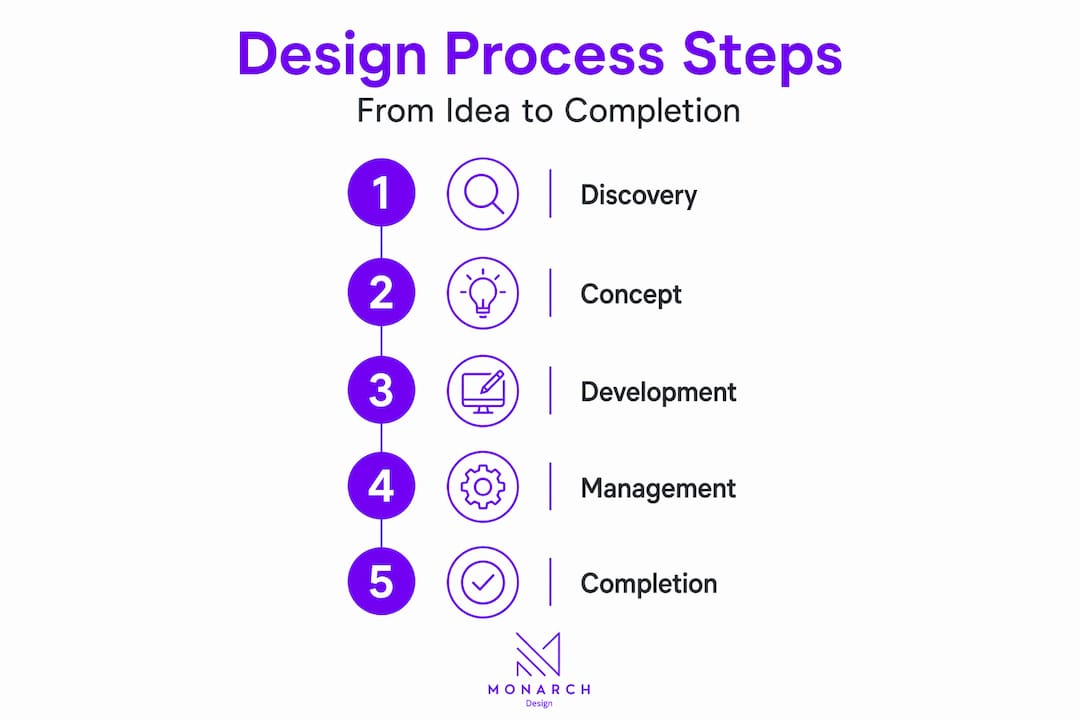
The phased approach matters because layout, electrical, and lighting infrastructure decisions must be locked in before any finishes or furniture are chosen. This is the single most common source of budget blowouts in residential renovations. A couple who falls in love with pendant lights over their kitchen island and then discovers the electrical rough-in is in the wrong location is looking at replastering, repainting, and days of additional labor.
Creating a design mood board early in the concept phase helps you and your designer align on direction before money is spent on materials or products. It is one of the lowest-cost steps with the highest return in clarity.
Pro Tip: Ask your designer to walk you through the permit and technical drawing stage even if your renovation is modest. Understanding what is planned structurally and mechanically helps you make informed decisions and spot gaps before contractors begin work.
Working with a designer who has completed residential projects across different home types also gives you access to lessons learned that no amount of Pinterest browsing replicates.
My take on why this distinction actually matters
I have watched homeowners make the same mistake repeatedly. They treat interior design as the last step in a renovation, the part where you choose cushions and hang artwork, when it should be the first. The result is rooms that look finished but feel wrong. A sofa facing the wrong direction. A reading nook with no task light. A bathroom that is visually beautiful but damp and poorly ventilated six months in.
Interior design applies evidence-based methods and technical coordination to spaces. That is not marketing language. It means a trained designer measures your specific patterns of movement, considers how natural light shifts across your rooms throughout the day, and makes decisions that account for how you actually live, not how you imagine you might.
The scope of interior design professionals spans residential and commercial environments, with regulation varying by jurisdiction. In Singapore, where space comes at a premium and renovation decisions carry long-term financial weight, the gap between a well-designed home and a poorly planned one is significant. I have seen couples spend more correcting early mistakes than they would have spent engaging a qualified designer from day one.
My strongest advice is this: treat design as a discipline with a process, not a phase you rush through. The rooms that genuinely improve your quality of life are the ones where someone thought carefully about how you would use the space before anyone picked up a paintbrush.
— Seth Wayne
Work with Monarch carpenters on your next home project
If this guide has shifted how you think about design, the next step is finding a studio that applies these principles with both craft and care for your budget.

Monarch carpenters is a design and carpentry studio based in Singapore with a reputation built on delivering refined residential interiors at accessible price points. Clients consistently highlight the combination of thoughtful design and honest pricing in their feedback, and that feedback reflects a deliberate philosophy. At Monarch carpenters, the goal has always been to make well-designed homes available to more people, not just those with premium budgets.
Whether you are planning a full renovation or a focused refresh of your living and dining areas, the team brings technical expertise and bespoke carpentry together under one roof. Explore what is possible for your home at the Monarch carpenters design studio and see why clients keep recommending the studio to their friends and family.
FAQ
What is the definition of interior design?
Interior design is a specialized discipline focused on planning interior environments to promote health, safety, welfare, and human experience. It goes beyond decoration to include spatial planning, technical drawings, and code compliance.
How does interior design differ from interior decorating?
Interior designers plan and supervise architectural interiors, including structural and system coordination, while decorators focus primarily on furnishing and surface aesthetics. The two roles overlap but serve different project scopes.
Why does interior design matter for residential spaces?
Thoughtful design directly affects how comfortably and efficiently you live at home, influencing everything from daily routines and storage to mood, lighting quality, and long-term safety.
What are the main phases of the interior design process?
The process typically includes discovery and programming, concept development, design development, project management, and post-occupancy evaluation. Each phase builds on the previous one and helps avoid costly late-stage changes.
Do I need a qualified interior designer for a home renovation?
For structural changes, full renovations, or projects involving electrical and lighting infrastructure, working with a qualified designer reduces risk, avoids costly rework, and produces spaces designed around how you actually live.
Recommended
Comments