
Japandi Design Style: A Practical Guide for Home Interiors
- Monarch

- 13 hours ago
- 14 min read
TL;DR:
Japandi is a style that blends Japanese minimalism and Scandinavian coziness through natural materials and purposeful simplicity. It emphasizes warm, earthy palettes, layered textures, and low-profile furniture to create a calm, lived-in atmosphere that is durable and authentic. Starting with small, affordable updates like natural rugs and warm lighting can help achieve its inviting essence gradually.
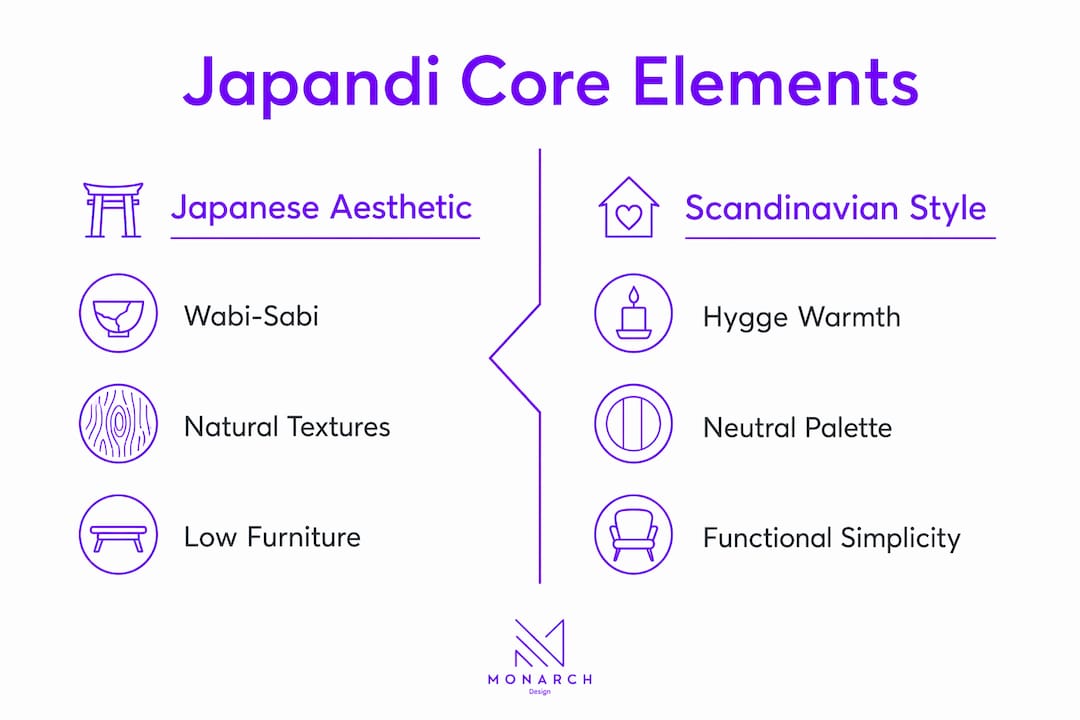
Japandi is a hybrid interior style that blends Japanese minimalism, rooted in the philosophy of wabi-sabi, with Scandinavian warmth and the cozy ethos of hygge. The result is a lived-in minimalism that feels orderly without feeling cold, and personal without feeling cluttered.
If you want a quick reference before diving deeper, here are the five traits that define the style:
Neutral, earthy palette: warm off-whites, greige, clay, sage, and charcoal accents
Natural materials: light wood, bamboo, stone, linen, wool, and handmade ceramics
Low-profile furniture: clean silhouettes, functional forms, no excess ornamentation
Purposeful minimalism: every object earns its place; storage hides what doesn’t
Craftsmanship over quantity: one well-made piece beats three disposable ones
TL;DR: Japandi suits anyone who wants a calm, lived-in home without the sterility of strict minimalism. The single fastest swap? Replace a synthetic area rug with a natural wool or linen one. The texture shift alone moves a room noticeably closer to the Japandi aesthetic.
Table of Contents
What Is Japandi Design Style, and Where Did It Come From?
The term “Japandi” is a portmanteau of Japan and Scandi, and it gained real design-world prominence around 2016. But the cultural exchange it draws from stretches back roughly 150 years, to the 19th century, when Japanese aesthetics began influencing Scandinavian artists and craftspeople through trade and exhibition exposure. Both cultures had already developed deep, independent traditions around natural materials, functional design, and a respect for quiet spaces. Japandi is, in that sense, less an invention and more a recognition of a long-running conversation.
The philosophical underpinnings matter here. Wabi-sabi, the Japanese aesthetic of finding beauty in imperfection and the natural aging of things, shapes Japandi’s tolerance for irregularity and its preference for handmade over machine-perfect. Hygge, the Danish concept of warmth, coziness, and togetherness, pulls in the opposite direction just enough to prevent the style from feeling austere. Together, they produce something neither tradition achieves alone.
That “lifetime ethos” is what separates Japandi from trend-driven decorating. Pieces are chosen to age gracefully, not to be swapped out when the next color of the year arrives.
The core elements that define Japandi interiors
Understanding what Japandi looks like in practice means knowing which elements are non-negotiable and which are flexible. The list below covers the essentials; the paragraphs that follow explain what each one actually means for purchasing decisions.
Minimalism with warmth
Neutral, earthy color palette
Natural materials and layered textures
Low-profile, clean-lined furniture
Emphasis on craftsmanship and longevity
Deliberate use of negative space
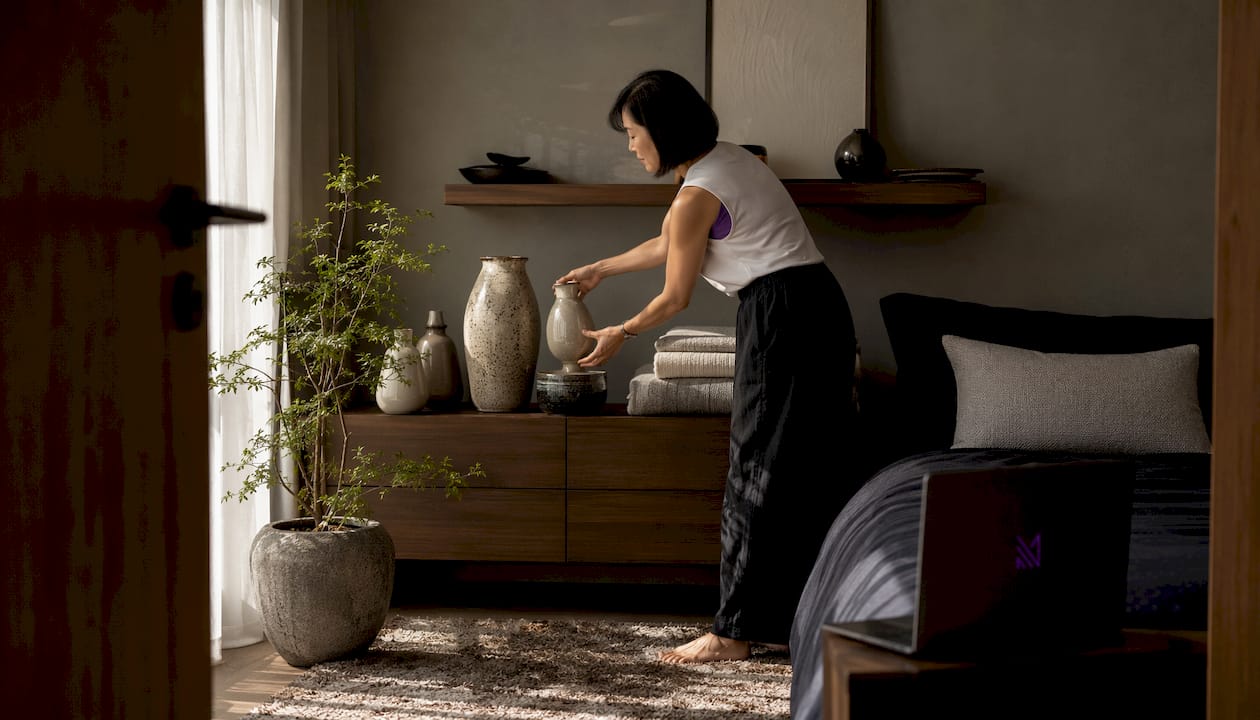
Minimalism with warmth is the defining tension of the style. Japandi interiors are clutter-free but never cold; every piece has a purpose while still feeling inviting. The warmth comes not from more objects but from better materials and layered textures.
Natural materials do the heavy lifting. Wood, linen, wool, ceramics, and stone add texture and authenticity in ways that synthetic alternatives simply cannot replicate. When you run your hand across a raw oak surface or a handthrown ceramic bowl, you feel the material’s character. That tactile quality is central to the Japandi experience.
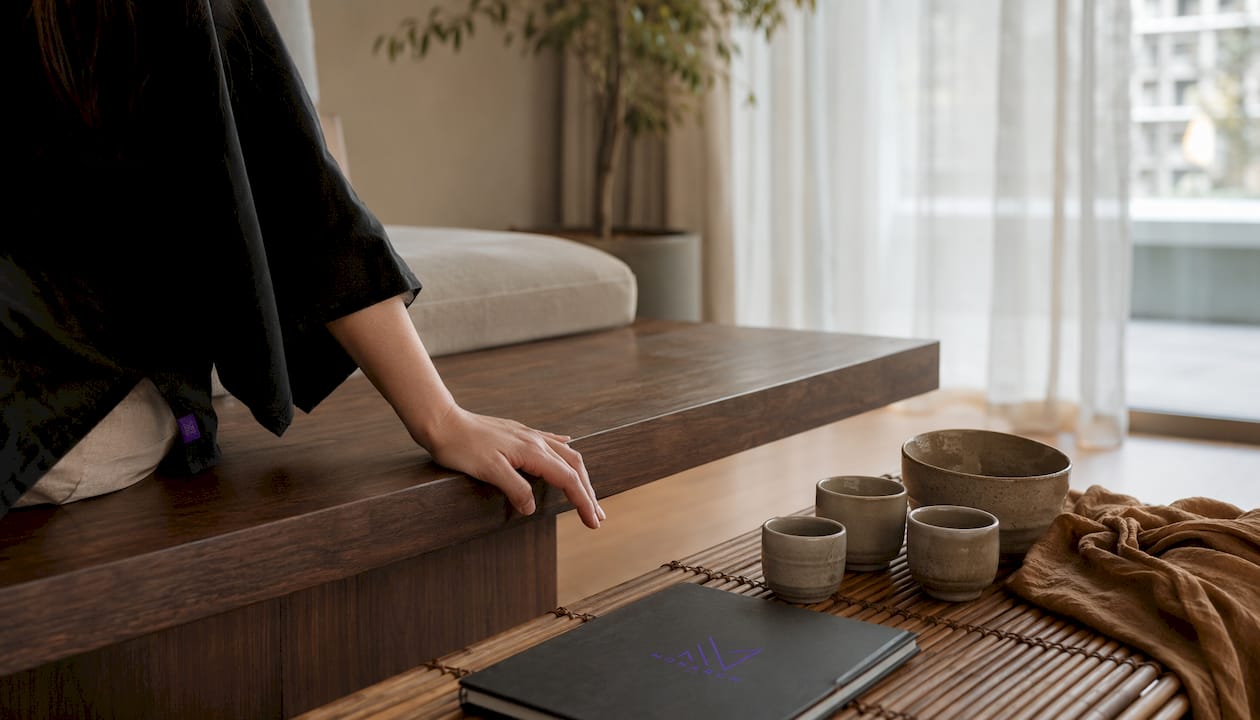
Low-profile furniture keeps sightlines open and rooms feeling spacious. In Japanese philosophy, furniture close to the ground reinforces a connection with the earth. Practically, it also makes small rooms read as larger.
Craftsmanship means prioritizing quality over quantity. A single well-jointed wooden bench with visible grain tells more of a story than a full matching set from a fast-furniture retailer.
Pro Tip: To get warmth without visual clutter, layer textures rather than objects. A linen throw over a wool cushion on a raw-wood sofa creates depth through material contrast alone. No extra decorative items needed.
What colors and materials make Japandi feel cohesive?
The Japandi color palette layers warm Scandinavian neutrals with deeper Japanese earthy tones. Think warm whites, soft grays, beige, greige, clay, and sage as your base. Charcoal and black appear as grounding accents, not as dominant tones. Black shows up on window frames, cabinet hardware, or a single pendant light, where it anchors the palette without overwhelming it.
For paint, matte or low-sheen finishes are the right call. They absorb light rather than reflect it, which softens the room and keeps the palette feeling grounded. If you want a darker accent wall, charcoal or deep clay works well on a single wall behind a bed or sofa. Keep the remaining walls in a warm off-white or greige, and the contrast reads as intentional rather than heavy.
Staple material pairings worth knowing:
Light oak + clay ceramics: the most common Japandi pairing; warm without being busy
Walnut + linen textiles: richer and slightly more Japanese in feel
Bamboo + stone: works especially well in bathrooms and kitchens
Raw concrete + wool: a more urban interpretation that still reads as Japandi
Avoid glossy surfaces, chrome hardware, and anything that reads as overtly modern or industrial. The goal is materials that look like they came from the earth, not a factory floor.
How to choose furniture and plan your layout
Low-profile furniture with clean silhouettes is the spatial foundation of any Japandi room. A low sofa, a slatted wooden coffee table, and a bed frame that sits close to the floor all create the same effect: the room breathes. Ceilings feel higher. Corners feel less cramped.
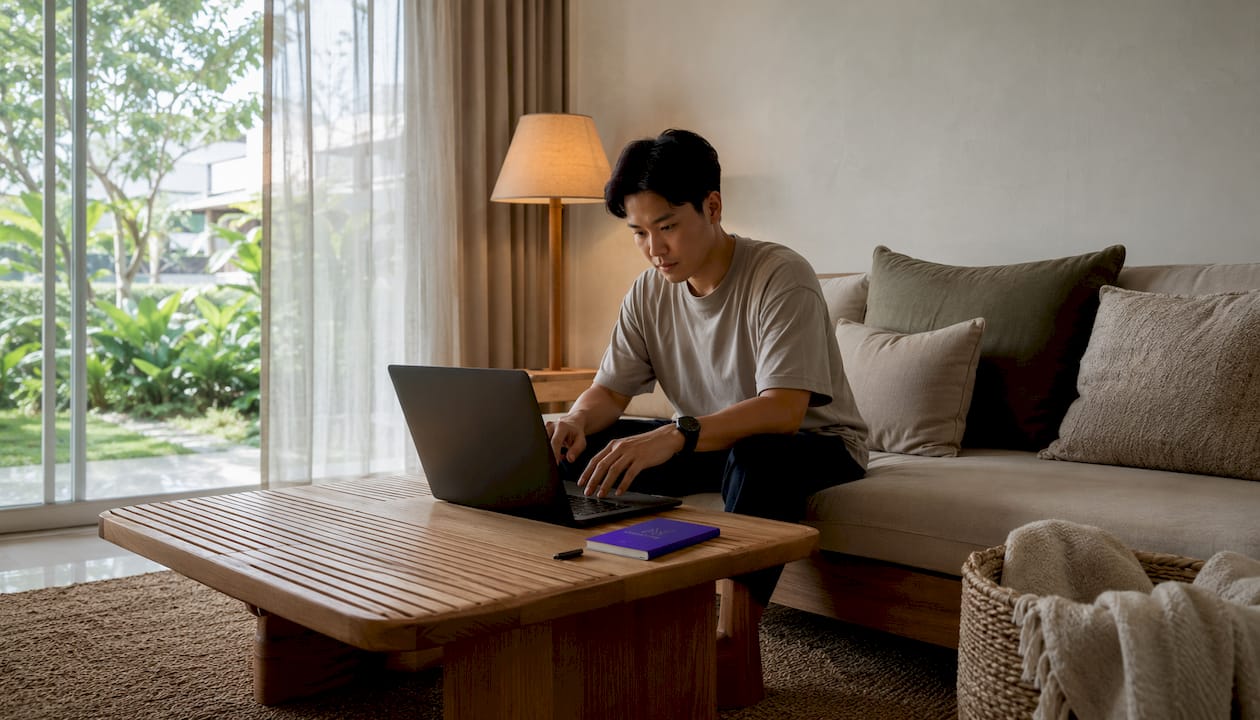
When buying furniture, run through this quick mental checklist before committing:
Measure first. Low furniture in a room with standard 8-foot ceilings can look proportional; in a room with 7-foot ceilings, it can feel oppressive. Know your ceiling height before you shop.
Check the material. Solid wood, rattan, and natural stone age well. Veneers and MDF do not. If a piece is going to be used daily, the material matters more than the price tag.
Look at the joinery. Visible dovetail joints, mortise-and-tenon construction, or hand-finished edges signal craftsmanship. Staples and glue do not.
Think about longevity. Will you still want this piece in ten years? Japandi’s whole premise is that you buy fewer things and keep them longer.
For layout, the principle is breathing room. Leave generous space between pieces. Pull furniture slightly away from walls. Let natural light reach the floor. Multipurpose pieces, a storage ottoman, a bench that doubles as a side table, reduce the number of objects in the room without reducing function.
Lighting deserves its own note. Paper or fabric pendants, warm-toned bulbs (around 2700K), and floor lamps with linen shades all fit the aesthetic. Recessed lighting works as a base layer, but Japandi rooms need at least one warm, low-hung light source to avoid feeling clinical. For Japandi-style bedside lighting ideas, soft pendant or table lamps in natural materials are the most consistent choice.
How to bring Japandi into your home, room by room
Start with one room. Trying to convert an entire home at once leads to inconsistent results and unnecessary spending. Pick the room where you spend the most time, and work through these steps.
Living room
Replace a synthetic rug with a wool or jute flat-weave in a neutral tone.
Swap a bulky sofa for a low-profile one in a natural fabric (linen, boucle, or cotton).
Add a wooden coffee table with visible grain; remove any decorative objects that don’t have a function.
Introduce one indoor plant, a fiddle-leaf fig or a simple potted bamboo, near a window.
Bedroom
Lower the visual weight by switching to a low bed frame in solid wood or rattan.
Use neutral bedding in linen or cotton; avoid patterns.
Replace overhead lighting with a warm bedside lamp in a natural material.
Clear the nightstand to one or two objects maximum.
Kitchen
Replace cabinet hardware with matte black or brushed brass pulls.
Clear countertops of everything except daily-use items.
Add a small ceramic bowl or wooden cutting board as the only decorative element.
Use open shelving sparingly, with a few handmade ceramics displayed intentionally.
Bathroom
Introduce a wooden bath mat or teak stool.
Swap plastic dispensers for ceramic or stone vessels.
Add a single plant that tolerates humidity, such as a snake plant.
Entry
Install a low wooden bench with hidden storage underneath.
Add a simple hook rail in matte black or natural wood.
Keep the floor clear; one small plant or a single piece of art is enough.
Budget swaps under $200: a new wool throw, a set of handmade ceramic mugs displayed on open shelving, a paper pendant light, or a bamboo storage basket that hides clutter behind a clean exterior. These small changes shift the room’s material story without a full renovation.
When to invest more: seating and bed frames are worth the higher price. You interact with them daily, and quality construction shows. Textiles and accessories can come later, sourced gradually from local makers or artisan markets.
Common Japandi decor mistakes and how to avoid them
Getting Japandi wrong usually comes down to one of five recurring errors.
Over-minimalism that reads as cold. Do: layer boucle, linen, and raw wood for warmth. Avoid: bare white walls with no texture and a single piece of furniture.
Matching everything perfectly. Do: mix light oak with darker walnut accents and curated “found” pieces with slight irregularities. Avoid: buying a complete matching furniture set from a single retailer.
Using cheap faux-natural materials. Do: invest in one real wood or stone piece. Avoid: laminate “wood-look” surfaces and plastic wicker, which undermine the entire material story.
Ignoring texture. Do: layer at least three different natural textures in every room (wood, textile, ceramic). Avoid: a room where every surface has the same finish.
Poor lighting. Do: use warm-toned bulbs and at least one low-hung pendant or floor lamp. Avoid: cool-white overhead lighting, which makes any neutral palette feel institutional.
The “found pieces” approach is worth emphasizing. Japandi does not require a perfectly curated showroom. A vintage ceramic bowl, a worn linen cushion, or a secondhand wooden stool with a small repair adds wabi-sabi character. Imperfection, when it comes from genuine use, is the point.
How does Japandi differ from wabi-sabi, Scandinavian design, and minimalism?
Wabi-sabi and hygge are the philosophical parents of Japandi, but they are distinct approaches in their own right. Wabi-sabi is a Japanese aesthetic that finds beauty specifically in imperfection, incompleteness, and the natural aging of materials. A cracked glaze on a ceramic bowl, a weathered timber beam, a hand-stitched textile with visible irregularities: these are wabi-sabi at its purest. Japandi includes that sensibility but tempers it with Scandinavian order and brightness.
Hygge, the Danish concept of warmth and togetherness, contributes the cozy, inviting quality that prevents Japandi from feeling sparse. It is less about objects and more about atmosphere: soft lighting, comfortable seating, and spaces that feel good to be in with other people.
Style | Palette | Texture | Warmth | Objects |
Japandi | Earthy neutrals, black accents | Layered natural textures | High, through materials | Curated, functional, some “found” |
Wabi-sabi | Aged, muted, irregular tones | Rough, imperfect surfaces | Moderate, introspective | Worn, aged, deliberately imperfect |
Scandinavian | Bright whites, soft pastels | Soft textiles, smooth wood | High, social and cozy | Functional, cheerful, some decorative |
Minimalism | White, monochrome | Smooth, uniform | Low, often clinical | Strictly functional, very few |
Choose wabi-sabi when you want aged, irregular surfaces and a deeply introspective atmosphere. Choose Scandinavian when you want bright, airy warmth and a social, family-friendly feel. Choose plain minimalism when function is the only priority and you want zero visual noise. Choose Japandi when you want all three qualities in balance: calm, warm, and beautifully lived-in.
What does Japandi look like? Examples and moodboard guidance
Building a moodboard before you shop or commission anything saves time and money. Here is a practical checklist for what to collect:
Materials: photos of light oak grain, raw linen, handthrown ceramics, and smooth stone surfaces
Lighting: images of paper pendants, warm-toned floor lamps, and rooms where natural light hits a wooden floor
Silhouette: low sofas, slatted bed frames, simple wooden dining tables with tapered legs
Textures: close-ups of boucle fabric, woven wool, and raw wood joinery
One accent color: a single sage green cushion, a clay-colored vase, or a charcoal throw to ground the neutral base
Suggested image search queries to build your reference library: “Japandi living room natural light,” “wabi-sabi ceramic tableware,” “Scandinavian low bed frame wood,” “Japandi kitchen open shelving,” and “warm minimalist bedroom linen bedding.”
When reviewing room photos, pay attention to three things: where the light source is (natural light from one direction is more Japandi than even overhead lighting), whether the furniture sits low relative to the ceiling, and whether you can count the visible objects on one hand. If a room passes all three checks, it is worth saving.
For editorial photo selection, prioritize close-ups of joinery and material texture alongside one wide-angle room shot that shows the full layout and sightlines. The combination communicates both craftsmanship and spatial quality.
Sourcing durable pieces and caring for Japandi materials
Japandi’s core promise is longevity. That means sourcing materials that age well and maintaining them so they do.
Sourcing checklist: Look for solid wood (not veneer), natural fiber textiles (linen, wool, cotton), handmade ceramics with visible maker marks, and rattan or bamboo from responsible suppliers. Where certifications matter to you, FSC-certified wood and OEKO-TEX-certified textiles are reliable starting points.
Maintenance by material:
Wood: wipe with a damp cloth, oil annually with a food-safe or furniture oil, avoid prolonged water exposure
Linen and wool: hand-wash or gentle machine cycle, air-dry flat, embrace natural wrinkling as part of the texture
Stone: seal porous stone annually, wipe spills immediately, avoid acidic cleaners
Bamboo: dust regularly, keep away from direct heat sources, re-oil if it begins to dry out
The tradeoff between low-cost imitations and one well-made piece is straightforward in practice. A solid oak coffee table maintained properly will outlast three generations of MDF alternatives. The upfront cost is higher, but the cost per year of use is usually lower, and the piece develops character rather than deteriorating.
Interior doors and built-in carpentry elements follow the same logic. Well-crafted interior doors and millwork can shift a room’s entire material register, and they are worth treating as long-term investments rather than afterthoughts.
A practical checklist for choosing lasting Japandi pieces
Use this framework before any significant purchase to make sure it aligns with Japandi principles and your budget.
Material authenticity. Is it solid wood, natural stone, or real linen? Or is it a synthetic approximation? If you cannot confirm the material, ask before buying.
Joinery details. Look for visible craftsmanship: dovetail joints, hand-finished edges, or maker signatures on ceramics. These signal durability and intentionality.
Maker transparency. Can you find out who made it and where? Local makers and small studios are often more transparent, and their pieces carry more character.
Repairability. Can the piece be repaired if it breaks? Solid wood can be sanded and re-oiled. A veneer cannot. A ceramic can be repaired with kintsugi. Plastic cannot.
Resale or heritage value. Would someone else want this piece in twenty years? If the answer is yes, it is probably worth the investment.
Budget prioritization: spend the most on seating and bed frames first. These are the pieces you use every day, and quality construction is most noticeable here. Textiles and accessories can be sourced gradually, from local artisan markets, estate sales, or small ceramics studios. For bespoke carpentry, built-in storage, and custom joinery, commissioning a specialist is worth considering once the core furniture is in place. Monarch carpenters’ bespoke furniture commissioning guide walks through exactly what to expect from that process.
For U.S.-based sourcing, look for local woodworkers on Etsy’s handmade marketplace, regional ceramics studios, and furniture makers who list their materials and joinery methods openly. Antique and vintage markets are also reliable sources for the “found pieces” that give Japandi its wabi-sabi character.
Key Takeaways
Japandi works because it combines Japanese wabi-sabi and Scandinavian hygge into a warm, functional minimalism built on natural materials, craftsmanship, and purposeful restraint.
Point | Details |
Start with one room | Apply Japandi principles to your most-used space first before expanding to the whole home. |
Texture creates warmth | Layer boucle, linen, and raw wood to prevent minimalism from reading as cold or clinical. |
Invest in seating and bed frames | These daily-use pieces benefit most from quality construction and natural materials. |
Found pieces add character | Curated vintage or handmade objects with slight irregularities reinforce wabi-sabi authenticity. |
Craftsmanship outlasts trends | One well-made solid wood piece will outlast and outperform multiple fast-furniture alternatives. |
Why Japandi rewards patience more than perfection
There is a tendency, especially among first-time Japandi adopters, to treat the style as a checklist: buy the right rug, paint the walls greige, add a low sofa, done. What that approach misses is the underlying philosophy. Japandi is not a look you install; it is a way of editing. The rooms that read most convincingly as Japandi are usually the ones that took the longest to assemble, because each piece was chosen deliberately and kept only if it earned its place.
The comparison with strict minimalism is instructive. Minimalism, at its most rigorous, asks you to remove until nothing is left to remove. Japandi asks a different question: what stays because it is genuinely useful, beautiful, or meaningful? That distinction allows for the worn linen throw, the chipped ceramic bowl, the secondhand wooden stool. These objects would fail a minimalist audit. In Japandi, they are the point.
Hygge’s contribution is often underestimated here. The Scandinavian emphasis on warmth and togetherness means Japandi rooms should feel good to be in with other people, not just to photograph. If a space looks right in photos but feels uncomfortable to sit in for two hours, something is off. The fix is almost always more texture, warmer lighting, or both.
At Monarch carpenters, the projects that generate the most consistent client feedback are the ones where bespoke carpentry, built-in storage, and natural material choices work together to create exactly this balance: calm, warm, and genuinely livable at a cost that does not require a full renovation budget. The warm minimalism portfolio shows what that looks like in practice.
Useful sources for deeper reading and visual research
Architectural Digest: Japandi Style 101 — expert designer commentary and a strong overview of the style’s defining characteristics; good starting point for understanding the “lived-in minimalism” framing.
Apartment Therapy: What Is Japandi? — practical palette and color guidance with real room examples; useful for moodboard building.
The Spruce: Japandi Interior Design Guide — room-by-room application advice with furniture and layout specifics.
Good Housekeeping: Japandi Style Explained by Designers — designer quotes and a clear breakdown of how Japandi differs from adjacent styles.
Wikipedia: Japandi — reliable origin timeline and term history; useful for understanding the 19th-century cultural exchange roots.
Monarch carpenters: Warm Minimalism Portfolio — real-world bespoke carpentry examples that apply Japandi principles at modest cost; useful for communicating the look to a designer or carpenter.
Recommended image search queries for moodboards: “Japandi bedroom natural linen,” “wabi-sabi handmade ceramics,” “Japandi living room low sofa wood,” “Scandinavian hygge warm lighting,” “Japandi kitchen open shelving ceramics.”
Keywords for commissioning or shopping: “bespoke Japandi cabinetry,” “solid oak low bed frame,” “handmade ceramic tableware,” “natural linen upholstery fabric,” “FSC-certified wood furniture.”
FAQ
What does Japandi style look like in a room?
A Japandi room features low-profile furniture in natural wood, a neutral earthy palette of warm whites and soft grays, layered natural textures like linen and wool, and very few decorative objects. Natural light and warm-toned lighting are central to the atmosphere.
What are common Japandi decor mistakes?
The most frequent mistakes are over-minimalism that reads as cold (fixed by layering textures), matching all furniture from a single set (fixed by mixing materials and adding found pieces), and using faux-natural materials like laminate wood-look surfaces, which undermine the material authenticity the style depends on.
Are wabi-sabi and Japandi the same thing?
No. Wabi-sabi is a Japanese philosophy that finds beauty in imperfection and aging, and it is one of Japandi’s philosophical sources. Japandi is a hybrid style that combines wabi-sabi influences with Scandinavian hygge, producing a warmer, more functional result than pure wabi-sabi alone.
What colors define Japandi design?
The Japandi color palette centers on warm off-whites, greige, soft gray, clay, and sage, with charcoal and black used as grounding accents on hardware, frames, or a single pendant. Bold or bright colors are avoided; the palette thrives on subtlety and balance.
How do I start achieving Japandi style on a budget?
Begin with one high-impact swap: replace a synthetic rug with a natural wool or jute alternative, or change your lighting to warm-toned bulbs with a fabric or paper shade. Both changes cost under $200 and shift the room’s material story immediately, without touching furniture or paint.
Recommended
Comments