
Bespoke Furniture Commissioning Guide for Singapore Homes


TL;DR:
Commissioning bespoke furniture involves working with skilled makers to create custom pieces that fit specific spaces in Singapore homes. Proper preparation, active collaboration, and clear specifications ensure the furniture meets your needs, lasts in humid conditions, and stays within budget. The process typically takes 12 to 16 weeks, during which detailed communication and material choices are crucial for success.
Commissioning bespoke furniture is the process of working closely with skilled makers to create unique, functional pieces built specifically for your space and lifestyle. Unlike off-the-shelf options, this approach gives you full control over dimensions, materials, and finish, which matters enormously in Singapore homes where every square meter counts. The bespoke furniture commissioning guide process typically spans 12–16 weeks across five stages: consultation, design, pricing, production, and installation. Understanding each stage before you begin is the single most effective way to protect your budget, your timeline, and your satisfaction.
What does a bespoke furniture commissioning guide cover?
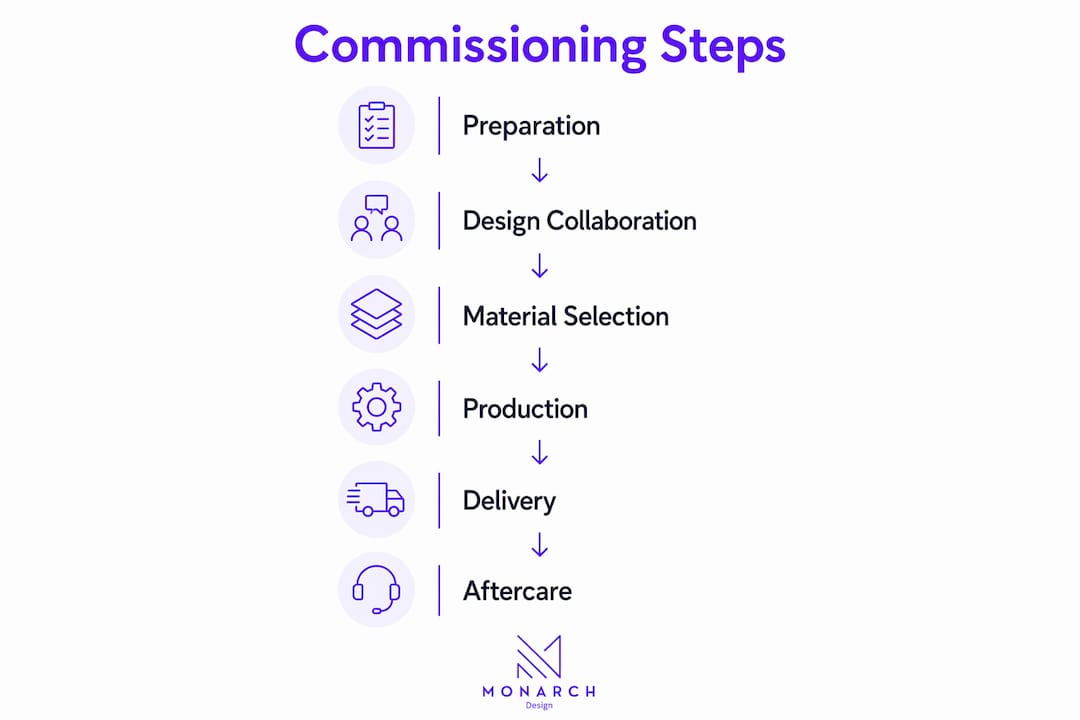
A complete commissioning process covers six areas: preparation, design collaboration, material selection, production management, delivery, and aftercare. Each area builds on the one before it. Skipping preparation, for example, almost always creates problems during production that cost time and money to fix. The industry term for this end-to-end process is “custom furniture commissioning,” and the word “bespoke” signals that every specification is made to order rather than adapted from a standard range.
Singapore homeowners face specific challenges that make this process worth understanding in detail. Compact floor plans, high humidity, and the need to maximize storage in HDB and condominium units all affect how a piece should be designed and built. A dining table that works beautifully in a Melbourne terrace house may be structurally wrong for a 90-square-meter Singapore apartment. This guide addresses those local realities at every step.
What to prepare before your first furniture design consultation
The quality of your first meeting with a maker determines the quality of everything that follows. Bring exact room dimensions to avoid traffic flow problems and spatial conflicts with existing furniture. Inspiration photos are equally important. They communicate style preferences faster and more accurately than words alone.
Gather the following before your consultation:
Room dimensions: Measure length, width, and ceiling height. Note door swing arcs, window sill heights, and any fixed features like columns or skirting boards.
Inspiration images: Collect 10–15 photos from sources like Pinterest, Houzz, or magazine tearouts. Include pieces you dislike as well as pieces you love.
Lifestyle notes: Write down how you actually use the space. A dining table used for homework and crafts needs a different surface treatment than one used only for meals.
Project timeline: Know your move-in date or renovation completion date. Work backward from there to set a realistic commissioning start date.
Budget range: Have a number in mind before the meeting. Makers can design to a budget, but only if they know what it is.
Pro Tip: Measure your absolute maximum dimension for each piece, then subtract 50mm. This buffer accounts for wall irregularities, skirting boards, and installation clearance. Pieces built to the exact wall measurement often cannot be moved into position.
Reviewing a furniture layout planning guide before your consultation helps you arrive with a clear picture of how the new piece fits into your broader room plan.
How to collaborate effectively with your furniture maker
Most homeowners assume they need a fully formed design before approaching a maker. That assumption is wrong. Makers prefer to start with rough ideas and inspiration, then apply their technical expertise to develop construction details. Your job is to communicate clearly, ask questions, and stay engaged throughout the design development phase.
Effective collaboration follows a predictable sequence:
Share your inspiration and constraints. Present your photos, dimensions, and lifestyle notes. Let the maker ask clarifying questions without interrupting.
Review initial sketches openly. Early drawings are proposals, not commitments. Say what works and what does not. Be specific: “The leg profile feels too heavy” is more useful than “I’m not sure about this.”
Ask why, not just what. Curious, engaged clients consistently report better commissioning experiences. When a maker recommends a particular joinery method or wood species, ask for the reasoning.
Request scaled drawings for complex pieces. A scaled drawing catches spatial fit problems before production begins. This step is non-negotiable for built-in units or large dining tables.
Sign off on a written specification. The written spec with dimensions, materials, and finishes is your production contract. Do not allow work to begin without it.
One detail that surprises many homeowners: wood is a living material. It expands and contracts with changes in humidity, which is significant in Singapore’s climate. Wood movement requires makers to sometimes push back on aesthetic requests to preserve long-term structural integrity. When your maker says a particular panel width needs a floating joint, trust that advice. It protects your investment.
Pro Tip: If you feel uncertain about a design decision, ask the maker to show you a physical sample or a completed piece with a similar detail. Seeing the actual result eliminates most second-guessing.
Choosing materials and finishes that last in Singapore
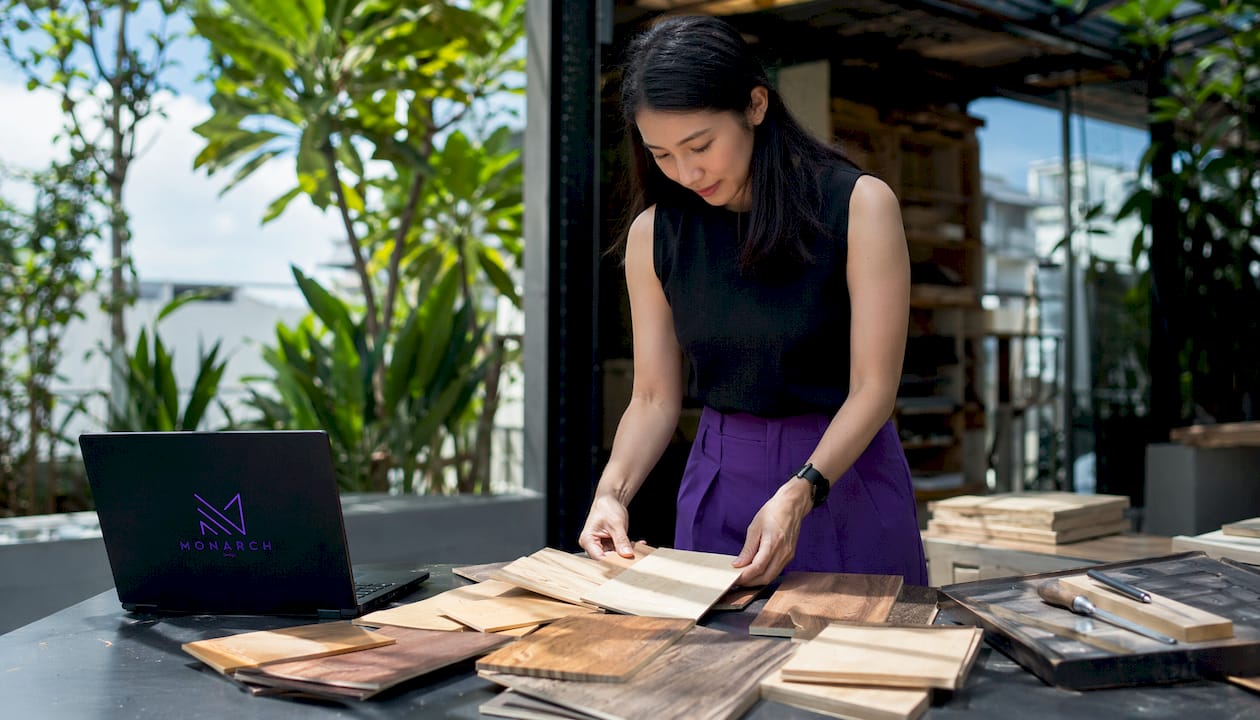
Material selection is where a bespoke piece earns its price premium over mass-produced furniture. Solid woods and natural stones develop a natural patina and age gracefully. That aging is a feature, not a flaw. A teak dining table with a few years of use looks richer than a new one.
Singapore’s humidity adds a layer of complexity to this decision. Consider these material realities:
Solid timber: Species like teak, walnut, and white oak handle humidity well when properly finished. Avoid highly porous timbers without a protective coating in air-conditioned rooms, where humidity swings are frequent.
Engineered wood cores: For large cabinet carcasses, engineered cores with solid timber veneers or laminates offer dimensional stability without sacrificing appearance.
Natural stone: Marble and granite work beautifully for tabletops and counters. Both require sealing on installation and periodic resealing to resist staining in humid conditions.
Leather and fabric upholstery: Choose breathable, natural fabrics or full-grain leather for upholstered pieces. Synthetic materials trap moisture and degrade faster in Singapore’s climate.
Always request physical samples before committing. A timber stain looks different on a small chip than on a full tabletop under your home’s lighting. Makers who work with local carpentry expertise understand which materials perform well in this climate and can steer you away from choices that look good in a showroom but fail within two years.
Trusting designers with local experience produces better material choices and higher-quality outcomes. This is especially true in Singapore, where the combination of air conditioning and outdoor humidity creates conditions that few imported furniture ranges are designed to handle.
How to manage timeline, cost, and expectations
The typical lead time of 12–16 weeks covers consultation through installation. That figure assumes no major design revisions after sign-off and no material supply delays. In practice, Singapore homeowners who start the commissioning process at least four months before their target move-in date avoid most scheduling pressure.
Commissioning is an investment. Be clear on total costs including design fees, materials, delivery, and your payment schedule before production begins. Changes made mid-production are expensive and sometimes structurally disruptive. The sign-off stage exists precisely to prevent them.
Budget comprehensively from the start. Design fees may be charged separately from production costs, and delivery and installation fees are often quoted as a separate line item. A typical payment structure looks like this:
Stage | Payment milestone | Notes |
Design sign-off | 50% deposit | Triggers material ordering and production scheduling |
Mid-production check | 25–30% progress payment | Common for large or complex commissions |
Delivery and installation | Final balance | Paid on satisfactory completion |
Avoiding mid-production changes is the single most effective way to protect your budget. Changes after production begins are costly and can delay your entire project by weeks. The written specification and scaled drawings you approved at sign-off are your protection against scope creep in both directions.
Monarch carpenters has built a strong reputation among Singapore homeowners for delivering quality craftsmanship at modest price points, with client feedback consistently praising the transparency of the process and the accuracy of final delivery against the agreed specification.
Common challenges and how to avoid them
Most commissioning problems trace back to one root cause: insufficient detail in early conversations. Detailed conversations before cutting or ordering materials are the single most reliable way to prevent dissatisfaction. The following issues appear most frequently, and each has a clear prevention strategy:
Spatial fit problems: A piece that does not fit through the door or into the room is the most avoidable mistake in commissioning. Verify all dimensions twice, including door widths, corridor clearances, and lift dimensions for high-rise deliveries.
Style miscommunication: Verbal descriptions of style are unreliable. Always back up words with images. “Minimalist” means something different to every homeowner and every maker.
Structural pushback: When a maker declines a specific design request, the reason is almost always structural. Pushing back on that advice risks a piece that looks right but fails within a few years.
Impatience with lead times: Handcrafted furniture takes time. A piece built in four months will outlast a piece rushed through in four weeks. Clients who prioritize longevity over speed consistently report greater satisfaction.
Disengagement after sign-off: Stay available during production. Makers occasionally need a quick decision on a minor detail. Slow responses delay completion.
Key Takeaways
Successful bespoke furniture commissioning requires preparation, active collaboration, and a clear written specification before production begins.
Point | Details |
Prepare before the first meeting | Bring exact room dimensions, inspiration photos, and a realistic timeline to your consultation. |
Treat design as a partnership | Ask why choices are made and stay engaged through every iteration for the best outcome. |
Sign off before production starts | A written spec with dimensions, materials, and finishes prevents costly mid-production changes. |
Choose materials for Singapore’s climate | Solid timber, natural stone, and breathable upholstery perform best in humid conditions. |
Budget for the full cost | Include design fees, materials, delivery, and installation in your total from the start. |
What I’ve learned from watching homeowners commission furniture
By Seth Wayne
After watching dozens of commissioning projects unfold, the pattern is consistent. Homeowners who treat the process as a creative partnership get furniture they love for decades. Homeowners who treat it as a transaction get furniture they tolerate for a few years.
The conventional advice is to “trust your maker.” That is true but incomplete. The better advice is to stay curious. Ask why a particular wood species was recommended. Ask what the joinery looks like inside the carcass. Ask how the finish will behave in five years. Makers who can answer those questions clearly are makers worth trusting. The ones who cannot are worth reconsidering.
Singapore’s compact living conditions make bespoke commissioning more valuable here than almost anywhere else. A piece designed specifically for your floor plan, your storage needs, and your family’s habits will outperform any imported range on every measure that matters. The 12–16 week wait is not a drawback. It is the time required to do the work properly.
Monarch carpenters stands out in this market because the team combines genuine design skill with honest pricing. The client reviews reflect a studio that listens, delivers on its commitments, and produces work that holds up over time. That combination is rarer than it should be.
— Seth Wayne
Working with Monarch carpenters on your next commission
Monarch carpenters offers a personalized design consultation that covers every stage of the commissioning process, from initial measurements through to installation. The studio’s in-house team of designers and carpenters works collaboratively with each homeowner to develop pieces that fit the space, suit the lifestyle, and stay within a realistic budget.

Client feedback consistently highlights two things: the quality of the finished work and the transparency of the pricing. Monarch carpenters does not charge premium rates for bespoke quality. The studio’s approach to interior design consultation is built around honest communication, clear specifications, and craftsmanship that homeowners are proud to show off. Contact Monarch carpenters to schedule your first consultation and get your project started on the right foundation.
FAQ
How long does bespoke furniture commissioning take in Singapore?
The standard lead time is 12–16 weeks from consultation to installation. Complex or large commissions may take longer if custom materials need to be sourced.
What should I bring to my first furniture design consultation?
Bring exact room dimensions, 10–15 inspiration images, a note on how you use the space, and a budget range. This preparation makes the first meeting productive and reduces design iterations.
How much does bespoke furniture cost compared to ready-made options?
Bespoke furniture costs more upfront than mass-produced alternatives, but the price reflects custom dimensions, material quality, and craftsmanship built to last. Total cost should include design fees, materials, delivery, and installation.
Can I make changes after production has started?
Changes after production begins are costly and can delay your project by weeks. The sign-off stage, where you approve a written specification with dimensions and finishes, exists to prevent this situation.
Why does wood movement matter for furniture in Singapore?
Wood expands and contracts with humidity changes, which are frequent in Singapore due to air conditioning and outdoor conditions. Makers accommodate this through specific joinery techniques, and overriding that advice risks long-term structural failure.
Recommended
keonhacai.cam mình cũng mới ghé thử vì thấy bạn bè nhắc hoài, kiểu vào xem cho biết chứ không ngồi nghiên cứu gì nhiều. Vừa mở ra cái mình thấy trang sắp xếp khá gọn, nhìn không bị rối mắt như nhiều chỗ khác. Nội dung chia thành từng khối rõ ràng nên lướt xuống một chút là biết phần nào nằm ở đâu, đỡ phải mò. Mình để ý cái menu đặt ngay chỗ dễ thấy, bấm qua lại giữa các mục khá nhanh, không phải vòng vèo nhiều bước. Mấy khung thông tin cũng canh theo cột nên nhìn phát là nhận ra mình đang ở mục nào, không bị lẫn. Nói chung trải nghiệm kiểu “vào xem…