
What Is Transitional Interior Style: A Homeowner's Guide
- Monarch

- Jul 1
- 8 min read
TL;DR:
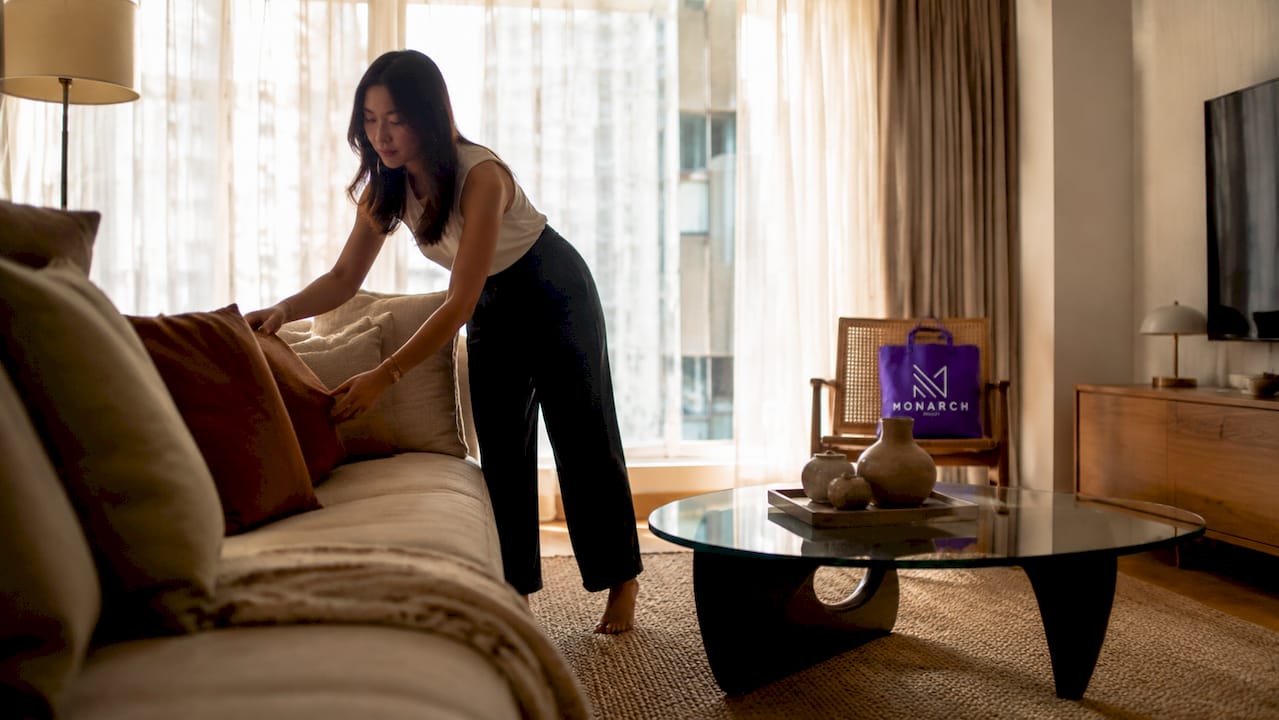
Transitional interior style combines traditional warmth with contemporary simplicity to create timeless, balanced spaces. It emphasizes neutral colors, layered textures, and furniture with clean silhouettes that blend the old and new. This style remains relevant for 10 to 15 years, offering a versatile, long-term design solution.
Transitional interior style is defined as a design approach that blends traditional warmth with contemporary simplicity to create comfortable, timeless spaces. Known in the industry as “transitional design,” this style sits deliberately between two extremes, drawing from the comfort of classic interiors and the clean restraint of modern ones. The result is a home that feels current without chasing trends, welcoming without feeling heavy, and polished without feeling cold. Monarch carpenters, based in Singapore, works with this philosophy regularly, helping homeowners achieve spaces that hold their appeal for years.
What are the key characteristics of transitional interior style?
Transitional interior style is built on a neutral color foundation, balanced proportions, and layered textures. These three elements work together to create rooms that feel calm and considered rather than stark or overdone.

Color: the 70-20-10 rule
The 70-20-10 color rule governs how color is distributed in a transitional room. Seventy percent of the room uses a neutral base, typically soft whites, creams, taupes, or greiges, applied to walls and large furniture pieces. Twenty percent goes to deeper neutrals through upholstery and window treatments. The final ten percent is a subtle accent color introduced through art, throw pillows, or decorative objects. This distribution creates psychological calm and lets texture and form carry the visual weight of the room.
Furniture silhouettes and materials
Clean lines with softened edges define transitional furniture. A sofa might have a straight back and tapered legs, but the cushions are deep and inviting. A dining table may be solid wood with a simple profile, free of carved ornamentation. Natural materials like linen, wool, oak, and walnut appear consistently because they bring warmth without formality. The key distinction is that furniture avoids both the ornate carved details of traditional design and the cold, hard surfaces of minimalist contemporary design.
Signature features at a glance
Neutral palette of soft whites, creams, taupes, and greiges as the dominant room color
Furniture with clean silhouettes that retain traditional comfort and scale
Layered textures using linen, wool, jute, and natural wood grain
Minimal ornamentation with an emphasis on proportion and balance
Subtle pattern use, such as geometric or tone-on-tone textiles
Mixed metals in warm or cool tones, kept consistent across a room
Pro Tip: Layer at least three different textures in every seating area. A linen sofa, a wool throw, and a jute rug create depth without adding visual clutter.
How does transitional style differ from traditional and contemporary design?
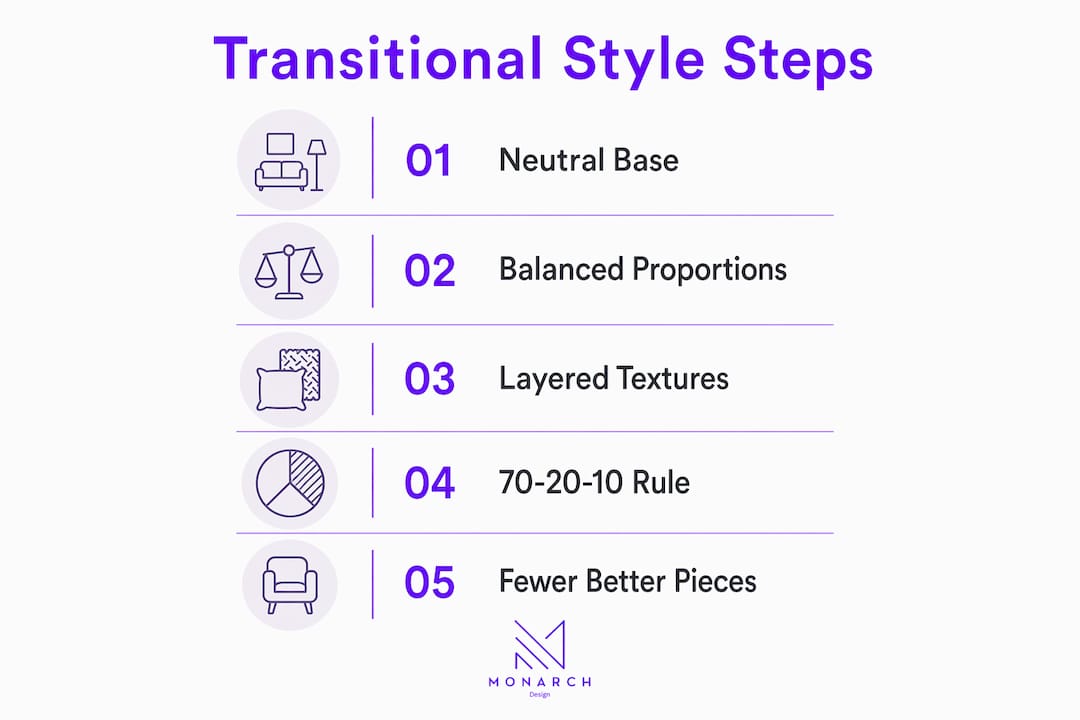
Transitional design resolves the tension between two extremes. Traditional interiors feel dated to many modern homeowners because of their heavy ornamentation, dark wood tones, and formal arrangements. Contemporary interiors, on the other hand, can feel cold and unwelcoming because of their strict minimalism and hard material palette. Transitional design takes the best from both.
The table below shows where each style lands on the key design dimensions.
Feature | Traditional | Transitional | Contemporary |
Color palette | Rich, warm, deep tones | Soft neutrals with subtle accents | Stark whites, blacks, grays |
Ornamentation | Heavy, carved, detailed | Minimal, purposeful | None |
Furniture lines | Curved, ornate | Clean with soft edges | Strictly geometric |
Texture use | Layered, formal fabrics | Layered, casual naturals | Sparse, smooth surfaces |
Overall feel | Formal, traditional | Warm, balanced, livable | Cool, spare, modern |
The most important distinction is formality. Traditional design demands a certain arrangement and deference to period styles. Contemporary design demands restraint. Transitional design demands balance. A transitional room can hold a vintage armchair alongside a modern floor lamp without either piece looking out of place. That flexibility is exactly what makes this approach so practical for real homes.
How to achieve transitional style in your home
Achieving a transitional interior does not require a full renovation. Homeowners can modernize spaces by focusing on paint, textiles, and furniture placement while retaining quality existing pieces and architectural bones. The process is methodical and cost-effective when approached in the right order.
Start with paint. Choose a soft neutral for your walls. Warm greige, soft white, or pale taupe works in most rooms. Avoid stark white, which reads as contemporary, and avoid beige with a strong yellow undertone, which reads as traditional.
Audit your existing furniture. Keep pieces with good proportions and solid construction. A well-made traditional sofa can work in a transitional room if you reupholster it in a clean, textured linen fabric.
Align your undertones. Matching warm or cool undertones across wood stains, metal finishes, and fabric colors is the single most important technical step. Warm oak floors pair with brushed brass hardware and cream upholstery. Cool gray floors pair with brushed nickel and soft blue-gray textiles. Mixing warm and cool undertones creates visual chaos that no amount of styling can fix.
Layer your textiles. Add a wool area rug, linen curtains, and a mix of throw pillows in varying textures. Keep the colors within your neutral palette with one or two accent pieces in your chosen ten percent color.
Mix masculine and feminine elements. A balanced mix of masculine, feminine, and vintage elements creates a collected, organic feel. A structured leather chair alongside a soft linen sofa achieves this. A geometric side table next to a curved lamp does the same.
Add one unexpected piece. An antique or bold art piece prevents a transitional room from feeling like a showroom. A richly patinated vintage mirror or a single large-scale painting introduces character and warmth that new furniture alone cannot provide.
Pro Tip: When in doubt, edit down. Transitional style favors fewer, better pieces over a crowded room. Remove one item from every surface and see if the space improves.
The role of soft furnishings in interior design is especially significant in transitional spaces because textiles carry most of the warmth and texture that the style depends on. Getting your textile selection right is faster and cheaper than replacing furniture.
Why transitional style is a smart long-term design choice
Transitional interior design remains visually relevant for 10 to 15 years after completion. That longevity is not accidental. It is the direct result of avoiding trend-driven choices in favor of timeless proportions, quality materials, and a neutral palette that does not date.
“Transitional style is not a lukewarm compromise. It is a deliberate philosophy of balance where traditional and modern elements inform each other, creating visual tension and interest.” — JAC Interiors
This philosophy has practical financial implications. A homeowner who invests in a well-proportioned transitional interior avoids the cycle of costly redesigns that trend-chasing demands. The neutral color palette also creates a serene foundation that adapts easily as personal tastes evolve. You can swap accent colors, introduce new art, or update textiles without touching the core design.
Transitional design also adapts to changing life circumstances. A living room that works for a young couple works equally well when children arrive or when the household shifts to accommodate aging parents. The types of interior design styles popular in Singapore reflect this demand for adaptability, and transitional consistently ranks among the most requested for its livability and broad appeal.
Key Takeaways
Transitional interior style succeeds because it balances traditional warmth with contemporary restraint, creating spaces that stay relevant for 10 to 15 years without requiring costly redesigns.
Point | Details |
Core definition | Transitional style blends traditional comfort and contemporary clean lines into one balanced aesthetic. |
Color foundation | Apply the 70-20-10 rule: 70% neutral base, 20% deeper neutrals, 10% subtle accent color. |
Undertone alignment | Match warm or cool undertones across wood, metal, and fabric to avoid visual chaos. |
Long-term value | Industry professionals recognize transitional design as relevant for 10 to 15 years after completion. |
One unexpected piece | Adding a vintage or bold art element prevents the space from feeling sterile and showroom-like. |
Why transitional design rewards patience over perfection
I have seen homeowners approach transitional style the wrong way more times than I can count. They treat it as a safe middle ground, a fallback when they cannot commit to a stronger aesthetic. That misreads the style entirely. Transitional design is one of the most demanding approaches to get right precisely because it has no dramatic signature to hide behind. A maximalist room can absorb a mistake. A transitional room cannot.
The misconception I hear most often is that neutral means boring. Neutral means disciplined. When you strip away strong color and heavy pattern, every proportion, every material choice, and every piece of furniture has to earn its place. A slightly wrong sofa scale or a mismatched wood undertone becomes immediately visible. That is why undertone alignment is the step most homeowners skip and the reason most transitional rooms fall flat.
What I find genuinely rewarding about this style is how it ages. I have walked back into transitional interiors completed years earlier and found them still feeling fresh and considered. That does not happen with trend-driven rooms. The discipline of choosing quality over novelty, balance over drama, and texture over color pays off in a way that is hard to quantify but impossible to miss when you experience it. For homeowners who want a space they will still love a decade from now, transitional design is the most reliable path I know.
— Seth Wayne
Timeless transitional interiors with Monarch carpenters
Achieving a well-balanced transitional interior takes more than good taste. It takes technical knowledge of materials, proportions, and undertone coordination that most homeowners develop only after costly trial and error.

Monarch carpenters brings that expertise to every project, combining bespoke carpentry with thoughtful design to deliver transitional spaces that are beautiful, practical, and built to last. Clients consistently praise the studio’s ability to deliver refined results at a modest cost, making quality transitional design accessible without compromise. Whether you are starting from scratch or refreshing an existing space, the team at Monarch carpenters works closely with you to bring your vision to life with craftsmanship and care.
FAQ
What is transitional interior style in simple terms?
Transitional interior style is a design approach that combines traditional warmth and contemporary clean lines into one balanced, livable aesthetic. It uses neutral colors, natural materials, and minimal ornamentation to create spaces that feel current and comfortable without being trendy.
What are the best colors for transitional style?
The best colors for transitional style are soft whites, creams, taupes, and greiges applied using the 70-20-10 rule. Seventy percent of the room uses these neutrals, with a subtle accent color making up just ten percent.
How is transitional style different from contemporary design?
Transitional style adds warmth, texture, and traditional comfort that contemporary design avoids. Contemporary design favors strict minimalism and hard surfaces, while transitional design layers natural textiles and softened furniture silhouettes for a more livable feel.
How long does a transitional interior stay relevant?
Industry professionals recognize transitional interiors as visually relevant for 10 to 15 years after completion. The neutral palette and timeless proportions allow the space to adapt as tastes evolve without requiring full redesigns.
Can I achieve transitional style without a full renovation?
Transitional style is one of the most cost-effective approaches to update because it focuses on paint, textiles, and furniture placement rather than structural changes. Homeowners can modernize an existing space by reupholstering quality traditional furniture, refreshing wall colors, and layering new textiles.
Recommended
Comments