
Do Acoustic Wall Panels Actually Fix Echo Problems?
- Monarch

- 1 hour ago
- 13 min read
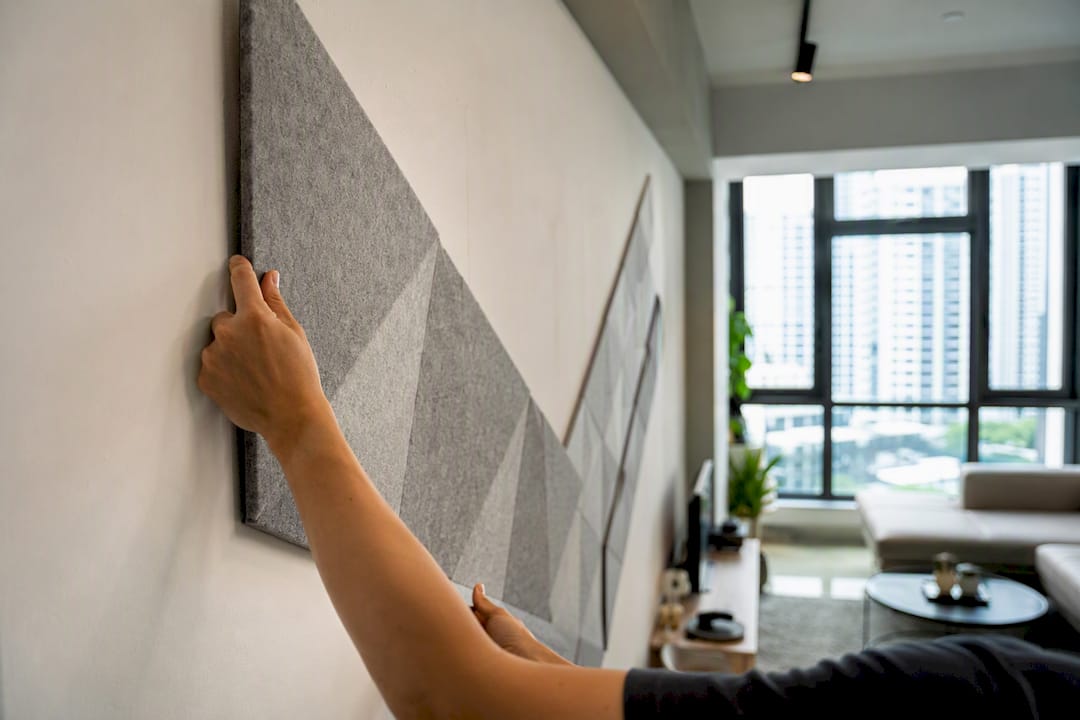
Yes, acoustic wall panels reliably reduce echo and sharpen speech clarity, but they don’t replace soundproofing. Panels absorb sound waves bouncing around inside a room; they don’t stop sound from leaking into the next one. If your problem is a conference call that sounds like it’s happening in a parking garage, panels solve that. If your problem is hearing your neighbor’s television through the wall, you need a different fix first.
Start here before buying anything:
Find your reflection points. Stand where you normally sit and have someone slide a mirror along the wall. Wherever you see your own speaker or screen reflected, sound is bouncing straight back at you.
Plan for 10 to 30 percent wall coverage, depending on how the room is used. Home offices and living rooms sit at the low end; music rooms and busy restaurants need more.
Shop by NRC and thickness, not looks. A panel’s absorption rating and its core density matter more than its color when you’re actually trying to quiet a room.
TL;DR:
Acoustic wall panels are effective at reducing echo and improving speech clarity, especially when placed at reflection points identified via the mirror test.
Panels rated NRC 0.7 or higher and covering 10 to 20 percent of a room’s wall area typically suffice for speech-focused rooms, while noisier spaces may need 20 to 40 percent coverage.
Proper placement includes treating corners for bass trapping, mounting panels slightly off the wall for better low-frequency absorption, and avoiding treating only the wall behind the camera during video calls.
Panels do not soundproof rooms; sealing gaps, especially around doors, and adding mass are required for true sound isolation.
Selecting panels with fire safety and low VOC ratings is crucial, especially in occupied spaces, and integrating acoustic treatment into the room design yields better aesthetic and functional results.
Table of Contents
How Acoustic Wall Panels Work: Absorption Basics and NRC Explained
Installation and Mounting: Adhesive, Z-Clips, or a Carpenter?
Panels Won’t Soundproof a Room. Here’s the Difference That Matters
The Monarch Approach: Performance Without Sacrificing Finish
Are Acoustic Panels Safe? VOC Emissions and Fire Ratings Explained
Get Acoustic Wall Panels Designed Into Your Space, Not Bolted On
How Acoustic Wall Panels Work: Absorption Basics and NRC Explained
Acoustic wall panels work by absorbing sound energy before it bounces off a hard surface and back into the room, which is a different job than soundproofing, which blocks sound from passing through a wall entirely. A panel can make a room sound calmer without stopping a single decibel from reaching the hallway.
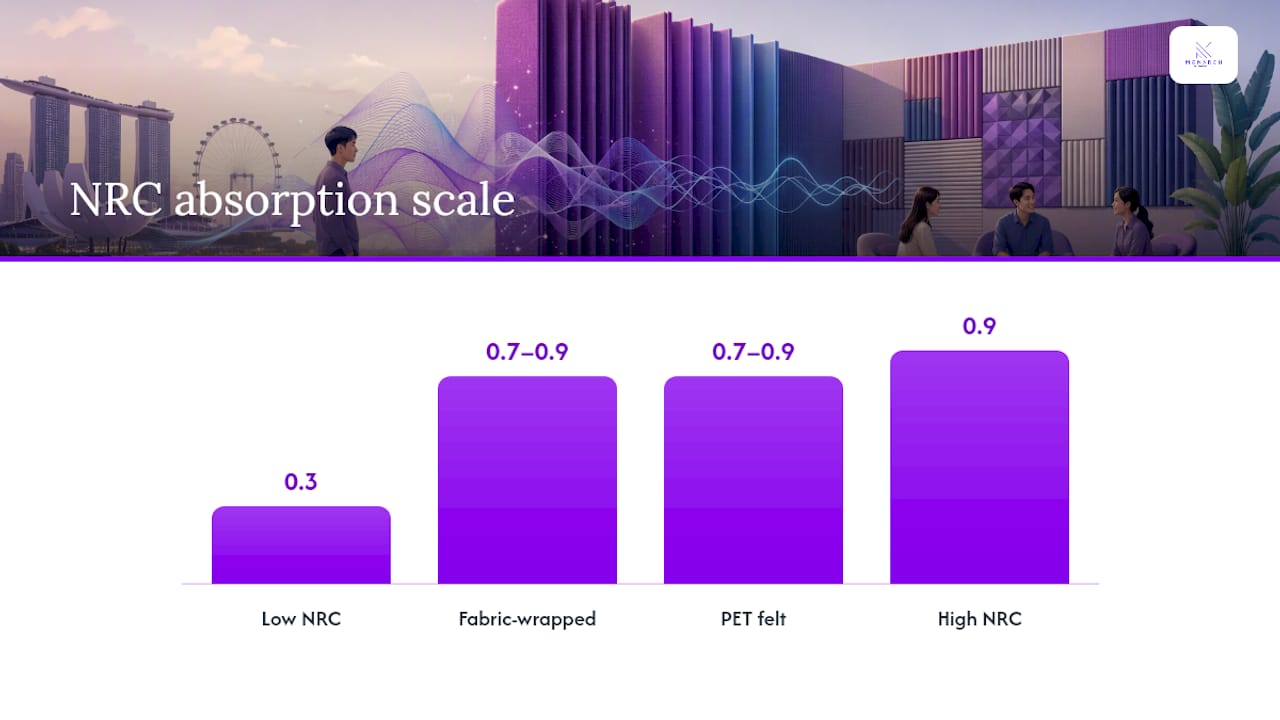
Manufacturers rate this absorption using the Noise Reduction Coefficient, or NRC, a number between 0 and 1 that estimates how much sound a material absorbs across common speech frequencies. A panel rated 0.3 absorbs relatively little and mostly reflects sound back into the room. A panel rated 0.9 absorbs nearly all of it. According to Acoustical Solutions, most fabric-wrapped and PET felt panels sold for interiors fall in the 0.7 to 0.9 range, which is enough to noticeably tighten up speech in a home office or meeting room.
Thickness and core density matter because low frequencies have long wavelengths and need more material to slow them down. A thin 1-inch panel handles voice and mid-range noise fine. Taming a bass-heavy home theater or a drum room needs 2 to 4 inches of depth, sometimes paired with a bass trap in the corners.
Types and Materials: Foam, Fiberglass, PET Felt, and Slats
Not every material solves the same problem, and picking the wrong one is the most common mistake we see homeowners make before they ever call a design studio.
Foam panels are cheap and easy to cut, but most consumer-grade foam only handles mid and high frequencies well and looks like a recording studio leftover.
Fiberglass panels absorb across a wider frequency range, including some low end, and are the choice for serious home theaters, though they need a fabric wrap to be presentable and safe to touch.
PET felt panels, made from recycled polyester, hit a sweet spot of solid mid-to-high absorption, no itchy fibers, and a clean, modern look that fits residential and commercial interiors alike, as noted by Inhabit Living’s felt panel line.
Wood slat and diffusive panels scatter sound rather than fully absorbing it, and they double as a design statement when built into cabinetry or a feature wall.
For fire and health, look for Class A flame-spread ratings (tested to ASTM E84) and low VOC certifications, especially on foam and adhesive-backed products used in occupied spaces.
Where Should You Place Acoustic Panels for Best Coverage?
Placement decides whether panels work or just decorate. A room with panels in the wrong spots can still ring like a bell.
Run the mirror test. Sit in your usual spot and mark every point on the wall where a mirror shows you the source of the sound, whether that’s a speaker, a TV, or the head of the table.
Cover 10 to 20 percent of wall area for voice-focused rooms like home offices, home theaters used mostly for dialogue, and meeting rooms.
Cover 20 to 40 percent for music rooms, home studios, or noisy commercial spaces like restaurants, where reflections compound quickly off hard floors and glass.
Treat corners first. Bass and mid-range energy pile up in corners, so a panel or bass trap there does more work than one on an open wall.
Keep panels symmetrical relative to the listening or speaking position, and mount them slightly off the wall with a small air gap when low-frequency performance matters, since research on panel mounting shows an air gap improves bass absorption over flush mounting.
Pro Tip: If you’re only treating one wall, treat the one directly behind whoever is speaking on video calls, not the wall behind the camera. That’s the surface sending the echo straight into the microphone.
Installation and Mounting: Adhesive, Z-Clips, or a Carpenter?
Lightweight foam and thin PET felt tiles under about 2 pounds per square foot usually go up fine with adhesive strips or construction adhesive, provided the wall surface is clean, dry, and not freshly painted. That covers most DIY home office and bedroom projects.
Heavier fabric-wrapped panels, fiberglass boards, or anything larger than roughly 2 by 4 feet need mechanical hardware: Z-clips, French cleats, or a mounting rail screwed into studs. Drywall anchors alone will eventually fail under that weight, especially in humid climates.
Before mounting anything:
Confirm stud locations rather than trusting anchors in open drywall.
Check the wall for plaster, tile, or textured finishes that resist adhesive.
Measure and dry-fit the full layout before committing to permanent hardware.
Call in a carpenter or installer once panels exceed about 15 pounds each, involve custom sizing, or need to integrate with built-in cabinetry.
Panels Won’t Soundproof a Room. Here’s the Difference That Matters
Absorption and isolation solve two completely different problems, and confusing them wastes money.
Panels change how sound behaves once it’s already inside your room. They add no mass to a wall and seal no gaps, so a door or window that’s leaking sound will keep leaking it no matter how many panels line the walls around it.
The most common weak point is the door. A standard hollow-core door with a half-inch gap underneath acts like an open window for sound. Door sweeps and weatherstripping help with drafts, but testing shows they only cut noise by about 1 to 4 decibels, which is barely noticeable. If you’re wondering how to soundproof a door properly, the sequence that actually works is seal the gaps first, then add mass, such as a solid-core door or mass-loaded vinyl, and only then worry about absorption inside the room. Skip a step and you’re treating the wrong problem.
How to Choose Acoustic Wall Panels: A Practical Checklist
Shopping for panels gets easier once you know which specs actually predict performance and which are just marketing.
Read the NRC rating and its test-mount conditions. A panel tested flush against a wall performs differently than one tested with an air gap, so ask for the actual test method.
Match thickness to your frequency problem. Voice and general room echo need 1 to 2 inches; music, home theaters, or mechanical noise need 2 inches or more.
Confirm fire rating and indoor-air certification, especially Class A flame-spread and low-VOC labeling, before installing in a bedroom or a space with limited ventilation.
Decide between stock and custom sizing. Stock tiles ship fast and cost less; custom panels take longer to produce but integrate cleanly into a feature wall or built-in design.
Ask any seller for measured performance with your intended mounting method, since flush-mounted and standoff-mounted results can differ meaningfully at low frequencies.
Priority | Why it matters |
NRC rating | Tells you how much sound the panel actually absorbs, not just its appearance. |
Thickness and core | Determines whether the panel handles voice-range noise or deeper bass. |
Fire and VOC certification | Protects occupant safety, especially Class A rated products near living spaces. |
Stock vs. custom | Stock panels are faster and cheaper; custom fits a designed feature wall. |
What Do Acoustic Wall Panels Cost?
Basic foam tiles run at the low end of the market and work fine for a small home office. Fabric-wrapped and PET felt panels sit in the middle, priced for their improved absorption and cleaner look. Custom slat systems or engineered Class A panels, like those tested to αw 0.95 by AKUART, sit at the top because of the material engineering and documentation behind them.
The biggest cost drivers are fabric choice, panel thickness, and whether you need mounting hardware or professional installation. If budget is tight, treat your mirror-test reflection points first. That’s where the money buys the most improvement per square foot.
Keeping Panels Looking Good for Years
Fabric-wrapped and felt panels need only occasional vacuuming with a soft brush attachment; spot-clean fabric surfaces with a damp cloth rather than soaking them. Humidity and direct sunlight can fade fabric and warp thin foam over time, so avoid mounting foam near windows or bathrooms.
Vacuum monthly in dusty environments; wipe PET felt panels with a dry microfiber cloth.
Choose darker or textured fabrics in high-traffic commercial spaces where marks show easily.
Coordinate panel color and texture with existing millwork so treatment reads as a design feature, not a retrofit.
The Monarch Approach: Performance Without Sacrificing Finish
We’ve built acoustic treatment into everything from home theaters to compact study rooms, and the brief is almost always the same: quiet the room without making it look like a recording studio. That usually means folding fluted panel walls or slatted cabinetry into the carpentry itself, so the acoustic layer becomes part of the finish rather than something bolted on afterward.
Select panel material and NRC based on the room’s actual noise problem, not a generic spec sheet.
Hide mounting hardware behind slatted panels or recessed channels to preserve a clean look.
Balance premium engineered panels against budget-friendly PET felt depending on the client’s priorities.
Clients consistently tell us the acoustic improvement surprised them more than the visual upgrade, which is exactly the outcome we design for.
How to Measure Room Acoustics Before You Buy Anything
Guessing at coverage wastes money. Before you order a single panel, spend fifteen minutes actually diagnosing the room.
Clap sharply in the center of the room and listen for the tail of the echo. A sharp, ringing decay that lasts more than a second signals a reflective room that needs real treatment. A dull, quick decay means you may only need light touches at the worst reflection points.
Run the mirror test along every wall, not just the obvious ones. Reflections off a side wall or ceiling are easy to miss but often cause the harshest echo on video calls, because the microphone picks up both the direct voice and the delayed reflection.
Pay attention to room shape and hard surfaces. Rooms with parallel hard walls, tile or hardwood floors, and large windows trap sound far more than carpeted rooms with soft furniture. A restaurant with concrete floors, glass storefronts, and high ceilings needs meaningfully more coverage than a carpeted living room of the same square footage, which is why reducing noise in a restaurant often takes more aggressive treatment than a home office of similar size.
If you want a more objective read, several smartphone apps use the phone’s microphone to estimate reverberation time, though the results are rough compared to lab measurements. For most homeowners and small business owners, the clap test plus the mirror test gives enough information to plan coverage sensibly, without needing a certified acoustician.
Combining Panels With Bass Traps and Diffusers
Flat absorption panels solve most speech-clarity problems on their own, but rooms with real bass energy, like home theaters, music rooms, or open-plan living spaces with a subwoofer, need more than one tool.
Bass traps belong in corners, where low-frequency energy naturally accumulates regardless of where the speakers sit. They’re typically thicker and denser than standard wall panels because low frequencies need more material and more depth to slow down. Skipping bass traps in a media room is the single most common reason people feel disappointed after installing “acoustic treatment” that only addressed mid and high frequencies.
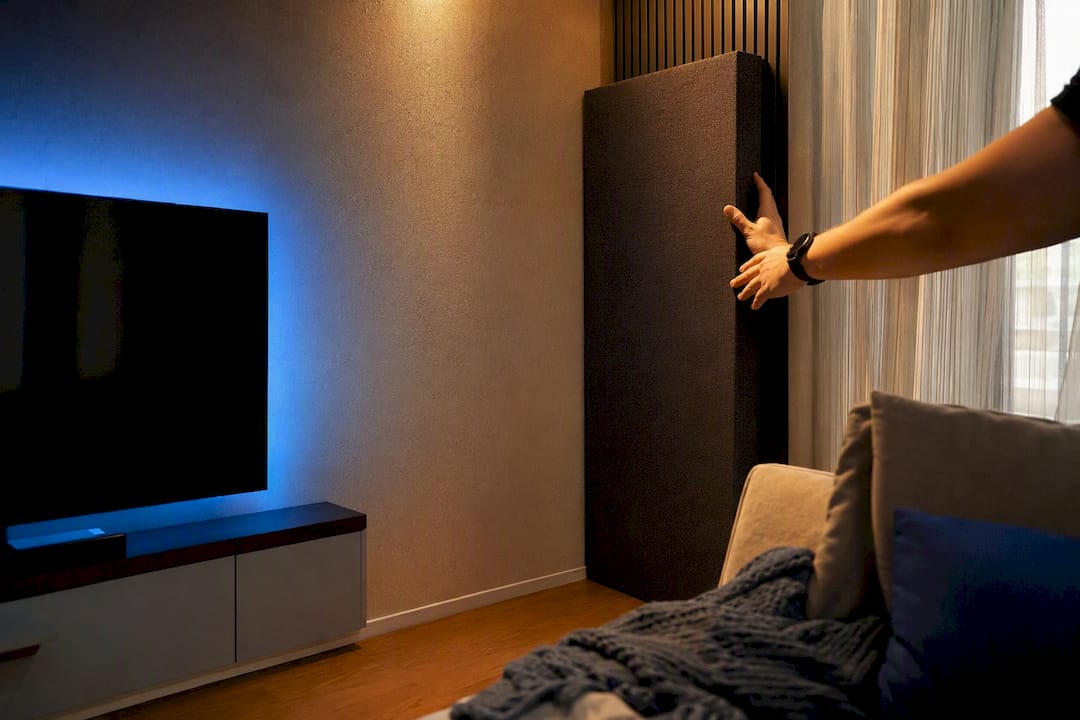
Diffusers, usually slatted or geometrically textured wood panels, scatter sound instead of absorbing it. They’re useful when a room feels too dead after heavy absorption treatment, which happens more often than people expect in small, heavily paneled rooms. A home studio or listening room with too much flat absorption can sound flat and lifeless; diffusers reintroduce some natural liveliness without bringing back the original echo problem.
The most effective rooms usually combine all three: absorption panels at primary reflection points, bass traps in corners, and diffusers on a rear wall or ceiling where you want to preserve some natural sound movement rather than deaden it completely. A home theater built this way, for instance, often uses fabric-wrapped absorption panels on the side walls, corner bass traps behind the screen wall, and a slatted diffuser panel on the back wall. Treating only one of the three usually leaves an audible gap in performance.
Are Acoustic Panels Safe? VOC Emissions and Fire Ratings Explained
Indoor air quality matters as much as acoustic performance, especially in a bedroom, nursery, or small office where ventilation is limited. Look for panels labeled low-VOC or formaldehyde-free, particularly with foam and adhesive-backed products, since off-gassing from cheap foam can linger in a closed room for weeks after installation.
Fire safety is a non-negotiable spec, not a nice-to-have. Class A fire ratings, tested under the ASTM E84 flame-spread standard, indicate a material resists ignition and slow flame spread well enough for use in occupied residential and commercial interiors. Many budget foam products carry no fire certification at all, which matters more in a commercial space like a restaurant or office where local fire codes typically require certified materials on wall and ceiling installations.
PET felt panels made from recycled polyester generally carry favorable safety profiles, since the manufacturing process avoids some of the chemical binders used in cheaper foam. Engineered panels marketed with environmental product declarations, like the Class A rated system from AKUART, go a step further by documenting both fire performance and material sourcing, which matters for commercial projects that need to meet building code documentation.
Before buying, ask the seller directly for the fire rating and VOC certification in writing, especially for any product going into a bedroom, classroom, or space with young children. A supplier who can’t produce this documentation on a panel meant for a code-regulated commercial space is a signal to keep shopping.
Which Acoustic Approach Works, and What Falls Short
Acoustic wall panels do exactly one job well: they tame reflections and sharpen speech clarity, and the evidence on NRC ratings and material science backs that up consistently.
Where conventional advice falls short is treating panels as a universal fix. Plenty of buying guides sell foam packs as a total solution for a noisy apartment, when the actual noise complaint is often sound leaking through a door or shared wall, a problem panels cannot touch. That’s a mismatch between the product and the problem, and it’s why so many people feel let down after covering a wall in foam tiles and still hearing their neighbor’s music.
The bigger miss is treating acoustics and design as separate decisions. Most guides tell you to buy the highest-NRC panel available and mount it wherever fits. That produces a technically correct but visually awkward room. The better approach, and the one worth prioritizing first, is diagnosing the actual reflection points before buying anything, then choosing a material and finish that solves the acoustic problem while reading as an intentional design choice rather than a retrofit. A study room built with integrated carpentry proves this isn’t a trade-off you have to accept.
— Seth Wayne
Get Acoustic Wall Panels Designed Into Your Space, Not Bolted On
Most acoustic panel shopping ends the same way: a stack of foam tiles that solve the echo problem but look like an afterthought on an otherwise finished wall. Monarch carpenters designs the acoustic treatment into the room from the start, choosing NRC, thickness, and finish to match your actual noise problem while folding the panels into carpentry you’d want visible anyway, whether that’s a fluted feature wall or slatted built-ins.

Our design-build studio in Singapore has built this exact balance into home offices, media rooms, and commercial interiors, consistently earning strong client feedback for solving real acoustic complaints at a modest cost rather than the premium price tag most engineered panel systems carry. If you’re weighing home office acoustics or a full feature wall, get in touch with Monarch carpenters for a project consultation, and bring your room’s dimensions and noise complaint so we can recommend the right material and layout from day one.
Key Takeaways
Acoustic wall panels reduce echo and improve speech clarity by absorbing reflected sound, but they require sealing and added mass separately to address true soundproofing needs.
Point | Details |
Panels absorb, they don’t block | Treat reflections with panels; seal gaps and add mass separately for true isolation. |
NRC drives buying decisions | Look for NRC 0.7 or higher for effective speech and mid-frequency absorption. |
Coverage depends on use | Plan 10 to 20 percent coverage for voice rooms, 20 to 40 percent for music or noisy spaces. |
Fire and VOC certification matter | Confirm Class A fire ratings and low-VOC labeling before installing in occupied spaces. |
Monarch integrates design and acoustics | Monarch carpenters builds panel treatment into feature walls and carpentry for a finished look at modest cost. |
Sources
FAQ
Are Acoustic Wall Panels Worth It?
Yes, for reducing echo and sharpening speech clarity in home offices, living rooms, and meeting rooms, panels are one of the most reliable and affordable acoustic upgrades available. They’re not worth it as a substitute for soundproofing if your real problem is noise passing through walls or doors.
Do Acoustic Panels Actually Work?
They work by absorbing sound waves at the frequencies covered by their NRC rating, which meaningfully reduces reverberation and echo in most rooms. The catch is that placement matters as much as the panel itself; panels in the wrong spot do far less than panels at your actual reflection points.
What Are the Disadvantages of Acoustic Wall Panels?
Panels add no mass to a wall and seal no gaps, so they don’t stop sound from traveling between rooms. Cheaper foam options can also lack fire certification and may off-gas VOCs, so checking Class A ratings and low-VOC labeling matters before buying.
What Are the Best Soundproof Wall Panels?
No wall panel truly “soundproofs” a room, since that requires sealing and mass, not absorption. For the best absorption performance, look for fabric-wrapped or PET felt panels with NRC ratings of 0.7 or higher, or engineered Class A panels for demanding commercial projects.
Recommended
Comments