
Carpentry Maintenance: 30 Day Check to Protect Bespoke Joinery


Carpentry maintenance for bespoke joinery means protecting the fit, finish, and hardware of custom-built pieces through scheduled inspection rather than reactive repair. The single best first step is scheduling a post-install check with your design-build studio and documenting every finish, hardware spec, and service point while the details are still fresh. This article covers the checklist, the schedule, and how to pick a studio that stands behind its work.
TL;DR:
Regular inspections should be scheduled at least twice a year to identify small issues like uneven gaps, hardware wear, or finish deterioration before they escalate.
Maintenance visits are most effective when planned shortly after installation, during seasonal changes, and every one to five years for ongoing care of high-use pieces.
Choose a studio with an in-house workshop, documented processes, and clear warranty and spare-parts policies to ensure reliable long-term support.
Address maintenance planning during the design phase to incorporate proper clearances, finish choices, and hardware specifications that simplify future upkeep.
A comprehensive handover package from a dedicated design-build team streamlines future maintenance, reducing the risk of warranty disputes and ensuring consistent finish and hardware performance.
Table of Contents
What Does Carpentry Maintenance Cover in Bespoke Design-Build Work?
Carpentry maintenance in a bespoke context has almost nothing in common with the handyman work of tightening a loose cabinet hinge once a decade. A custom kitchen island, a wall of veneered joinery, or a hospitality reception desk carries tighter tolerances, layered finishes, and hardware chosen for a specific look and function. Maintaining it means protecting the decisions your designer and carpenter made, not just keeping the thing standing.
Four areas matter most:
Finish integrity — lacquer, oil, or veneer coatings that shield wood from moisture and UV exposure.
Joinery tolerances — the precise gaps and fits that make drawers glide and doors close flush.
Hardware performance — hinges, soft-close mechanisms, and pulls that see daily use.
Service access — clearances behind panels and under counters that let a technician reach plumbing or wiring without demolition.
A professional bespoke joinery workflow builds these considerations in from the start, using site visits, precise measurements, and production-ready drawings so that what gets installed matches what was designed. That upfront discipline is exactly what makes long-term maintenance manageable instead of guesswork.
What Should Be on Your Carpentry Inspection Checklist?
A good inspection routine catches small issues before they become expensive ones. Run through these steps twice a year, or whenever you notice a door sticking or a drawer running rough.
Check visible gaps and reveals. Look at where doors and drawer fronts meet cabinet frames. Uneven gaps often signal seasonal wood movement rather than a defect.
Test hardware function. Open and close every drawer and door. Soft-close mechanisms that slam or hinges that sag need adjustment before they wear the joinery around them.
Inspect finish wear. Look for dulling, hairline cracks, or lifting at edges, especially near sinks, stovetops, and window-facing surfaces exposed to sunlight.
Lubricate moving hardware. A light application of the manufacturer-recommended lubricant on hinges and slides keeps mechanisms quiet and extends their working life.
Repair edge and veneer chips promptly. Small chips left untreated let moisture into the substrate, which spreads damage far beyond the original mark.
Control humidity. Solid wood and veneer both expand and contract with humidity swings; a stable indoor range prevents cracking and warping.
Reapply UV protection where needed. Window film or UV-rated finishes slow the fading that direct sunlight causes on darker wood tones.
Waterproof zones near sinks and wet areas. Silicone seams and sealed edges around under-sink cabinetry need periodic resealing, particularly in humid climates.
Photograph and log everything. Keep dated photos, the original specification sheet, and warranty documents together in one file, digital or physical.
Pro Tip: Keep a small “maintenance kit” for each project: the touch-up lacquer or oil used on-site, spare hardware in the original finish, and the hinge adjustment tool your carpenter recommends. Studios that supply this at handover save clients months of hunting for a matching finish later.
How Often Should Bespoke Carpentry Be Serviced?
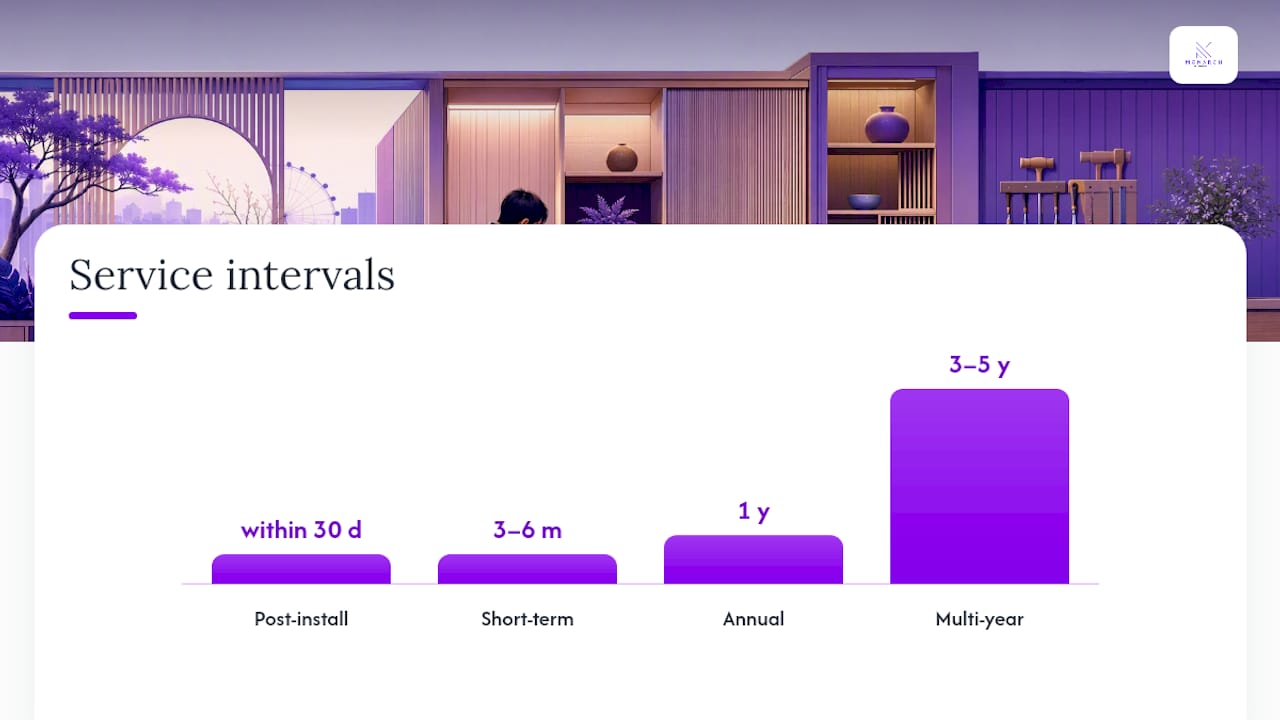
Maintenance timing should follow the life of the piece, not a fixed calendar. Generally, bespoke joinery benefits from periodic checks that include an initial review after installation, followed by inspections at intervals that suit the use and environment of the piece.
Post-install (within 30 days): Confirm doors, drawers, and hardware are performing as installed, and note any early wood movement.
Short-term (3 to 6 months): Reassess after the piece has been through a full seasonal humidity cycle.
Annual: Full inspection using the checklist above, with touch-ups as needed.
Multi-year (every 3 to 5 years): Consider re-oiling, re-lacquering, or hardware replacement for high-traffic pieces.
Lead time matters here as much as the schedule itself. Luxury and bespoke projects commonly run on longer procurement and fabrication timelines than off-the-shelf furniture, and replacement hardware or matched veneer often has to be special-ordered. Flagging a wear issue early gives your studio time to source the right part instead of scrambling for a substitute.
This is also why maintenance planning belongs in the project closeout conversation, not an afterthought. Ask your studio to include care instructions, a finish schedule, and a hardware list in the handover package. A documented handover reduces warranty disputes later and gives whoever manages the space day-to-day a clear reference.
How Do You Choose a Studio for Long-Term Carpentry Care?
The studio that built your piece is usually best positioned to maintain it, but not every workshop is set up for aftercare. Look for these traits before signing:
An in-house workshop, not a subcontracted network, so the people servicing your piece understand how it was actually built.
A documented process that includes technical drawings and a pre-delivery inspection before anything ships to site.
An installation warranty that spells out what’s covered and for how long.
A clear spare-parts policy, so matching hardware or veneer stays available after the project closes.
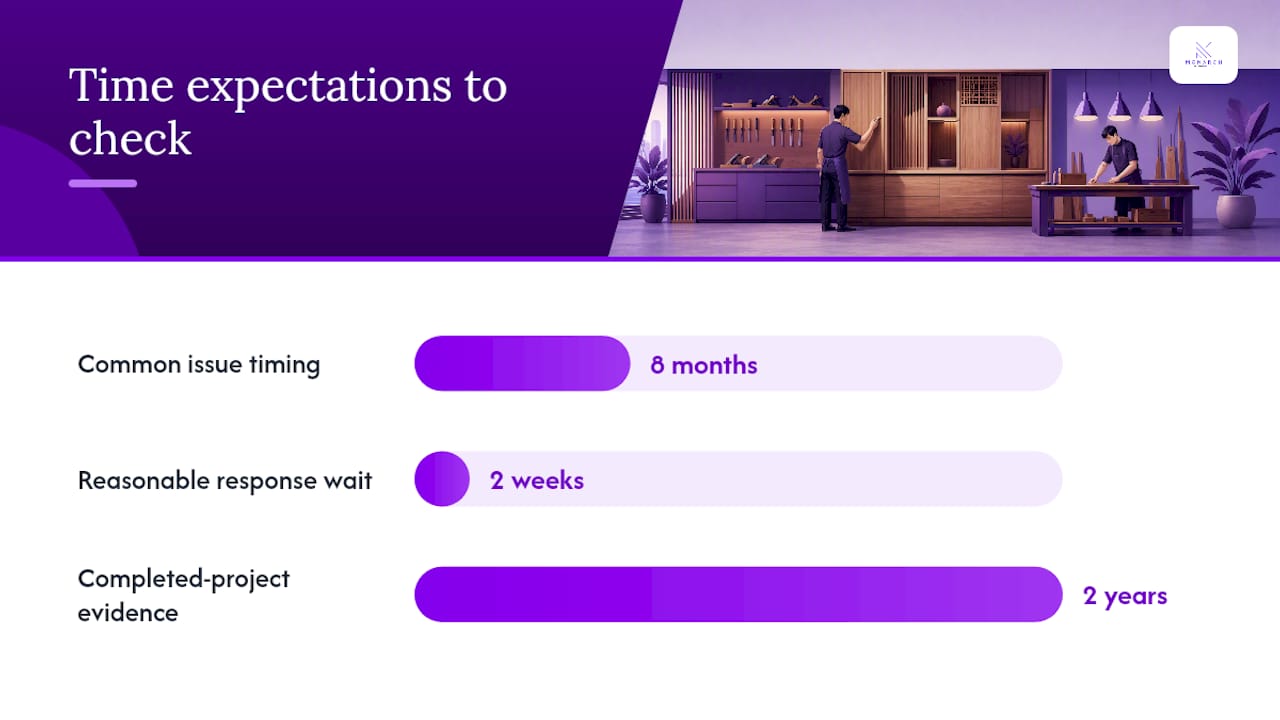
When you interview a studio, ask direct questions: “What happens if a drawer runs rough eight months after installation?” A studio confident in its own production-ready drawings and dry-fit inspections will have a straightforward answer, usually involving a service visit rather than a shrug. Ask, too, about response times for warranty claims, since a two-week wait for a stuck cabinet door is a reasonable red flag.
Your contract should name the maintenance scope, response-time commitments, warranty duration, and how spare parts are handled. Vague language here almost always means vague service later.
Pro Tip: If a studio can’t show you a completed project older than two years, ask how they know their finishes and hardware hold up over time. A design-build partner with a track record can point to real examples, not just renderings.
Watch for red flags: no in-house workshop, no written warranty, or reluctance to schedule a pre-delivery walkthrough. Design-build delivery, which keeps design and construction under one accountable team, tends to close these gaps because the same people who designed the piece are the ones standing behind it.
Why Maintenance Planning Is Part of Good Design, Not an Afterthought
We’ve watched enough projects move from concept to installation to know that the pieces that age well are almost never the ones that got lucky. They’re the ones where finish choices, hardware specs, and service clearances were decided deliberately during design, not patched together after a complaint call. That’s the philosophy behind how we build at Monarch carpenters: catch the problem on the drawing board, not on a client’s kitchen floor five years later.
Clients consistently tell us the difference shows up in small things, a drawer that still glides smoothly, a finish that hasn’t yellowed. Bringing up maintenance during your first design conversation, not after handover, is the modest step that protects the investment for years.
— Seth Wayne
Get a Design-Build Partner Who Plans for the Long Term
Monarch carpenters is the design-build alternative to hiring a builder for the install and a separate contractor for the years after. Because our in-house designers and carpenters manage your project from first sketch to final walkthrough, the maintenance plan, finish schedule, and hardware documentation are part of the handover package, not a phone call you have to make later.

Work with us and you can expect a real consultation, a documented scope of work, a look at our workshop capabilities, and a pre-delivery inspection before anything reaches your site. Our reputation is built on strong client feedback for design quality delivered at a modest cost, and we structure every project so upkeep stays simple long after installation. If you’re planning a custom fit-out or bespoke furniture piece, start by reviewing our bespoke furniture commissioning guide or request a consultation directly through Monarch carpenters to see our portfolio and discuss your project.
Where to Learn More About Workshop Process and Project Planning
For readers who want to go deeper on how bespoke joinery gets built and scheduled, Reeve & Co.‘s breakdown of the joinery workshop process covers production drawings and pre-delivery inspection in detail. Panorama Luxe Designs’ project planning guide is useful for understanding lead-time and budgeting for long-lead items. Dibico’s comparison of design-build versus traditional renovation explains why single-team accountability matters for aftercare.
Sources
FAQ
What Is Carpentry Maintenance for Bespoke Joinery?
It’s the scheduled inspection and care of custom-built wood elements, covering finish condition, hardware function, joint fit, and environmental protection, distinct from general handyman repair work.
How Often Should I Inspect Custom Cabinetry?
Plan for a post-install check within 30 days, a short-term review at 3 to 6 months, and a full annual inspection after that, with deeper checks every few years for high-use pieces.
Should Maintenance Be Discussed Before the Project Starts?
Yes. Raising maintenance during design, not after handover, lets your studio build in service access, spare hardware, and a documented care plan from the start.
What Should Be in a Carpentry Maintenance Contract?
Look for a defined maintenance scope, stated response times for warranty claims, warranty duration, and a clear policy for sourcing matching spare parts or hardware.
Can Monarch Carpenters Handle Ongoing Maintenance After Installation?
Monarch carpenters designs and builds under one in-house team, so documentation, warranty terms, and finish schedules are part of the handover, supporting easier long-term care.
Recommended
Comments