
Save on Carpentry: Monarch's Singapore Interior Design Costs
- Monarch

- 2 days ago
- 11 min read
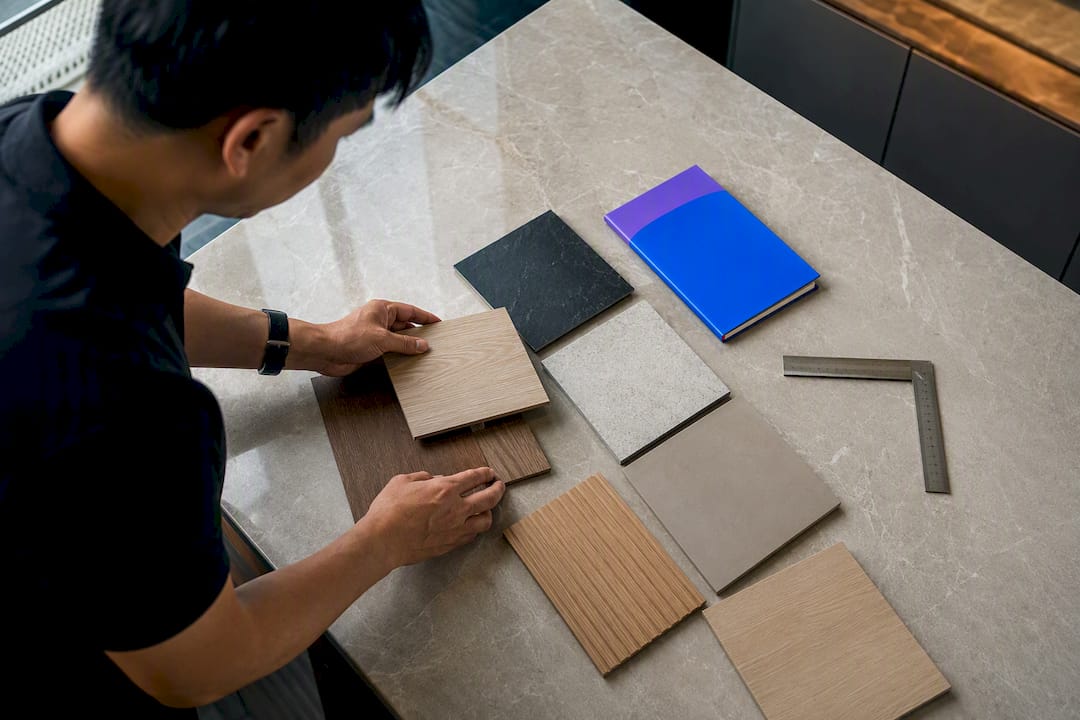
Most Singapore homes land in one of three planning bands: basic (finishes-focused, minimal structural work), standard (full carpentry package with some hacking), or premium (bespoke joinery, imported finishes, and layout changes). What separates one band from the next comes down to three levers: how much hacking and structural work the unit needs, how much custom carpentry you commission, and the finish grade you choose. It is advised to get an itemized proposal before assuming which band your project falls into.
TL;DR:
Most renovation costs in Singapore rise sharply when you require custom carpentry, structural hacking, or imported finishes, especially in larger or resale units.
Budgeting an extra 10% to 20% for unforeseen hidden costs such as permit fees, structural issues, or debris disposal can prevent budget overruns during renovation.
Choosing in-house carpentry and design services typically leads to more predictable costs through itemized quotes and faster approval processes, reducing overall expense surprises.
Material choices like natural stone, large-format tiles, or imported fixtures significantly increase costs, while simpler finishes like laminate and vinyl remain budget-friendly options.
Starting renovation planning early and breaking projects into phases, especially deferring cosmetic finishes, can help manage costs and avoid the tendency to underestimate carpentry and structural expenses.
Table of Contents
How Much Does Interior Design Cost in Singapore by Unit Type?
Monarch Carpentry Design Studio: How Our In-House Model Controls Cost
How Do Material and Fixture Choices Affect Cost in Singapore?
What Permits and Regulations Affect Renovation Costs in Singapore?
Work With Monarch Carpenters for Design-and-Build in Singapore
How Much Does Interior Design Cost in Singapore by Unit Type?
Interior design cost in Singapore varies more by unit type and scope than most homeowners expect going in. A compact 2 room BTO with a basic package can land between S$15,000 and S$28,000, while a 4 room BTO typically runs S$40,000 to S$62,000, depending on how much carpentry and structural work is involved. Resale flats tend to cost more than new BTOs because older units often need rewiring, replumbing, or hacking of dated tiling before any design work begins.
Here’s how the bands generally break down by unit type:
Studio/1 bedroom: Basic packages focus on space-saving carpentry and paint; standard adds a kitchen overhaul; premium includes custom-built storage walls.
2 Room BTO: S$15,000 to S$28,000, mostly carpentry and flooring, with minimal hacking since these units are new.
3 Room HDB: Mid-range budgets typically add a kitchen island or peninsula and full wardrobe systems.
4 Room HDB (new): S$40,000 to S$62,000, often includes a false ceiling and feature wall.
4 Room Resale HDB: S$48,000 to S$78,000, reflecting the extra cost of removing old fixtures and addressing hidden wear.
5 Room HDB and Condos: Higher bands driven by larger floor area and, for condos, stricter management guidelines on renovation hours and materials.
Landed and penthouse: The widest range of all, since scope can include full structural reconfiguration, multiple staircases, and outdoor living spaces.
Pro Tip: If your resale flat was built before 2000, budget on the higher end of your band. Old electrical wiring and plumbing rarely survive a renovation untouched, and that discovery almost always happens after the contract is signed, not before.
What’s in an Interior Design Fee Quote in Singapore?
A Singapore interior design pricing quote usually breaks into four distinct fee lines, and knowing what each one covers helps you compare proposals that look wildly different on the surface. Consultation fees generally run S$50 to S$250 and cover an initial site visit plus a rough scope discussion, sometimes waived if you proceed with the designer.
Design-only fees, for homeowners who want drawings without a build contract, typically fall between S$1,500 and S$6,000, with 3D visualization running S$300 to S$500 per room as an add-on. Project management fees are commonly quoted as a percentage, usually 5% to 10% of total renovation value, though some firms charge a fixed sum instead.
Carpentry billing varies more than any other line item: some studios quote per running foot of cabinetry, others per room, and a few offer lump-sum packages that bundle materials and labor. When comparing quotes, ask directly about:
Revision limits before extra design fees kick in
Provisional sums (placeholder costs for items not yet finalized)
Allowance items that assume a certain material grade unless upgraded
What Does a Turnkey Interior Design Package Include?
A full turnkey package should read like a detailed contract, not a sales brochure. Homeowners who get burned usually signed a proposal that described work in vague terms rather than itemized deliverables and material grades.
Typical inclusions cover:
Carpentry (wardrobes, kitchen cabinets, TV consoles, built-in storage)
Flooring supply and installation
Painting and wall finishing
Basic plumbing and electrical rerouting
False ceiling and lighting installation where specified
Frequent exclusions that catch buyers off guard:
Appliances (fridge, washer, oven) unless explicitly bundled
Curtains, blinds, and soft furnishings
HDB or condo permit and application fees
Contingency for unforeseen structural issues
Before signing, confirm the variation order process (how price changes get approved mid-project), the warranty period on carpentry and workmanship, and whether snagging defects get fixed at no extra charge.
How Can You Budget and Save on Renovation Costs?
Set aside a contingency of 10% to 20% of your total budget before you start. That buffer absorbs the unseen conditions almost every renovation uncovers, whether it’s damaged wiring behind a wall or a structural column that wasn’t on the original floor plan.
Beyond the buffer, a few levers actually move the needle on home renovation costs in Singapore:
Simplify joinery details (fewer profiles, standard hardware) without cutting storage capacity.
Choose standard laminate finishes over imported veneers for cabinetry you’ll rarely see up close.
Stage the project, tackling wet areas first and deferring cosmetic upgrades to a later phase.
Reuse existing electrical and plumbing points where layout allows, since relocating M&E points adds cost fast.
Pro Tip: Swapping one premium material, like a marble-look countertop, for a quality quartz alternative in a single room can free up enough budget to fully outfit a second room’s storage. Small substitutions in one zone often fund entire upgrades elsewhere.
What’s the Renovation Timeline and Payment Schedule?
Design-only engagements typically wrap in a few weeks. Partial renovations take several weeks, while full gut renovations of a resale flat can stretch over a few months, largely because custom joinery has its own procurement lead time once drawings are finalized.
Payment structures generally follow this sequence:
A deposit of 10% to 30% upon signing, securing your slot in the production schedule.
Progress draws tied to milestones (hacking complete, carpentry installed, final finishes done).
A retention or snagging holdback, often 5% to 10%, released only after a final walk-through confirms defects are fixed.
If you’re staying elsewhere during major works, coordinate the move around the hacking and carpentry install phases, the noisiest and most disruptive stretch of the project.
How Do You Vet an Interior Designer or Design-Build Firm?
Comparing quotes fairly starts with comparing scope, not just the bottom-line number. Ask every firm on your shortlist whether carpentry is built in-house or subcontracted, since that single answer affects both quality control and how fast issues get resolved during production.
Before signing anything, run through this checklist:
Does the portfolio show completed projects in a unit type similar to yours?
Is the scope of work itemized line by line, or bundled into vague categories?
What’s the stated timeline, and does it account for custom joinery lead time?
What warranty period covers carpentry and workmanship?
Can they provide references you can actually contact, not just photos?
Red flags worth walking away from include a quote with no provisional sums disclosed, reluctance to specify material brands or grades, and payment terms that ask for more than 50% upfront. Firms serious about their trade will also often invest in visibly showcasing past work, and studios that work with partners like interior design marketing specialists to present their portfolios tend to be more transparent about pricing from the first meeting, since they’re used to being evaluated publicly.
Monarch Carpentry Design Studio: How Our In-House Model Controls Cost
We built Monarch carpenters around one operating principle: keeping design and carpentry under one roof removes the coordination gaps that quietly inflate budgets elsewhere. When our designers and joiners share a workshop, a material substitution or layout tweak gets priced and confirmed same-day rather than routed through a subcontractor’s separate quote.
Seth Wayne, who writes many of our budgeting guides including our breakdown of why carpentry often dominates renovation costs, has watched this model consistently produce tighter, more predictable proposals for clients. [Client testimonial and project outcome placeholder: insert specific case study and review data here.]
Does Your Choice of Design Style Change the Price?
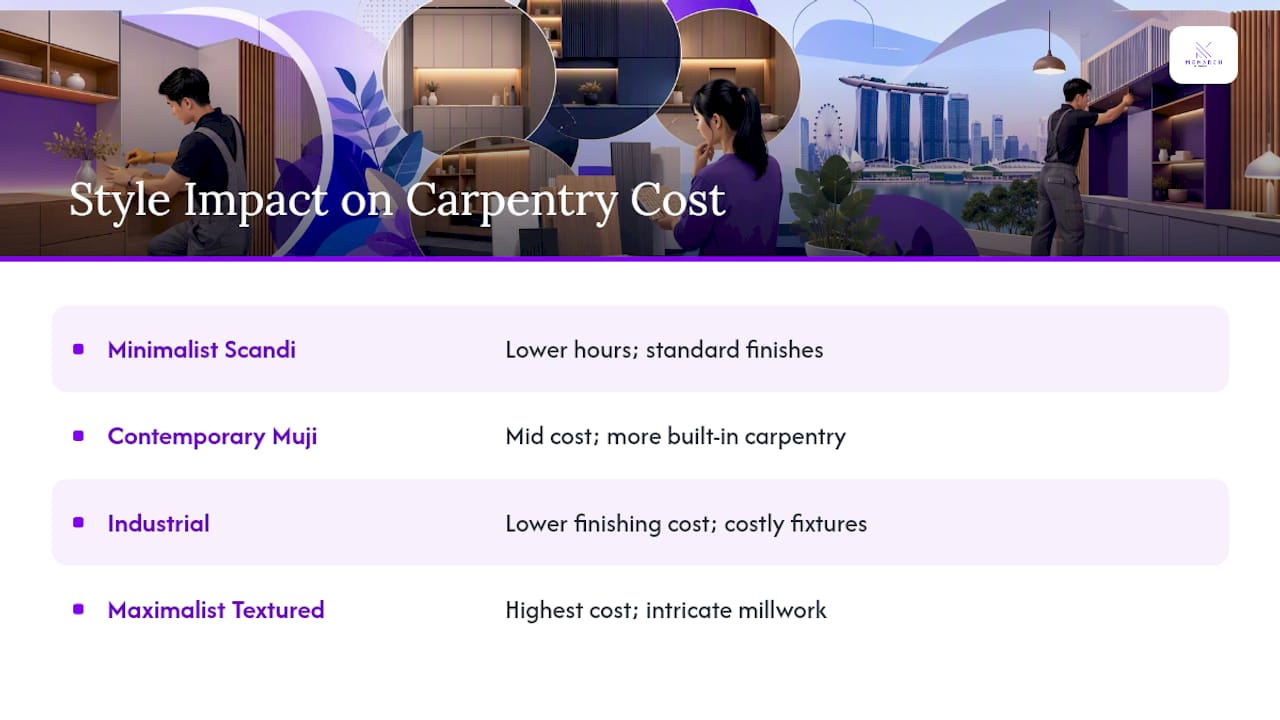
Design style shifts your budget more than most first-time homeowners assume. A minimalist Scandinavian look, built on clean lines and a limited material palette, is often one of the more budget-friendly styles because it relies on fewer joinery details and standard finishes.
Contemporary and Muji-inspired styles sit in the middle. They favor built-in storage and hidden hardware, which adds carpentry hours even though the overall look stays understated. Industrial styles, with exposed concrete, black metal accents, and factory-style lighting, can actually save money on wall finishing but add cost through specialty fixtures that aren’t stocked locally and often carry import lead times.
The most expensive styles tend to be maximalist or heavily textured looks, think Peranakan-inspired tiling, custom millwork with intricate profiles, or full marble feature walls. Every curve, groove, or inlay in a design adds fabrication hours, and fabrication hours are what carpentry quotes are built on.
If a style you love feels out of budget, ask your designer which single element carries the most cost. Often it’s one feature wall or one material choice, not the entire aesthetic, driving the number up. Swapping that one element for a visually similar but simpler alternative can bring a premium-looking design back into a standard budget band without changing the overall feel of the space.
Should You DIY or Hire a Professional Interior Designer?
DIY renovation makes sense for cosmetic changes: painting, swapping light fixtures, or assembling ready-made furniture. It rarely makes sense once carpentry, electrical rerouting, or layout changes enter the picture, and that’s where most DIY budgets quietly unravel.
The appeal of going it alone is obvious: no design fee, no project management percentage, and full control over every decision. The risk is just as real. Without a trade network, homeowners often pay retail rates for materials that a designer would source at contractor pricing, erasing much of the savings on fees alone. Coordinating separate contractors for carpentry, electrical, and plumbing also means you become the project manager by default, absorbing every scheduling conflict and rework cost yourself.
Hiring a professional costs more upfront but shifts that risk elsewhere. A design-build firm typically carries workmanship warranties, has established material suppliers, and can catch scope problems (like an outlet placement that conflicts with planned cabinetry) before they become expensive rework. For a small, contained project, like refreshing one bedroom, DIY can work well. For anything touching multiple rooms, structural elements, or custom joinery, professional oversight usually pays for itself in avoided mistakes alone.
What Hidden Costs Should You Budget For?
The renovation costs that blindside homeowners are rarely on the initial quote at all. Permit and application fees for HDB or condo renovation approval often get overlooked until the paperwork stage, and condo management corporations frequently charge a refundable deposit on top of admin fees before work can even start.
Disposal fees for old furniture, flooring, and debris add up fast, especially in a full gut renovation. Temporary storage costs, if you need to house furniture during the works, are another line item rarely included in the original quote. And if your renovation uncovers termite damage, water seepage, or non-compliant electrical wiring behind existing walls, that discovery becomes a change order, not a warranty claim.

The single best defense against hidden costs is the same one that protects against every other budget surprise: a clearly itemized proposal with provisional sums flagged upfront, so you know exactly which numbers are estimates and which are firm.
How Do Material and Fixture Choices Affect Cost in Singapore?
Singapore’s climate and import dependency shape material costs in ways that don’t apply everywhere. Humidity makes solid wood a risky choice for cabinetry unless properly treated, which is why most local carpentry defaults to moisture-resistant board with laminate or veneer finishes. Upgrading to imported European laminates or solid surface countertops can add meaningfully to a carpentry line item, since nearly all premium finishes arrive by sea freight with lead times attached.
Fixtures follow a similar pattern. Locally available sanitary ware and lighting tend to be budget-friendly and readily stocked, while imported fittings from brands popular in showroom displays often carry a price premium plus a longer wait. Flooring choices matter too: vinyl and laminate remain the most cost-effective options for HDB flats, while natural stone and large-format tiles push both material and installation costs higher, partly due to the skilled labor required for precise cutting and leveling.
What Permits and Regulations Affect Renovation Costs in Singapore?
HDB and condo renovations both require approval before hacking, electrical rewiring, or plumbing changes begin, and skipping this step risks fines or forced reinstatement. HDB has specific rules on which walls can be hacked (structural walls generally cannot), and condo management corporations often add their own restrictions on renovation hours, protective flooring in common areas, and a deposit against damage.
These requirements affect cost indirectly but meaningfully. Permit processing can add days or weeks to a timeline, which matters if you’re paying for temporary housing. Structural surveys, sometimes required before hacking is approved, carry their own fee. And any request to alter a load-bearing element typically requires a qualified person’s endorsement, an added professional fee most first-time renovators don’t anticipate. Factoring permit and compliance costs into your initial budget, rather than treating them as an afterthought, keeps your final number closer to your original plan.
A Common Misbudget, and the Fix
The mistake we see most often: homeowners budget generously for flooring and finishes, then treat carpentry as an afterthought, only to find it consumes the largest share of their renovation costs. The fix is sequencing. Prioritize function first, defer finish upgrades to a second phase if needed, and always get itemized quotes before comparing firms. If you want a fast read on where your numbers actually stand, Monarch carpenters can put together an itemized estimate in short order.
— Seth Wayne
Work With Monarch Carpenters for Design-and-Build in Singapore
Choosing a design and carpentry team that works under one roof provides itemized proposals instead of vague allowances, in-house joinery instead of subcontractor markups, and staged plans that let you prioritize function now and finishes later without blowing your budget.

Modest-cost design that holds up to scrutiny, room by room, line item by line item, can provide clarity before committing to an upcoming renovation. Request an itemized quote to see where your numbers land.
FAQ
How Much Does an Interior Designer Cost in Singapore?
Consultation fees typically run S$50 to S$250, while full design-and-build projects range from roughly S$15,000 for a compact BTO to well over S$78,000 for a larger resale flat, depending on scope and carpentry.
What Is the 70/30 Rule in Interior Design?
Definitions vary by source, but the version most commonly cited suggests allocating roughly 70% of a room’s visual weight to a dominant color or material and 30% to accent tones, a proportion rule rather than a strict cost formula.
How Much Does an Interior Designer Charge in the USA?
Pricing structures in the United States differ from Singapore’s model and typically follow hourly rates, flat design fees, or a percentage of total project cost, varying widely by region and project scope.
What Country Is Best for Interior Design?
There’s no single “best” country. It depends on what you’re looking for: distinct regional styles, availability of skilled trades, and local material costs all shape whether a market suits your specific renovation needs.
What Drives Interior Design Fees Up in Singapore?
Custom carpentry, structural hacking, and premium or imported finishes are the three biggest factors that push a Singapore interior design pricing quote from a basic band into a premium one.
Recommended
Comments