
12 Room by Room Feature Wall Ideas for Homeowners and Renters

Paint gives you the fastest and cheapest refresh, wallpaper or a mural adds pattern and drama in an afternoon, timber slats or panelling bring warmth and last for years, tile or stone suits wet areas that need durability, and built-in joinery earns its cost by adding storage while it anchors the room. Renters do best with peel-and-stick wallpaper or fabric panels that leave no trace. Homeowners planning to stay put should lean toward timber, tile, or custom joinery, and call in a carpentry professional once electrical work, heavy materials, or built-in cabinetry enter the picture.
TL;DR:
Timber panelling, built-in joinery, and stone veneer are more durable and maintain their appeal over time, justifying their higher upfront costs.
DIY options like peel-and-stick wallpaper, fabric panels, or painted geometric shapes are best suited for renters or temporary updates due to ease of removal.
Professional installation is recommended for projects involving heavy materials, electrical wiring, or built-in cabinetry, which can take one to three weeks and cost thousands.
Proper lighting, including wall grazing and backlighting, enhances the visual impact of a feature wall and should be matched to the material’s color temperature.
Moisture-resistant materials like patterned tile and glazed ceramic are essential for kitchen and bathroom feature walls to withstand humidity and splashes.
Table of Contents
Feature Wall Ideas: 12 High-Impact Options Worth Trying
Some feature wall ideas earn their keep in a weekend. Others need a carpenter and a proper plan. Here are twelve that consistently deliver, ranked by how much visual payoff you get for the effort involved.
Bold single-color paint. Pick one saturated color for one wall only. Best for a fast mood shift in any room. Effort: low, a weekend job for most people.
Color capping. Paint the wall a shade or two darker than the ceiling and trim, wrapping the color slightly onto the ceiling edge. Best for low-ceiling rooms that need visual height. Effort: low to moderate.
Board and batten. Vertical strips of trim create a paneled look without full millwork. Best for hallways, dining rooms, and bedrooms. Effort: moderate, a solid DIY weekend project for someone comfortable with a miter saw.
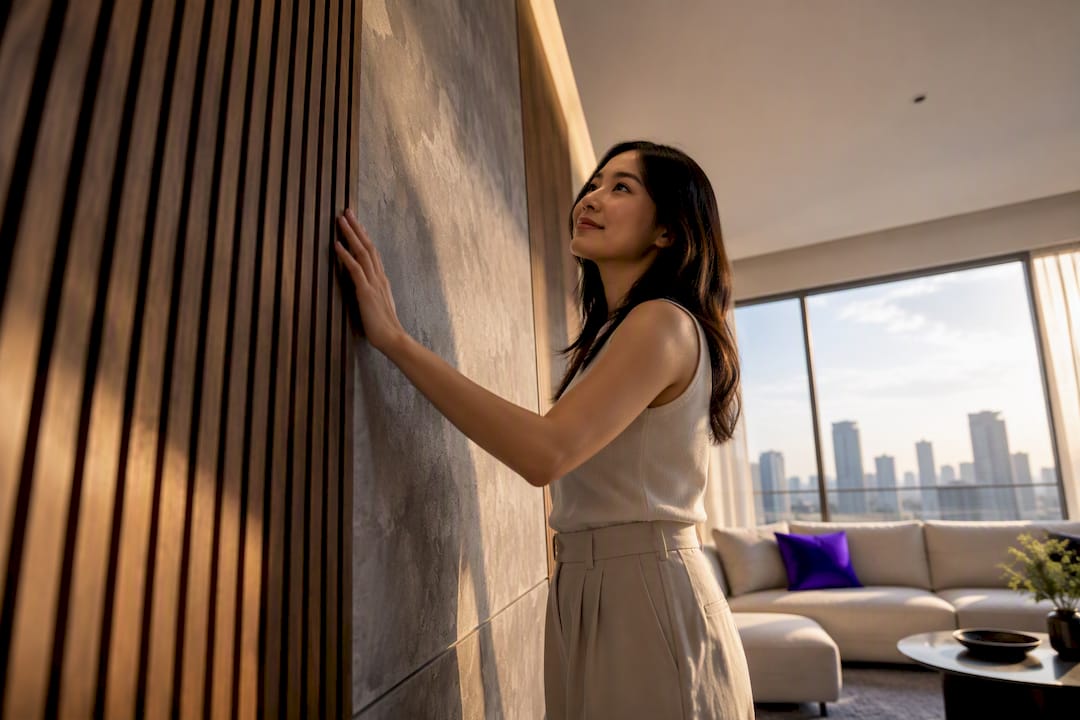
Fluted or slatted timber panelling. Vertical ribbed wood adds texture and hides imperfect drywall. Best for TV walls, headboards, and entryways. Effort: moderate to high, often worth hiring out for a clean finish. Homebuilding points to timber cladding as one of the more durable, timeless choices in this category.
Gallery wall. A curated cluster of framed art or photos. Best for hallways, staircases, and living rooms. Effort: low, renter-friendly with the right hanging strips.
Statement wallpaper or mural. A single bold pattern or scenic print on one wall only. Best for bedrooms, powder rooms, and dining nooks. Effort: low to moderate depending on paste type. Architectural Digest notes that homeowners increasingly restrict wallpaper to one wall or a chimney breast rather than covering a whole room.
Tile as a statement surface. Patterned or glazed tile applied floor to ceiling or as a partial backsplash-style feature. Best for kitchens and bathrooms. Effort: moderate to high, usually needs a professional.
Faux stone or veneer panels. Lightweight stone-look panels for a fireplace or entry wall. Best for living rooms wanting a rustic or industrial edge. Effort: moderate.
Painted geometric shapes. Taped-off triangles, arches, or blocks of color. Best for kids rooms and home offices. Effort: low, and fully renter-reversible with a repaint.
Fabric or tapestry panels. Stretched fabric or a hung textile softens a room and adds acoustic dampening. Best for bedrooms and apartments. Effort: low, no adhesive required.
Modular shelving or joinery. Built-in shelving that doubles as storage and visual anchor. Best for living rooms and home offices. Effort: high, a carpentry job.
TV or media wall with integrated cable management. Slats, a recessed niche, or a floating console hide wires and make the screen look designed in, not bolted on. Best for living rooms and media rooms. Effort: moderate to high depending on wiring scope.
Feature Wall Ideas by Room
A feature wall only works when it respects how the room actually gets used. A dramatic mural behind a bed reads as romantic; the same mural in a kitchen backsplash zone would peel within a year from grease and steam.
Living room
The living room is where most people start, mainly because it usually has one wall that already does the visual work: the TV wall or the fireplace wall. Fluted timber panelling around a fireplace hides the transition between mantel and wall cleanly, and stone or tile veneer gives a fireplace wall genuine weight. If you are wrapping a TV into this wall, keep ventilation in mind. Electronics generate heat, so avoid sealing a television into a fully enclosed niche without airflow, and skip glossy finishes directly behind the screen since they throw glare back at seated viewers.
Fluted panel or slatted wood behind the TV or fireplace
Stone or brick-look veneer for a fireplace feature
Built-in shelving flanking a central media wall
Bedroom
Bedroom feature wall ideas tend to replace the headboard rather than compete with it. A moody, saturated paint color behind the bed head (deep green, charcoal, terracotta) does more for the room’s feel than any single piece of furniture. Wallpaper behind the bed works well too, since the furniture blocks half the wall and reduces how much pattern the eye has to process at once. Renters get the same effect with a large fabric panel or tapestry hung from a curtain rod, no adhesive needed.
Deep, saturated paint color behind the headboard
Wallpaper or mural limited to the wall behind the bed
Fabric panel or tapestry for a renter-friendly swap
Kitchen and bathroom
Moisture rules everything here. Glazed ceramic tile, whether in a bold pattern or a simple large-format slab, tolerates steam and splashes in ways that wallpaper and raw wood cannot. If you want a mural effect in a kitchen, look at printed tile rather than paper. Adhesive choice matters more than people expect. A partner resource on interior door and closet materials covers how humidity affects material choice in wet-area renovations, which applies just as much to wall finishes as it does to doors.
Patterned or glazed tile for a durable focal wall
Large-format slab tile for a cleaner, modern look
Avoid raw wood or standard wallpaper near steam or splash zones
Hallway and entry
Hallways are narrow and get walked past, not sat in front of, so subtlety works better than a loud mural. Color capping, where the wall color wraps partway onto the ceiling, adds drama without overwhelming a tight space. Moulding, whether picture-frame panelling or simple board and batten, gives an entry a built sense of intention the moment someone walks in. Gallery walls also thrive here since the hallway gives people time to actually look at each frame.
Color capping to add height in a narrow space
Board and batten or picture-frame moulding
Gallery wall along the main walking path
Kids’ rooms and home offices
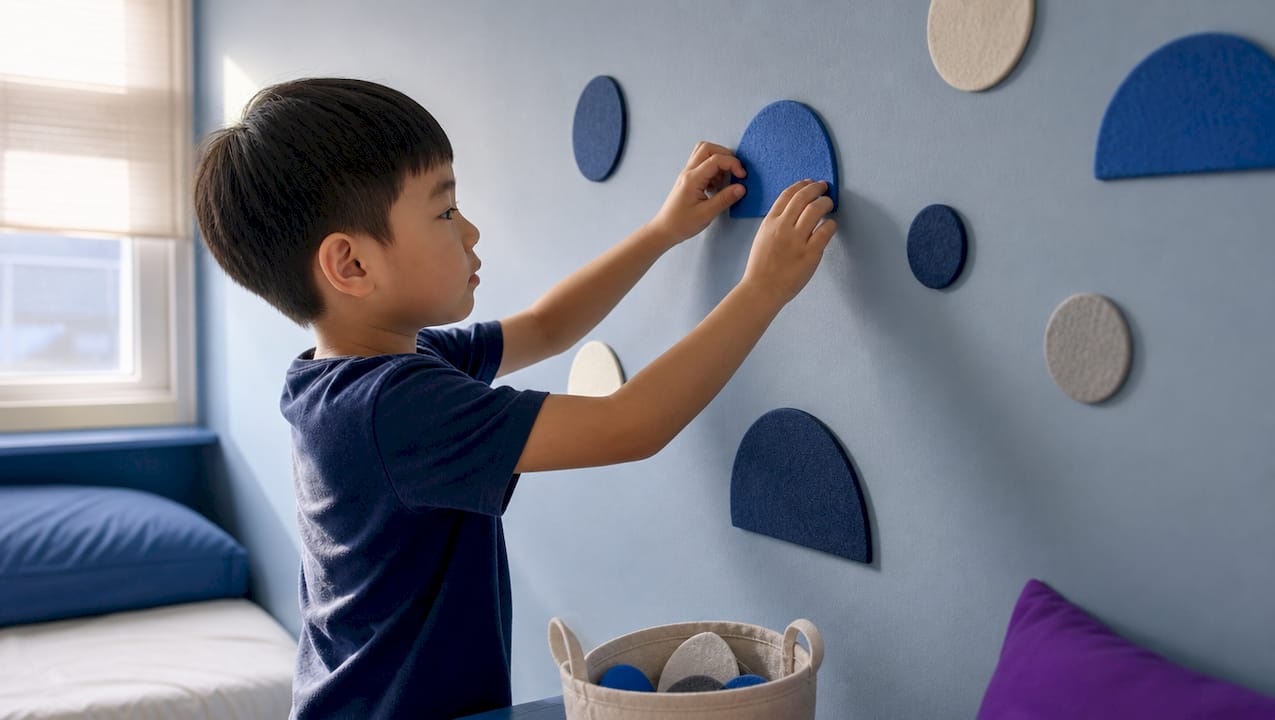
Kids’ rooms need flexibility since preferences change fast at that age. Removable murals, wall decals, and felt stickers let a room shift from dinosaurs to space themes without a repaint. A kids room carpentry guide walks through safe, low-maintenance options built for that turnover. Home offices benefit from the opposite instinct: calm, low-contrast wallpaper or a built-in shelving backdrop that also looks intentional on video calls. A study room carpentry design guide shows how slatted and paneled walls double as a functional backdrop for focused work.
Feature Wall Materials: Cost, Durability, and Maintenance
The material you choose determines whether the wall looks the same in five years or needs redoing in eighteen months. Here is how the main options actually compare once you factor in upkeep, not just install day.
Material | Visual effect | Install difficulty | Moisture tolerance | Maintenance |
Paint | Bold color, ombre, capping | Low, weekend DIY | Low to moderate | Repaint every 3–5 years |
Wallpaper or mural | High drama, pattern, scenic | Low to moderate | Low, poor in wet rooms | Wipe clean, watch for seam lifting |
Timber slats or panelling | Warmth, texture, architectural | Moderate to high | Moderate | Occasional dusting, reseal every few years |
Tile or stone veneer | Substantial, permanent | High, usually professional | High | Very low, occasional regrouting |
Plaster or textured finish | Organic, tactile | Moderate to high | Low to moderate | Careful cleaning, avoid abrasive scrubbing |
Fabric panel | Soft, acoustic benefit | Low | Low | Vacuum or spot clean |
Paint remains the fastest lever for a feature wall. Two-tone splits, ombre fades, and color capping all cost the same as a standard paint job, just with more taping.
Wallpaper splits into peel-and-stick and traditional paste. Peel-and-stick suits renters and pattern-repeat mistakes are easier to fix; paste-applied paper handles humidity slightly better and lies flatter over time.
Timber slats and panelling come in engineered veneer or solid wood. Veneer costs less and weighs less, which matters if you are gluing directly to drywall. Solid timber costs more but ages with more character.
Tile or stone veneer adds real weight to a wall, so confirm the substrate can hold it before committing. This is one of the few feature wall categories where hiring a professional is close to non-negotiable once you move past a small accent area.
Plaster, limewash, and other textured finishes reward patience during application but need almost no upkeep once cured.
Renters short on time can fake almost any of these effects with a lightweight faux finish or a large fabric panel, at a fraction of the cost and zero risk to the deposit.
Pro Tip: Before committing to a full wall of anything expensive, buy or make a sample board roughly two feet square and look at it in your room at both midday and after dark. Lighting changes color and texture more than most people expect, and a color that looked perfect on a paint chip under store lighting can read completely differently at home.
Planning a TV or Media Feature Wall
Mount the television so its center sits between 42 and 48 inches from the floor. TaskRabbit’s mounting guidance ties that range directly to comfortable seated viewing and warns that mounting a TV too high above a fireplace forces the neck into an unnatural angle during long viewing sessions.
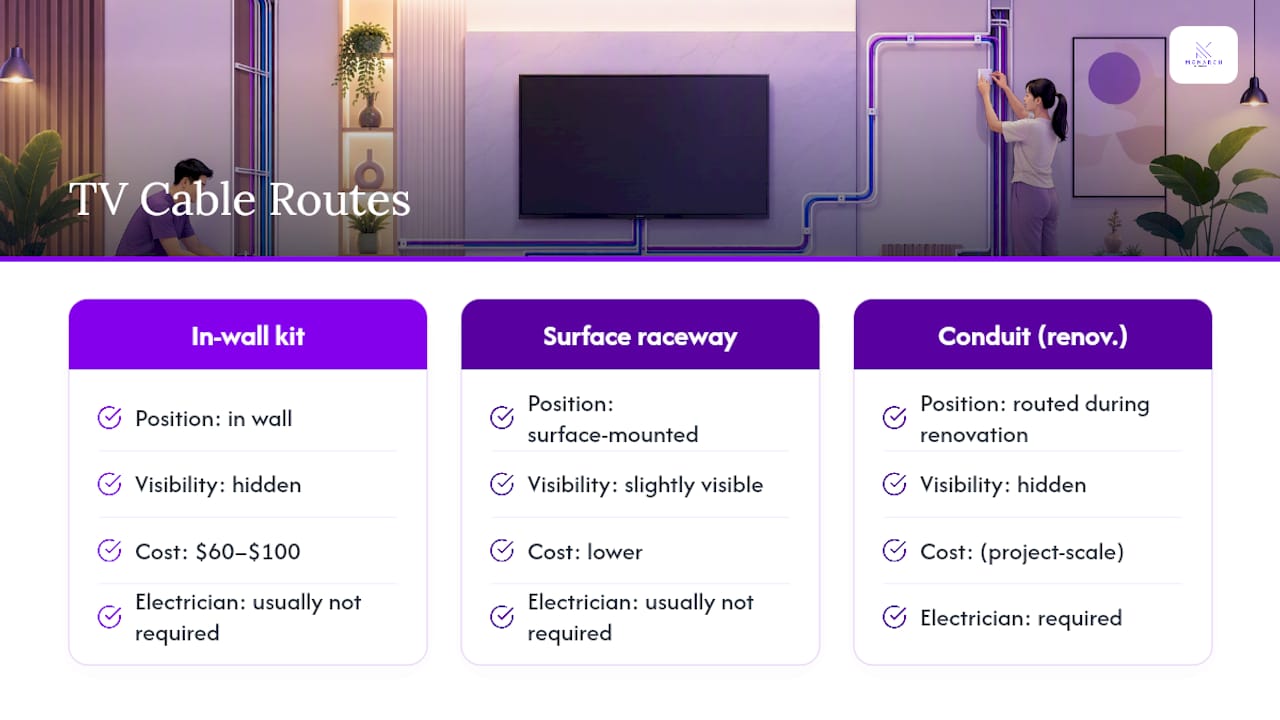
Cable management makes or breaks whether a media wall looks designed or improvised. Three routes exist: in-wall power kits, surface raceways, and conduit run during a full renovation. DG Floors’ breakdown of TV wall builds puts in-wall power kits in the $60 to $100 range, a genuinely DIY-friendly option that lets you skip a visible power cord dropping to an outlet. Surface raceways cost less but stay slightly visible unless painted to match the wall. Full conduit work belongs to an electrician, especially if you are adding new outlets rather than just rerouting an existing one.
Ventilation matters more than most guides mention. Electronics need airflow, so a fully enclosed niche without a back vent or gap can shorten the life of a receiver or gaming console sitting inside it. Bring in an electrician anytime the project involves a new circuit, moving an outlet, or working near existing wiring you are not fully sure about.
Styling makes the screen belong rather than sit bolted to drywall. Fluted slats behind the TV break up the flat black rectangle. Backlighting with a thin LED strip behind the panel adds a soft glow that reduces harsh contrast in a dark room. Framing the whole setup with a shadow box or recessed niche gives the television the same visual weight as a piece of art.
Renter-Friendly and Temporary Feature Wall Options
You do not need to own the wall to change how it feels. Several reversible options give real visual impact without risking a security deposit.
Peel-and-stick wallpaper. Quality brands remove cleanly from most painted drywall when applied to a properly cleaned, dry surface. Always test a small hidden patch first, since paint quality and age affect how cleanly it lifts.
Tapestries and fabric panels. Hang from a tension rod or small hooks near the ceiling line rather than adhesive strips across the whole fabric. Zero wall damage and instant texture.
Freestanding panel screens. A folding or leaning wood-slat screen creates a feature wall effect without touching the actual wall at all.
Curtain-backed walls. Floor-to-ceiling curtains mounted on a simple rod add softness and can be swapped seasonally.
The Spruce’s guide to budget accent walls recommends always testing removal on a small patch before committing to full coverage, since some paint finishes lift more than others when adhesive comes off. Skip temporary options entirely in bathrooms, kitchens near cooking heat, or anywhere you were considering a heavy veneer. Moisture and weight both defeat anything designed to be reversible.
Feature Wall Costs, Timelines, and When to Call a Professional
A painted feature wall is realistically a weekend project, start to finish, including drying time between coats. Wallpaper takes longer than people expect, usually two to five days once you account for wall prep, pattern matching, and letting paste-applied paper cure properly. Timber slats or built-in joinery run one to three weeks depending on finish complexity, since that timeline includes measuring, cutting, staining or sealing, and installation.
Three signals mean it is time to bring in a professional rather than push through a DIY weekend:
Any project involving new electrical wiring, outlet relocation, or in-wall power routing beyond a simple retrofit kit.
Heavy materials like stone veneer or large-format tile, where substrate strength and structural load need confirming before installation.
Built-in cabinetry or joinery, where poor measurements or weak fastening show up as sagging shelves or misaligned doors within a year.
Some jurisdictions also require permits for structural changes tied to a feature wall project, particularly if a wall is load-bearing or the work touches electrical circuits. A renovation budget guide is worth reviewing before you request quotes, since contingency planning saves headaches once a quote reveals hidden scope.
When you do get quotes, ask each contractor the same four questions: what is included in the price versus billed as an add-on, what is the realistic timeline including material lead times, what warranty covers the workmanship, and can they show recent work similar to your project. A home renovation stages breakdown also helps set expectations for how a carpentry-led project typically unfolds from first sketch to final install.
How Monarch Carpenters Builds Feature Walls That Last
We approach a feature wall the same way we approach any carpentry project: design and build under one roof, so the idea on paper matches what actually gets installed. That collaborative process means a designer and a carpenter are looking at the same drawings from day one, which tends to catch material or spacing issues before they turn into an expensive change order on-site.
A typical feature wall project with us moves through a concept sketch, a materials sample for your approval, shop drawings for anything custom, on-site installation, and a finish handover where you walk through the completed wall before we call it done. Our explanation of carpentry’s role in home design covers why keeping design and fabrication in-house tends to produce a cleaner result than juggling separate designers and tradespeople.
Lighting That Makes a Feature Wall Actually Read as Finished
A feature wall without the right lighting looks flat no matter how good the material is. Wall washers, mounted above or below the feature and aimed to graze across the surface, bring out texture in timber slats, plaster, and stone veneer that overhead lighting flattens out. Picture lights work well over a gallery wall or a single statement piece, giving it the same treatment a piece in a gallery would get.
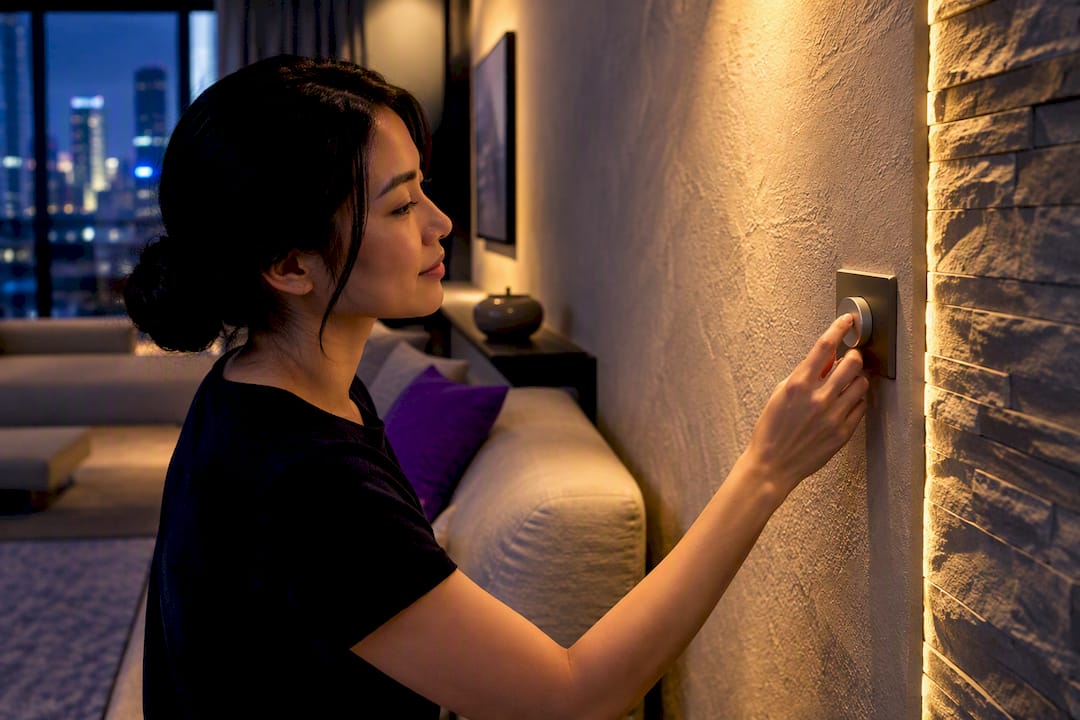
Backlighting, usually a thin LED strip run behind a floating panel or along a recessed niche edge, adds a soft glow that separates the feature wall from the rest of the room after dark. This works especially well behind a TV wall or a headboard feature, where it reduces harsh contrast between a bright screen and a dark room.
Match color temperature to the material. Warm white light (around 2700K to 3000K) flatters timber, stone, and warm paint tones, while cooler light can wash out the same materials and make them look sterile. Dimmers matter more than people budget for, since a feature wall usually needs to shift from bright and functional during the day to soft and moody at night. A single fixed brightness setting undercuts a feature wall’s whole purpose.
Avoid pointing a single overhead can light straight down onto a textured wall. It creates hard shadows that emphasize every imperfection instead of the material’s actual character.
Why Permanent, Architectural Feature Walls Win Long Term
Trends move fast, but the walls that still look good after five years share one trait: they were built as architecture, not decoration. A painted accent wall is easy to redo when you get tired of it, which makes it the right call for a rental or a room you expect to change soon. Timber panelling, built-in joinery, and stone veneer cost more upfront and take longer to install, but they hold their resale value and rarely look dated the way a trend-driven paint color eventually does.
The real trade-off is patience versus flexibility. A permanent wall demands more planning and a bigger check upfront; a temporary one demands more redoing over time. Either way, the rule that matters most stays the same: pick one wall, commit to one clear idea, and let the rest of the room stay quiet around it.
— Seth Wayne
Get a Feature Wall Built to Last, Not Redone in a Year
A well-integrated design and build team can be a better alternative to a patchwork of separate painters, tilers, and handymen for a feature wall that holds up well. When designers and carpenters work from the same drawings under one roof, clients benefit from a single point of contact, a clear timeline, and craftsmanship that minimizes costly change orders caused by coordination errors between multiple tradespeople.

A consultation with us starts with understanding your room, your budget, and which of these feature wall approaches actually fits your space before any material gets ordered. You can see finished carpentry and cladding work in our portfolio of facade and joinery projects, and if bespoke joinery is on your shortlist, our guide on choosing carpentry versus ready-made furniture is worth a read first. When you are ready to talk specifics, book a consultation through our services page and get a clear scope before you commit to anything.
Sources
FAQ
Are feature walls still on trend?
Feature walls have not gone out of style, they have shifted toward more intentional, architectural treatments rather than a single random accent wall. Editors at Homebuilding point to timber cladding, textured plaster, and restrained panelling as the current direction, favoring longevity over a quick trend.
What wall should become the feature wall?
Choose the wall your eye naturally lands on when you walk into the room, usually the one behind a bed, behind a TV, or facing the main entry point. Avoid picking a wall interrupted by too many doors, windows, or outlets, since a busy wall fights the feature instead of showcasing it.
What are some stylish feature wall ideas for 2026?
Fluted timber panelling, statement tile in kitchens and bathrooms, and single-wall murals limited to one focal point are among the strongest current directions, according to Architectural Digest. Built-in joinery that doubles as storage is also gaining ground for readers who want their feature wall to earn its space functionally, not just visually.
Should I hire a professional for a feature wall?
Hire a professional for anything involving new electrical work, heavy stone or tile veneer, or built-in cabinetry, since mistakes in those areas are expensive to redo. Monarch carpenters handles design and build together for exactly these projects. Consultation pricing is available directly through our services page.
How much does a feature wall cost to build?
Costs vary widely by material and scope, from a weekend paint job costing little more than a few cans of paint to a custom timber or joinery wall running into the thousands depending on size and finish. In-wall power kits for a TV feature wall typically run $60 to $100, while wood slat materials cost roughly $4 to $7 per square foot before labor.
Recommended
Comments