
The Role of Interior Designer in Renovation for Singapore Homes
- Monarch

- 4 days ago
- 8 min read

TL;DR:
Interior designers translate your living vision into detailed plans and supervise construction to ensure quality. They handle space planning, technical documentation, and coordination, preventing costly delays and errors during renovation. Early engagement with a designer streamlines permits, manages costs, and creates a cohesive, functional space.
The role of an interior designer in renovation is to translate your living vision into a precise, buildable plan and then supervise its execution from the first sketch to the final coat of paint. Interior designers handle space planning, technical documentation, contractor coordination, and on-site quality control. For Singapore homeowners, especially those navigating HDB permit workflows and tight floor plans, this professional involvement is the difference between a renovation that runs smoothly and one that unravels mid-build. Understanding what designers actually do, and when to bring them in, sets the foundation for a successful project.
What tasks do interior designers handle before renovation begins?
The role of interior designer in renovation starts long before a single wall is hacked. Interior designers in Singapore typically begin with a structured needs assessment, asking about your lifestyle, storage habits, daily routines, and long-term plans for the space. This analysis directly shapes every layout decision that follows.

From there, designers produce moodboards, 2D floor plans, and 3D renders that give you a clear picture of the finished space before any money is spent on materials. These visuals are not decorative extras. They are decision-making tools that lock in choices early, reducing the expensive revisions that happen when homeowners change their minds mid-construction. Detailed specification and drawing documentation directly influences time, cost, and quality outcomes in renovation projects.
Designers also coordinate with architects at this stage to align structural and interior plans. A wall you want removed may carry a load. A lighting layout may conflict with existing conduit runs. Catching these conflicts on paper costs nothing. Catching them on site costs significantly more.
Key pre-renovation deliverables your designer should produce:
Detailed floor plans with furniture and fixture placement
Reflected ceiling plans showing lighting, fan, and air-conditioning positions
Cabinetry and joinery drawings with dimensions and material specifications
Electrical and plumbing coordination drawings
A complete specification list for contractor tendering
Pro Tip: Ask your designer to produce a renovation project checklist that maps each deliverable to a timeline milestone. This single document keeps every party accountable and prevents the “I thought you were handling that” conversations that derail projects.
How do interior designers support the construction phase?
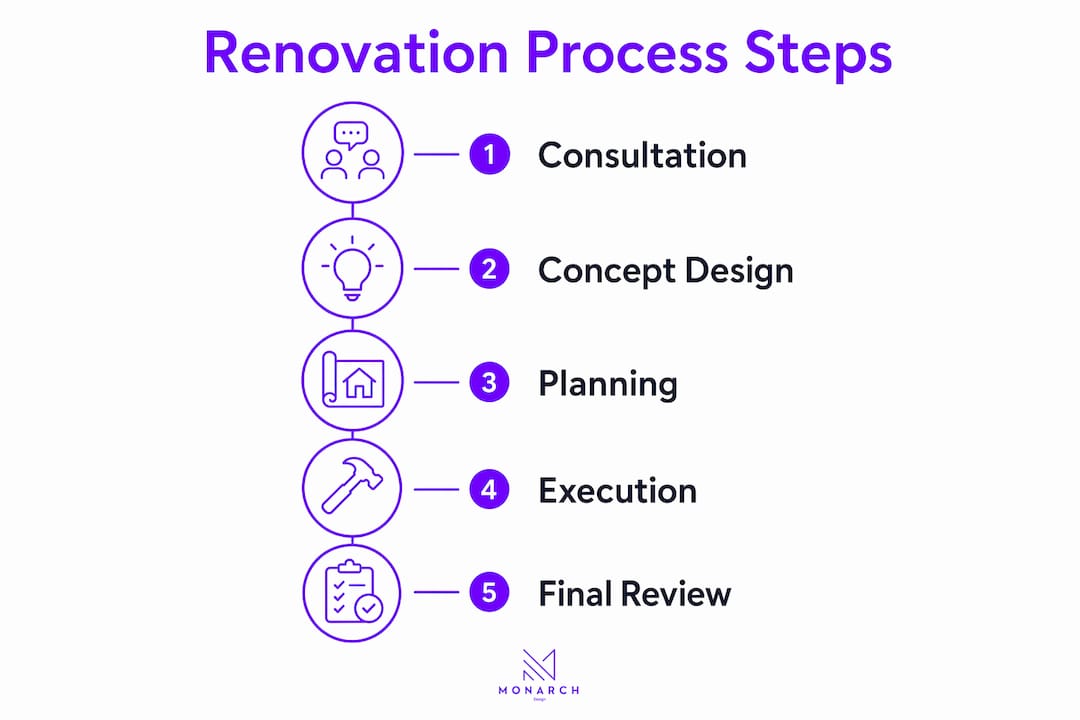
Once the build begins, the designer’s job shifts from creating to protecting. Their primary task is ensuring design intent survives contact with the realities of construction. Contractors work fast, and without a designer reviewing progress, shortcuts and substitutions accumulate quietly until the finished space looks nothing like the plan.
Here is what a thorough designer does during the construction phase:
Reviews shop drawings and submittals. Before fabrication begins on custom cabinetry or built-ins, the designer checks that the contractor’s working drawings match the approved design. Discrepancies caught here cost nothing to fix.
Conducts regular site visits. These are not social calls. The designer checks that tiling patterns are laid correctly, that lighting positions match the ceiling plan, and that material finishes match approved samples.
Answers requests for information (RFIs). Contractors encounter unexpected conditions, such as pipes in the wrong place or walls that are not plumb. The designer provides fast, documented decisions so work does not stall.
Coordinates between trades. Electricians, plumbers, carpenters, and tilers all work in overlapping sequences. The designer manages this choreography so one trade does not undo another’s work.
Documents deviations and approvals. Any change from the original plan gets recorded in writing. This protects you from disputes at handover and gives you an accurate record of what was built.
Interior designers who create their own construction documents reduce the risk of miscommunication and enable smoother project execution throughout the build.
Pro Tip: Request a site visit report after each inspection. A brief written summary with photos creates a paper trail that resolves disputes quickly and holds contractors to agreed standards.
How do interior designers differ from architects and decorators?
Many homeowners use these three titles interchangeably, but the roles are distinct. Knowing who does what helps you build the right team and avoid paying for overlapping services.
Professional | Primary focus | Renovation involvement |
Architect | Structural integrity, building codes, permits | Required for structural changes; handles submissions to BCA |
Interior designer | Space functionality, materials, lighting, cabinetry, finishes | Manages design from concept through construction oversight |
Interior decorator | Aesthetics, furniture, soft furnishings, styling | Engaged post-construction for visual finishing touches |
Architects handle the bones of a building. Interior designers handle how those bones are lived in. Decorators handle how the space looks once the build is complete. In most Singapore HDB renovations, you do not need an architect unless structural changes are involved. You do need an interior designer if you want the space to function well and be built correctly.
Early collaboration between architects, interior designers, and contractors leads to more cohesive and cost-effective renovations. When these professionals communicate from the start, conflicts are resolved on paper rather than on site.
A common misconception is that interior designers only select finishes, but their role includes functional space planning, technical coordination, and on-site management. This misunderstanding leads homeowners to hire decorators when they actually need a designer, then wonder why the renovation feels disorganized.
How do interior designers help manage renovation costs and timelines?
Budget overruns are the most common renovation complaint among Singapore homeowners, and most of them are preventable. Interior designers contribute to cost control in ways that go well beyond selecting affordable tiles.
Interior designers help create realistic budgets that include contingencies for unexpected conditions like hidden wiring, old pipes, or uneven floors. This means your initial budget reflects what the project will actually cost, not a best-case scenario that falls apart the moment hacking begins.
Specific ways designers protect your budget and schedule:
They finalize material and finish selections before contractor tendering, so quotes are accurate and comparable
They flag scope creep early, identifying when a homeowner’s wish list has outgrown the budget before commitments are made
They reduce change orders by making decisions upfront. Each change order during construction typically costs two to three times what the same decision would have cost at the design stage
They build phased timelines that sequence trades correctly, preventing idle time where one contractor waits on another
They leverage relationships with local suppliers and contractors to source materials at trade pricing
Sequencing design involvement before contractor bidding exponentially reduces change costs and timeline delays during renovation. This is why bringing a designer in early, before you have signed any contractor agreements, is one of the highest-return decisions you can make.
What should Singapore homeowners know about hiring a designer?
Singapore’s renovation process has specific procedural requirements that make local knowledge genuinely valuable, not just a nice-to-have. For HDB renovations, early engagement of interior designers 3 to 6 months before key collection is recommended to allow proper planning and scheduling. This timeline gives the designer room to finalize plans before the contractor needs to begin permit submissions.
Practical considerations for Singapore homeowners:
HDB renovation permits are submitted by the contractor, but the designer’s drawings must be complete and accurate before that submission can happen. Misaligned timelines cause delays that push back your move-in date.
Aligning design timelines with contractor APEX permit submissions keeps permit approvals on track and avoids costly project delays.
A written scope of work document is non-negotiable. It should define exactly what drawings and services the designer will deliver, how many revision rounds are included, and what falls outside the agreement. A well-crafted scope of work document prevents scope creep and protects both parties.
Ask whether the designer has experience with your specific flat type. A 4-room HDB and a condominium unit have very different spatial constraints and permit requirements.
Verify that the designer works closely with contractors rather than handing over drawings and stepping back. Homeowners benefit greatly from designers experienced in local regulations and contractor networks, which produces smoother workflows and approvals.
You can explore more about interior design planning for Singapore homes to understand how the full process unfolds from concept to handover.
Key takeaways
An interior designer’s value in renovation comes from early involvement, precise documentation, and active construction oversight, not from aesthetics alone.
Point | Details |
Start early | Engage your designer 3 to 6 months before key collection to align plans with permit timelines. |
Documentation drives quality | Detailed drawings and specifications reduce on-site errors, change orders, and contractor disputes. |
Designers protect your budget | They flag overruns before commitments are made and reduce costly mid-build changes. |
Know the role differences | Architects handle structure, designers handle function and finish, decorators handle styling post-build. |
Local knowledge matters | Singapore-specific experience with HDB permits and contractor workflows prevents avoidable delays. |
Why I think most homeowners hire designers too late
I have seen this pattern repeat more times than I can count. A homeowner signs a contractor, gets a quote, and then calls a designer to “make it look nice.” By that point, the structural decisions are locked, the budget is committed, and the designer is essentially decorating around someone else’s plan. The result is a space that functions adequately but never quite feels intentional.
The designers who deliver the best outcomes are the ones who are in the room before the contractor is even selected. They shape the brief, define the scope, and set the standard that every subsequent decision is measured against. When a contractor knows a designer is reviewing their work, the quality of that work improves. That accountability is worth more than any single material upgrade.
I also think homeowners underestimate how much a designer’s local knowledge is worth in Singapore specifically. Knowing which contractors reliably meet HDB permit requirements, which suppliers stock materials that photograph well but wear poorly, and which flat configurations create spatial problems that no amount of clever furniture can solve. These are not things you learn from a mood board. They come from years of completed projects and honest client conversations.
The studios that earn strong reviews and repeat referrals, like Monarch Carpenters, tend to share one trait: they treat documentation and communication as seriously as they treat design. Beautiful spaces are the result of good process, not just good taste.
— Seth Wayne
Renovation design you can trust at a cost that makes sense

Monarch Carpenters has built a reputation among Singapore homeowners for delivering thoughtful, well-crafted interiors at a price point that respects real-world budgets. Clients consistently highlight the studio’s clear communication, attention to detail, and the quality of their bespoke carpentry work as reasons they recommend Monarch to friends and family. The in-house team of designers and carpenters works collaboratively from concept through construction, so the design intent you approved on paper is the space you move into. If you are planning a renovation and want a studio that combines genuine design expertise with honest pricing, explore Monarch Carpenters’ services and see why so many Singapore homeowners trust them with their homes.
FAQ
What does an interior designer actually do in a renovation?
An interior designer handles space planning, technical drawings, material selection, contractor coordination, and on-site quality control throughout the renovation. Their role goes well beyond aesthetics to include documentation and construction oversight.
When should I hire an interior designer for an HDB renovation?
Engage your designer 3 to 6 months before key collection to allow enough time for design finalization, permit preparation, and contractor coordination before work begins.
How is an interior designer different from an interior decorator?
An interior designer manages the functional and technical aspects of a renovation from concept through construction. An interior decorator focuses on styling and furnishing a space after construction is complete.
Can an interior designer help me stay within budget?
Yes. Designers create realistic budgets that include contingencies, finalize material selections before tendering, and reduce costly change orders by making decisions early in the process.
Do I need both an architect and an interior designer for my Singapore renovation?
For most HDB renovations without structural changes, an interior designer is sufficient. An architect is required when structural modifications, additions, or changes to the building envelope are involved.
Recommended
Comments