
What Is a Kitchen Island? A Homeowner's Design Guide
- Monarch

- 2 days ago
- 9 min read

TL;DR:
A kitchen island is a self-contained, freestanding unit that provides extra workspace, storage, and seating accessible from multiple sides. Its size, shape, and function should be carefully planned using industry standards to ensure usability and comfort within the kitchen’s layout. Professionals recommend designing the island after determining appliance placement and workflow to prevent workflow issues and optimize functionality.
A kitchen island is a freestanding counter or cabinet unit placed within the kitchen, accessible from multiple sides, that adds workspace, storage, and seating beyond what standard cabinetry provides. Unlike a peninsula, which connects to a wall on one end, a freestanding island unit stands independently and can be approached from at least three sides. This makes it one of the most versatile additions in residential kitchen design. Whether you are planning a full renovation or simply rethinking your layout, understanding what a kitchen island is and how it functions will help you make a decision that serves your home for years to come.
What is a kitchen island, and how does it differ from other cabinetry?
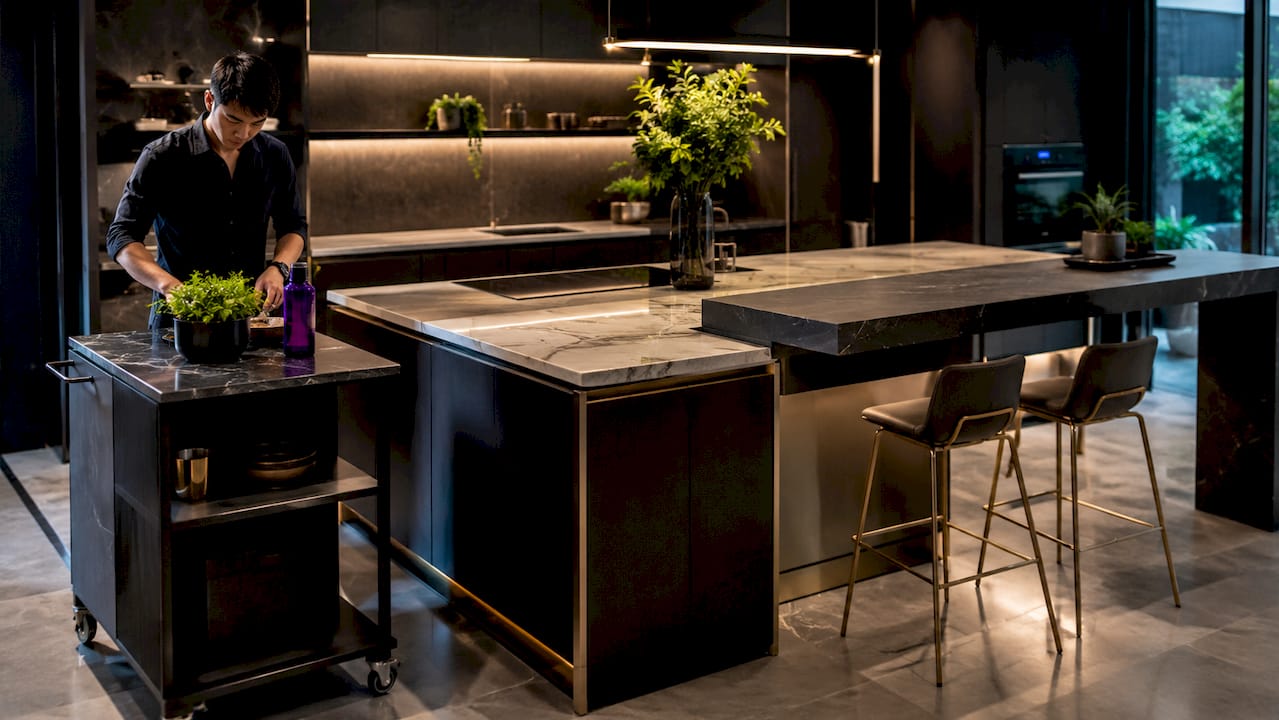
A kitchen island is defined as a self-contained unit that sits in the open floor space of a kitchen, separate from the perimeter walls and cabinets. The industry term most designers use is “island unit,” and it covers everything from a simple rolling cart to a fully built-in structure with plumbing, appliances, and seating. What separates it from a peninsula or a breakfast bar is that open circulation on three or more sides. That accessibility is what makes it a genuine workspace rather than just an extension of the counter.
The functional range of a kitchen island is broader than most homeowners expect. At its most basic, it adds prep space. At its most developed, it houses a second sink, a cooktop, a wine fridge, and seating for four. The multi-zone workspace model has largely replaced the old work triangle concept in modern kitchen planning, and the island is central to that shift. It allows you to separate prep, cooking, and cleanup into distinct areas rather than routing all activity through a single triangular path.
What are the common types and styles of kitchen islands?
Kitchen islands come in multiple configurations, and the right one depends on your kitchen’s footprint, your cooking habits, and how you use the space socially. The table below summarizes the most common types and their best use cases.
Island type | Best for | Key feature |
Rolling cart | Small kitchens, renters | Portable, no installation required |
Two-tiered | Families with children | Separates prep from dining height |
L-shaped | Open-plan kitchens | Maximizes corner space and seating |
Waterfall | Design-forward homes | Countertop material wraps to the floor |
Floating/built-in | Permanent renovations | Custom storage and appliance integration |
Circular | Compact or unique layouts | Encourages conversation, no sharp corners |
Beyond shape, islands divide into two broad functional categories: stationary and mobile. A rolling cart from brands like IKEA’s RÅSKOG line or a butcher block cart from Crosley Furniture gives you flexibility without committing to a fixed layout. A built-in island, on the other hand, is typically custom-fabricated to match your cabinetry and can include plumbing for a prep sink or electrical for a cooktop.
The waterfall island deserves special mention because it is one of the most requested designs in contemporary interiors right now. The countertop material, often quartz, marble, or engineered stone, continues vertically down the sides of the island to the floor. This creates a sculptural effect that reads as furniture rather than cabinetry. It works best in open-plan spaces where the island is visible from the living or dining area.
Pro Tip: If your kitchen is under 150 square feet, a rolling cart or a slim two-seater floating island will serve you better than a large built-in. Prioritize clearance over counter footage.
For compact kitchen layouts common in Singapore apartments, a narrow island measuring 24 inches deep rather than the standard 36 inches can preserve aisle width while still delivering meaningful prep space.
How to plan kitchen island size and layout for usability and comfort
Getting the size right is where most homeowners make their first mistake. A kitchen island that looks proportional in a showroom can create a bottleneck in your actual kitchen. The National Kitchen and Bath Association (NKBA) sets the benchmark here, and their numbers are worth memorizing before you finalize any design.
Follow these planning steps in order before committing to dimensions:
Measure your total kitchen floor space. The island should occupy no more than one-third of the open floor area. In a 10-by-12-foot kitchen, that leaves very little room for a fixed island.
Apply the NKBA aisle width standards. Work aisles require at least 42 inches for a single cook and 48 inches for households where two people cook simultaneously. These are minimums, not targets.
Add walkway clearance on non-work sides. Any side of the island that is not a primary work aisle still needs at least 36 inches of clearance for comfortable circulation.
Calculate your seating overhang. The recommended counter overhang for seating is 18 inches for a 30-inch counter, 15 inches for a 36-inch counter, and 12 inches for a 42-inch bar-height counter. These measurements determine leg comfort and stool selection.
Simulate appliance door swings. Appliance door swings and human movement reduce usable aisle space significantly. A dishwasher door open at 90 degrees can consume 24 inches of clearance. Map this out with tape on the floor before ordering anything.
Check overhang support requirements. Overhang sizes determine whether brackets or legs are needed to support the countertop. An overhang beyond 12 inches on most stone countertops requires visible corbels or hidden steel supports, which affects both aesthetics and seat depth.
For seating comfort, pairing your counter height with the right stool is as important as the overhang itself. A 36-inch counter pairs with a 24-inch counter stool, while a 42-inch bar-height island needs a 28-to-30-inch bar stool. Getting this wrong means guests sit with their knees jammed against the underside of the counter. You can find detailed seating and overhang guidance that applies directly to island planning.
Pro Tip: Before finalizing your island dimensions, use painter’s tape on the floor to mark the island footprint and simulate walking around it with grocery bags in hand. This physical test reveals clearance problems that floor plans miss.
What are the key benefits of adding a kitchen island?
A kitchen island delivers counter space, storage, social function, and home value in a single addition. Each of those benefits compounds the others, which is why the island has become the most requested feature in residential kitchen renovations.
The practical kitchen island benefits include:
Additional prep space. A standard island adds 12 to 20 square feet of usable counter surface, which is transformative in kitchens where the perimeter counter is consumed by appliances.
Dedicated storage. Drawers, pull-out shelves, and cabinet doors on the island body keep pots, utensils, and pantry items within arm’s reach of the prep zone without crowding upper cabinets.
A social gathering point. The island functions as the informal center of the home during meals and entertaining. Seating on one side keeps guests engaged without putting them in the cook’s path.
Kitchen zoning. Placing the island between the cooking zone and the dining area creates a natural boundary that improves workflow and reduces cross-traffic.
Increased home value. A well-designed island is consistently cited by real estate professionals as one of the highest-return kitchen upgrades in residential property.
“Functionality and efficiency must come before aesthetics when planning a kitchen island. Nail down the practical details first, and the design will follow naturally.” — Fine Homebuilding
The zoning benefit is particularly underappreciated. When you define multi-zone workspaces around the island rather than relying on the traditional work triangle, you can assign specific tasks to specific areas. The island becomes the prep zone, the range wall stays the cooking zone, and the sink perimeter handles cleanup. That separation reduces the mental load of cooking and makes the kitchen feel larger than it is.
How to choose the right kitchen island design for your home
Choosing the right island starts with an honest assessment of how your kitchen is actually used, not how you wish it were used. A household that orders takeout four nights a week needs a different island than one where two people cook elaborate meals together every evening.
Work through these considerations before settling on a design:
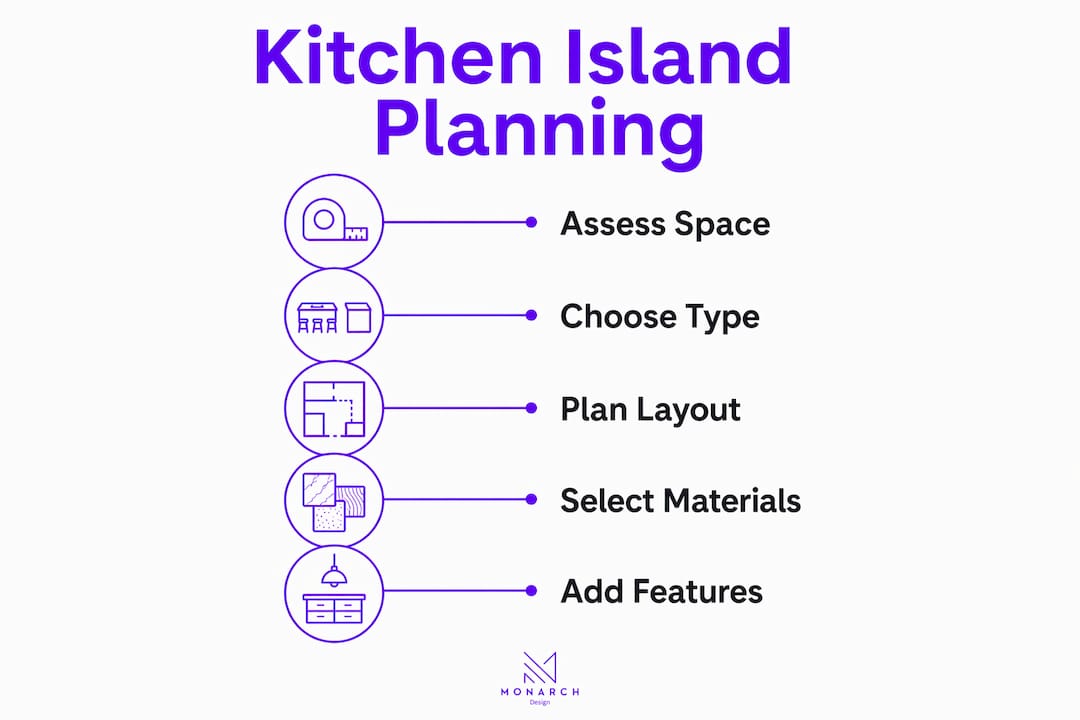
Assess your kitchen’s size and shape. Galley kitchens rarely accommodate a fixed island without sacrificing aisle width. L-shaped and open-plan kitchens are the most island-friendly layouts. Review compact kitchen layout options if your space is under 200 square feet.
Define the island’s primary role. Defining a single primary function for the island, whether prep, cleanup, or cooking, prevents cluttered layouts and preserves workflow. Secondary functions like seating or storage can be layered in, but one purpose should drive the design.
Choose materials that match your lifestyle. Quartz resists staining and requires minimal maintenance, making it the practical choice for busy households. Butcher block adds warmth and is repairable, but it demands regular oiling and is vulnerable to moisture. Marble is visually striking but etches easily with acidic foods.
Consider a kitchen renovation checklist before committing. A structured planning process catches conflicts between the island design and existing plumbing, electrical, or ventilation before they become expensive problems.
Engage a professional design and carpentry service. Custom-built islands from a firm like Monarch carpenters are designed to your exact kitchen dimensions, finish preferences, and functional requirements. This eliminates the compromise that comes with off-the-shelf solutions and ensures the island integrates with your existing cabinetry rather than sitting beside it.
The role of bespoke carpentry in home design is precisely this: translating a homeowner’s practical needs into a built form that is both functional and considered. An island that is designed alongside the rest of the kitchen, rather than added as an afterthought, will always perform better and look more intentional.
Key takeaways
A kitchen island delivers the most value when its size, layout, and primary function are defined before any aesthetic decisions are made.
Point | Details |
Definition and access | A kitchen island is a freestanding unit accessible from at least three sides, separate from perimeter cabinetry. |
Aisle width standards | NKBA recommends 42 inches for one cook and 48 inches for two cooks as minimum work aisle widths. |
Seating overhang | Overhang depth varies by counter height: 18 inches at 30 inches, 15 inches at 36 inches, 12 inches at 42 inches. |
Primary function first | Define one core role for the island before adding secondary features to avoid cluttered, inefficient layouts. |
Custom vs. off-the-shelf | A professionally designed island integrates with existing cabinetry and kitchen dimensions for better function and finish. |
Why I always tell homeowners to plan the island last
Most homeowners I speak with want to start with the island. They have a Pinterest board full of waterfall countertops and pendant lights, and they want to build the kitchen around that image. I understand the appeal. The island is the visual centerpiece, and it is easy to fall in love with the look before thinking through the logistics.
The problem is that an island chosen for aesthetics first almost always creates workflow problems. I have seen beautifully finished islands that block the refrigerator door, reduce the aisle to 30 inches, and leave no room for a second person to stand at the stove. The kitchen looks great in photographs and frustrates everyone who cooks in it.
My consistent advice is to plan the island last, after you have mapped every appliance, confirmed every aisle width, and walked through the kitchen’s daily routines. Once the functional constraints are set, the design choices become much easier because you know exactly what you are working with. A 36-by-72-inch island with a 15-inch seating overhang on one side is a specific brief. From there, the material, the finish, and the hardware are decisions you can make with confidence rather than guesswork.
The other mistake I see regularly is treating the island as a storage solution for everything that does not have a home elsewhere. Drawers fill up with miscellaneous items, the countertop becomes a landing zone, and the prep space disappears. Assign the island a clear purpose and protect that purpose deliberately.
— Seth Wayne
How Monarch carpenters can help you design the right island

Monarch carpenters has built a reputation in Singapore for delivering bespoke kitchen islands and cabinetry that balance craftsmanship with practical value. Clients consistently highlight the studio’s ability to translate a brief into a finished space that feels considered and purposeful, at a price point that respects the budget. The in-house team of designers and carpenters works directly with homeowners from concept through installation, which means every dimension, material choice, and detail is coordinated under one roof. If you are planning a kitchen renovation or exploring island options for the first time, start with Monarch carpenters to see how custom design and honest pricing can work together.
FAQ
What is a kitchen island used for?
A kitchen island provides additional prep space, storage, and seating in a kitchen, and it functions as a social hub during meals and entertaining. Its specific role depends on the household’s cooking habits and the island’s design.
How much space do you need for a kitchen island?
The NKBA recommends a minimum of 42 inches of aisle clearance on work sides and 36 inches on walkway sides. Kitchens under 150 square feet rarely have enough floor space for a fixed island without compromising circulation.
What should you put on a kitchen island?
The most practical items to keep on a kitchen island are prep tools, a cutting board, and frequently used small appliances. Avoid using the countertop as permanent storage, as this eliminates the workspace the island was designed to provide.
What is the difference between a kitchen island and a peninsula?
A kitchen island is freestanding and accessible from at least three sides, while a peninsula connects to a wall or cabinet run on one end. Islands offer more circulation flexibility, while peninsulas work better in kitchens where floor space is limited.
Can a kitchen island be added to any kitchen?
A kitchen island can be added to most kitchens, but the layout must support the required aisle widths. Galley kitchens and very small open-plan kitchens often cannot accommodate a fixed island without sacrificing usability, and a rolling cart is a practical alternative in those cases.
Recommended
Comments