
What Is an Open Concept Layout? A Singapore Guide
- Monarch

- Jun 10
- 8 min read
TL;DR:
An open concept layout removes interior walls to create a spacious, light-filled living environment, especially popular in Singapore. It enhances social interaction and perceived space but requires deliberate zoning using furniture, lighting, and materials to maintain organization. Proper planning, especially regarding structural elements and ventilation, is essential for functional and compliant renovations.
An open concept layout is defined as a floor plan that removes interior walls between key living spaces, such as the kitchen, dining room, and living room, to create one unified, light-filled area. This design approach has become the preferred choice for Singapore homeowners who want their homes to feel larger, brighter, and more connected. Whether you are renovating an HDB flat or planning a new condo interior, understanding what open floor design means and how it works in practice will help you make smarter decisions before you commit to any renovation.
What is an open concept layout vs. a traditional floor plan?
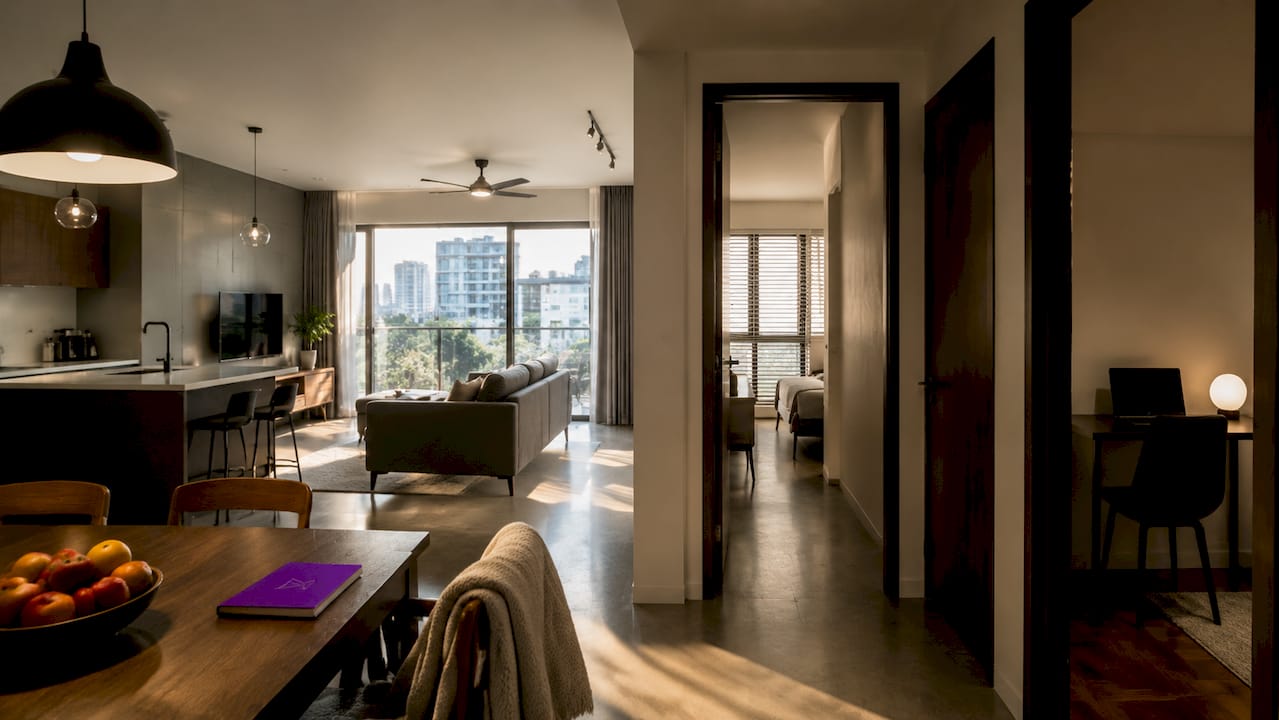
An open concept layout merges two or more common living areas into a single, flowing space by physically removing or reducing interior walls. The industry also uses the term “open floor plan” interchangeably, though there is a meaningful distinction worth knowing. As Alekseeva Design explains, the difference between open plan and open concept lies in function versus visual openness. An open plan prioritizes multifunctional zones within one area, while open concept focuses on the visual and spatial experience of removing barriers.
A traditional floor plan, by contrast, divides a home into separate, enclosed rooms, each with a dedicated purpose. The kitchen is closed off from the dining room. The living room has its own four walls. This compartmentalized approach offers privacy and noise control, but it also fragments natural light and makes smaller homes feel even more confined. In Singapore, where the average HDB flat ranges from 90 to 110 square meters, that fragmentation has a real cost on livability.
The open layout changes how light and air move through a home. Natural light flows more freely in open designs, making spaces feel larger and more inviting without adding a single square meter. Beyond aesthetics, the removal of walls also changes how families move through their homes, how they interact, and how flexibly they can use each area.
Here is a direct comparison of the two approaches:
Feature | Open concept layout | Traditional floor plan |
Wall structure | Minimal or no interior walls | Enclosed, separate rooms |
Natural light | Flows freely across zones | Blocked by walls between rooms |
Social interaction | High, family stays connected | Lower, rooms isolate occupants |
Perceived space | Larger, more expansive | Smaller, more defined |
Noise control | Lower without design intervention | Higher by default |
Renovation cost | Higher for retrofits | Lower, structure already in place |
One common misconception is that open concept means no structure at all. The most effective open floor designs still use purposeful zones to define activity areas, just without physical walls doing the work.
Why are open concept layouts popular among Singapore homeowners?
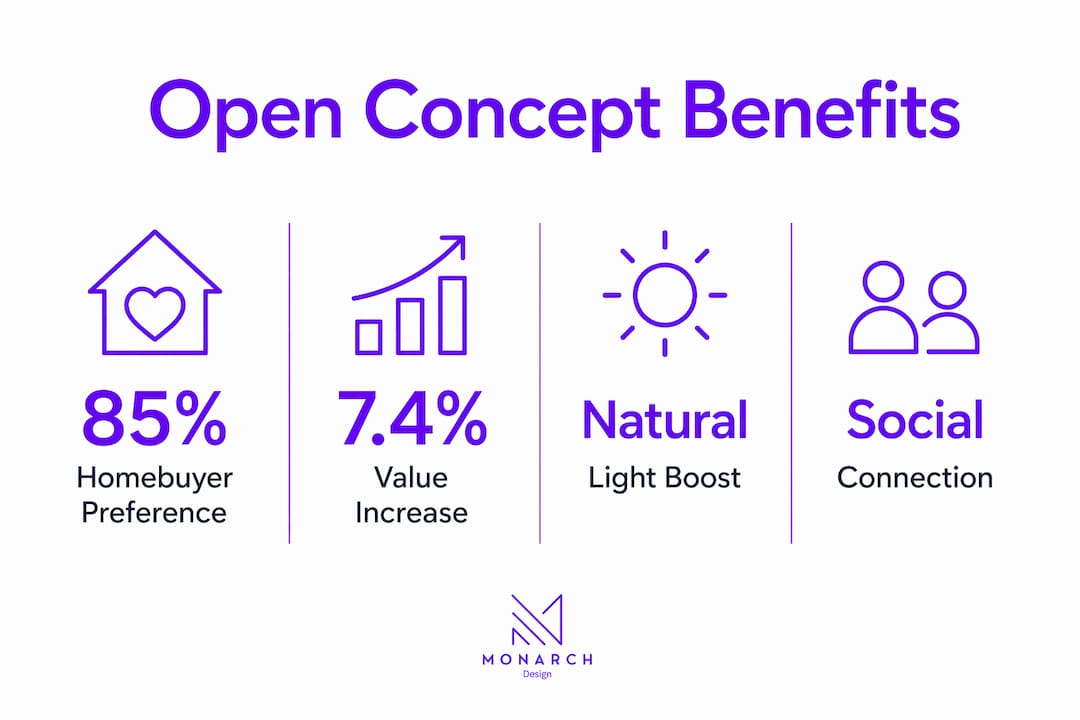
The preference for open layouts is not a passing trend. 85% of homebuyers want an open connection between the kitchen and dining room, and 79% seek openness between the kitchen and family room. These numbers reflect a genuine shift in how people want to live, particularly in urban environments like Singapore where space is a premium.
The core benefits driving this preference are practical and measurable. Open layouts let parents cook while watching children do homework at the dining table. They allow conversations to flow naturally between the kitchen and living room during gatherings. For Singapore families who frequently host relatives or entertain friends, this social connectivity is a significant quality-of-life improvement. Research shows that family time together averages just over six hours per week, and open layouts actively support those shared moments by keeping the household connected rather than separated by walls.
There is also a financial argument. Open floor plans contribute to an approximate 7.4% annual increase in home resale value. In Singapore’s competitive property market, that uplift matters. Buyers consistently respond to homes that feel spacious and modern, and an open layout delivers both without requiring a larger footprint.
Pro Tip: If you value both openness and privacy, consider a semi-open layout that removes walls between the kitchen and dining area while retaining a partial partition or sliding panel between the living room and a study or bedroom. You get the social benefits without sacrificing every quiet corner.
You can explore how this applies specifically to your living room in this open concept renovation guide for Singapore homes.
How do designers create functional open concept spaces?
Removing walls is the easy part. Creating a space that feels organized, purposeful, and livable without walls requires deliberate design strategy. The professional term for this is zoning, and it is the single most important skill in open floor plan design.
Zoning in open layouts relies on furniture placement, area rugs, lighting, and floor materials to define spaces without physical barriers. Each tool serves a specific role:
Area rugs anchor each zone visually. A rug under the dining table tells the eye “this is the dining area” even when it sits three meters from the kitchen counter.
Pendant lighting positioned directly above a kitchen island or dining table creates a visual ceiling that defines the zone below it.
Furniture arrangement acts as a soft boundary. A sofa facing away from the kitchen creates a psychological separation between the living and cooking zones.
Floor material changes are one of the most effective and underused zoning tools. Switching from tile in the kitchen to timber in the living area communicates a zone transition without a single wall.
Ceiling treatments such as a dropped section or exposed beam above one area can define that zone from above rather than from the sides.
The risk of skipping zoning is real. Without it, open spaces can feel like a warehouse: visually large but functionally chaotic. Clutter from the kitchen bleeds into the living area. Noise from the television competes with cooking sounds. The space loses its sense of purpose. Effective open concepts create structured “pockets of purpose” rather than one endless open area.
Pro Tip: In Singapore’s tropical climate, ceiling fans placed at zone boundaries do double duty. They improve air circulation across the open space and visually mark the transition between cooking and living areas.
For guidance on furniture layout planning within open spaces, Monarch carpenters has a dedicated resource for Singapore homeowners.
What should you consider before renovating for an open concept home?
Planning an open concept renovation in Singapore involves more than choosing a design style. There are structural, financial, and lifestyle factors that determine whether the project goes smoothly or becomes an expensive lesson.
Structural considerations
Retrofitting an open concept in an older home often requires addressing load-bearing walls, which may need steel beams or reinforced supports to replace the structural function of the removed wall. In Singapore HDB flats, certain walls are designated structural by HDB and cannot be removed without approval. Always engage a licensed contractor or interior designer who understands local building regulations before demolishing any wall.
Cost and timeline
Retrofitting an existing home for an open layout costs significantly more than incorporating the design into a new build. Structural work, hacking fees, plastering, and repainting all add to the budget. A realistic timeline for a mid-sized HDB renovation involving wall removal runs between eight and twelve weeks, depending on the scope. New condo owners have more flexibility since many developers now offer open-plan shell units that require less structural intervention.
Lifestyle and practical factors to plan for:
Noise management: Open spaces carry sound freely. Consider acoustic panels, soft furnishings, or a dedicated quiet zone if you work from home.
Ventilation: Singapore’s humidity means airflow planning is non-negotiable. Ceiling fans, cross-ventilation windows, and air conditioning placement all need to account for the larger open area.
Clutter visibility: In an open layout, mess in one zone is visible from every other zone. Built-in storage and concealed cabinetry become more important, not less.
Cooking odors: An open kitchen means cooking smells travel freely. A high-performance range hood with external ducting is a practical requirement, not an upgrade.
A kitchen renovation checklist tailored for Singapore homeowners can help you plan these details before work begins. Understanding space planning principles is equally useful when you are reconfiguring an entire floor layout.
Key takeaways
An open concept layout delivers measurable benefits in light, space, and social connection, but it requires deliberate zoning and careful renovation planning to work well in Singapore homes.
Point | Details |
Core definition | An open concept layout removes interior walls to merge living, dining, and kitchen areas into one connected space. |
Zoning is non-negotiable | Use rugs, lighting, furniture, and floor materials to define activity zones without physical walls. |
Strong buyer preference | 85% of homebuyers want kitchen-dining connectivity, and open layouts add approximately 7.4% in annual resale value. |
Renovation requires planning | Load-bearing walls, HDB regulations, ventilation, and storage all need professional assessment before work begins. |
Singapore-specific factors | Humidity, compact footprints, and cooking odors make range hoods, airflow planning, and built-in storage priorities. |
Why open concept layouts change more than just your floor plan
I have worked with enough Singapore homeowners to say this with confidence: the shift to an open concept layout changes how a family actually lives, not just how their home looks. The most consistent feedback I hear after a project is completed is not about aesthetics. It is about connection. Parents say they feel less isolated when cooking. Couples say they spend more time in the same room without even trying. That is the real value of this design, and it is harder to quantify than resale figures.
What I have also learned is that the homeowners who are happiest with their open layouts are the ones who invested in proper zoning from the start. The ones who skipped it often come back six months later asking why the space feels chaotic or why they cannot escape the noise. Openness without structure is just a large room. Structure without openness is just a traditional floor plan with a different name.
My honest recommendation is to treat the zoning strategy as seriously as the wall removal itself. Work with a designer who understands both the visual and functional dimensions of open floor plan design. In Singapore, where every square meter counts, getting this balance right is the difference between a home that works beautifully and one that just looks good in photographs.
— Seth Wayne
How Monarch carpenters designs open concept spaces that clients love

Monarch carpenters has built a reputation in Singapore for delivering open concept interiors that clients consistently praise for their craftsmanship and value. Homeowners across HDB flats, condos, and landed properties have trusted Monarch carpenters to handle everything from structural planning to bespoke carpentry, all at pricing that does not compromise on quality. The studio’s in-house team of designers and carpenters works closely with each client to translate open layout ideas into spaces that are beautiful, practical, and built to last. If you are ready to explore what an open floor plan could look like in your home, visit Monarch carpenters to start the conversation.
FAQ
What is an open concept layout in simple terms?
An open concept layout is a home design that removes interior walls between the kitchen, dining room, and living room to create one large, connected space. The goal is to improve light flow, perceived space, and social interaction within the home.
How does an open floor plan differ from an open plan?
An open floor plan refers broadly to the removal of walls to create visual openness, while an open plan emphasizes multifunctional zones within a single area. In practice, the best designs combine both: visual openness supported by deliberate functional zoning.
Does an open concept layout add value to a Singapore home?
Open floor plans contribute to an approximate 7.4% annual increase in resale value, and Singapore buyers consistently favor homes that feel spacious and modern. An open layout is one of the most cost-effective ways to improve both livability and market appeal.
Can HDB flats in Singapore be converted to open concept layouts?
Yes, but only non-structural walls can be removed without HDB approval. Load-bearing walls require a licensed structural engineer and formal approval before any hacking work begins. Always verify wall classifications with your contractor or interior designer before planning the renovation.
What is the biggest design mistake in open concept homes?
Skipping zoning is the most common and costly mistake. Without rugs, lighting, and furniture placement to define activity areas, open spaces feel chaotic and difficult to live in. Purposeful zones are what separate a well-designed open layout from a large, disorganized room.
Recommended
Comments