
One Team Humidity Control Cabinets: Durable Joinery for Homes & Hotels
- Monarch

- 1 day ago
- 10 min read
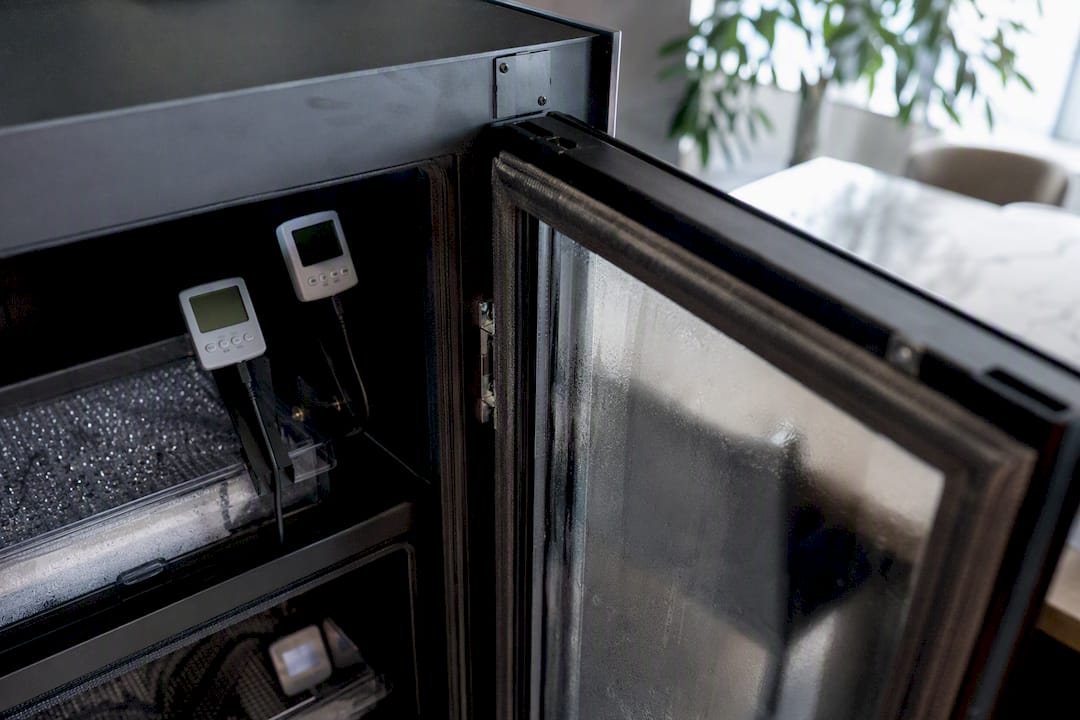
Humidity control cabinets are custom-built enclosures that hold a stable relative humidity and temperature around wine, musical instruments, wardrobes, or fine wood furniture, protecting them from swelling, cracking, and mold. They suit homeowners with a valuable collection or a design feature they want protected long term, hospitality operators needing consistent guest-room finishes, and property managers overseeing wood-heavy interiors. Getting reliable results depends entirely on bespoke design, correct component selection, and proper commissioning, not off-the-shelf hardware.
TL;DR:
Proper substrate and joinery choices are crucial, as wood movement over time can cause failures even with advanced climate control systems.
Commissioning includes testing sensors, verifying seals, and load testing, which significantly reduces maintenance issues and ensures consistent performance.
Acoustic and vibration management are essential, especially in hospitality settings, with best practices including remote-mounted compressors and vibration isolators.
Mechanical components like humidifiers, dehumidifiers, and cooling units must be integrated with accurate digital monitoring for reliable long-term operation.
A dedicated design-build team handling site assessment, design, and installation ensures precise coordination, fixed pricing, and better long-term performance.
Table of Contents
What Are Humidity Control Cabinets Used For?
A humidity control cabinet is a built-in enclosure engineered to hold a target relative humidity and temperature range for a specific purpose. We’re talking about custom joinery with active climate systems built in, not the sealed dry cabinets used in electronics labs to keep components bone dry. Those solve a different problem entirely. What we build protects living materials that need moisture, not the absence of it.
The right target range depends entirely on what’s inside:
Wine storage typically needs 60–70% RH at 12–14°C, mirroring the conditions of a below-ground climate-controlled cellar.
Musical instruments usually want a stable 40–60% RH, with the exact figure varying by instrument. A piano tolerates a wider band than a violin.
Wardrobes and textiles perform best at 45–55% RH, low enough to discourage mold but not so dry that leather and natural fibers crack.
Wooden furniture and cabinetry finishes generally sit in that same mid-range band, since most hardwoods are milled and finished assuming moderate humidity.
A built-in cabinet makes sense when you lack a basement suited to natural cellaring, when the collection is a permanent design feature you want visible rather than boxed away, or when a hospitality property needs guest-facing storage that performs reliably without daily attention. If the need is smaller in scale, a dedicated storage case or a whole-room humidifier might solve the problem more simply. Cabinets earn their cost when the collection or the finish is valuable enough to justify precision engineering.
What Components Keep a Cabinet’s Climate Stable?
The mechanical plant only works as well as the envelope around it. A well-built cabinet starts with high-density PIR insulation panels, continuous vapor barriers, and thermal-bridge breaks at every joint, sealed behind hermetic doors or double-glazed viewing panels. Skip any one of these and the active systems inside will fight a losing battle against outside air.
Inside that envelope, the mechanical components do the actual work:
Ultrasonic or evaporative humidifiers add moisture in wardrobe and instrument applications where dryness is the main risk.
Dedicated wine-cooling units, mounted on anti-vibration isolators, hold temperature without disturbing sediment in aging bottles.
Dehumidification handles the opposite problem in tropical or coastal climates where ambient humidity runs too high.
Argon-filled, low-emissivity glazing with UV filtering protects both the climate seal and the contents from light damage.
Warm 2700K, UV-free LED lighting illuminates the cabinet without adding heat load or bleaching labels and finishes.
Noise and vibration matter more than most owners expect going in. A compressor mounted directly to the cabinet carcass transmits hum through the joinery and into the room. Best practice routes the condensing unit remotely, decouples refrigerant lines with vibration isolators, and channels condensate away cleanly rather than pooling near the base. Hospitality projects in particular target under 35 decibels measured inside the cabinet, quiet enough that a guest room never registers the mechanism running.
Every cabinet worth commissioning includes digital monitoring. Calibrated probes track RH and temperature continuously, with alarm thresholds that flag drift before it becomes damage, and many systems now integrate with home automation or building management platforms so an architect resource or facilities team can watch performance remotely.
Which Materials and Joinery Details Prevent Failure?
Humidity cycling is what destroys cabinetry over time, not a single humid day. Standard moisture-resistant MDF holds up fine in a dry room but swells, delaminates, or grows mold cores when it sits inside a cabinet running at 65% RH for years. That’s why substrate choice matters more here than in almost any other joinery project.

Marine-grade, high-density engineered boards resist that cycling far better than standard MR-rated panels, maintaining dimensional stability under sustained moisture and heat while holding screws more securely over the cabinet’s life, according to Merino Laminates. For cabinets facing near-constant exposure, such as a hotel minibar niche or a poolside wine display, stainless steel bodies are worth the added cost.
Solid timber inside a humid cabinet needs room to move, and the numbers are more specific than most owners realize. Flatsawn timber expands and contracts by a small measurable amount per 100 millimeters of width for every 1% shift in relative humidity, while quartersawn stock moves roughly half as much, per Berkshire Bespoke Carpentry. Ignore that math and a door that fit perfectly at installation binds shut within a season.
Good joinery absorbs that movement instead of fighting it:
Floating panels within a frame, rather than glued-in solid panels.
Slotted screw holes that let a component shift without splitting.
Figure-8 buttons and Z-clips for tabletops and shelving that must expand seasonally.
Dovetail anchors on wider panels where mechanical fasteners alone won’t hold.
Edge details finish the job. A 2mm PVC edge-band seals exposed substrate from moisture intrusion, and catalyzed or two-component lacquers with higher pencil hardness resist the swelling and abrasion that lower-grade finishes can’t handle.
Pro Tip: If you’re torn between solid timber and an engineered substrate for a cabinet face, remember that solid wood is easier to repair when it does move, while engineered boards resist moving in the first place. Choose based on how much hands-on maintenance you’re willing to do.
How Do You Plan a Project With an Architect or MEP Team?
Getting a humidity control cabinet right requires the same coordination discipline as any built-in system tied into a home’s mechanical and electrical infrastructure. Walking into a design meeting with the right checklist saves weeks of back-and-forth later.
Audit the collection first. Count bottles, instruments, or garments, and calculate the internal capacity and shelving depth the cabinet actually needs before anyone sketches a facade.
Coordinate MEP early. Decide where the condensing unit sits, how refrigerant lines route without crossing structural elements, what electrical circuit feeds the unit, and how condensate drains away from finished floors.
Set acoustic and access targets. Confirm the compressor noise ceiling, usually under 35 decibels inside the cabinet, and plan a service access panel so a technician never has to disassemble the cabinetry to reach the mechanical core.
Request full deliverables in the proposal. A serious design-build partner provides a technical memorandum covering load calculations and refrigerant routing, CAD or IFC files for the architect, photorealistic renders for client approval, a commissioning plan, and clear warranty terms.
Budget for the full timeline. Expect a sequence of survey, design development, fabrication, installation, and commissioning, typically running several months for a fully bespoke build. Upgraded hospitality-grade materials can add 12–22% to initial cost but often pay that back within one to two years in avoided maintenance on high-use projects, according to Cabo Cabinet Group.
The role of ventilation in home design also deserves a place in that conversation, since a cabinet’s dehumidification load changes depending on how the surrounding room breathes.
What Does Commissioning and Ongoing Maintenance Involve?
A cabinet that looks finished isn’t necessarily working correctly. Commissioning is the step that proves it, and skipping it is the single most common reason a beautiful cabinet underperforms within its first year.
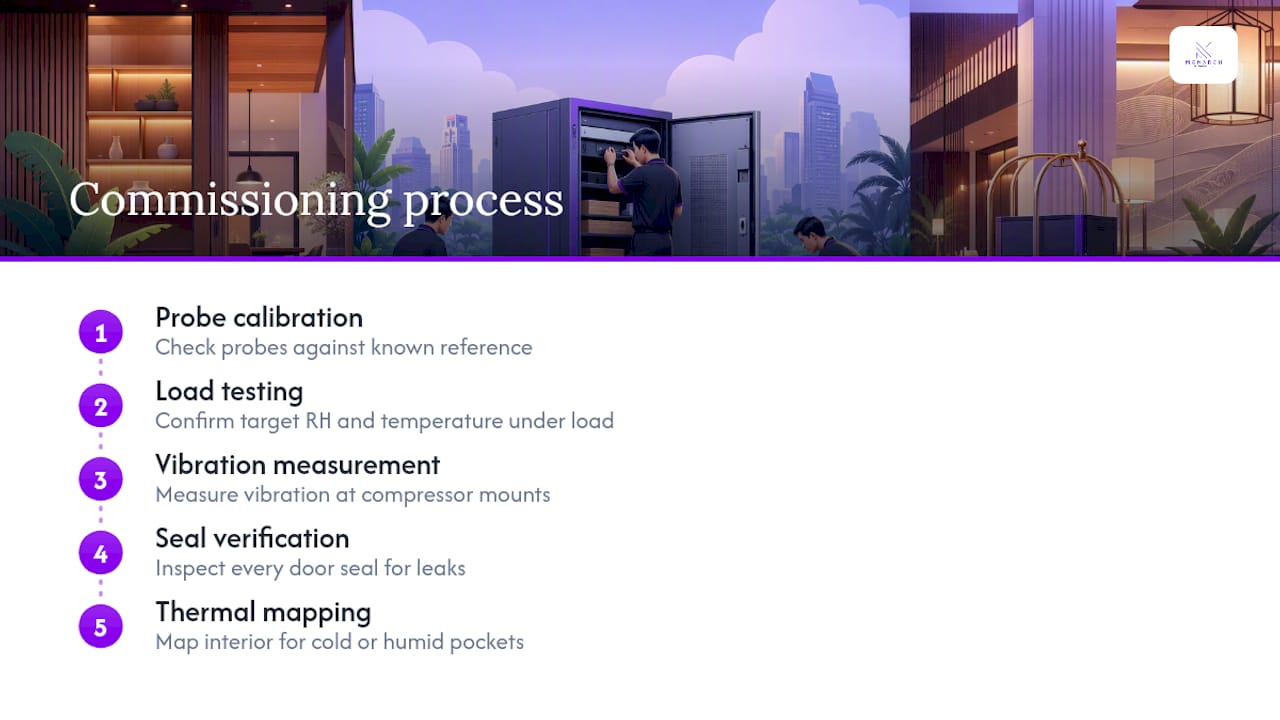
A proper commissioning process checks probe calibration against a known reference, runs a load test to confirm the system holds target RH and temperature under realistic conditions, measures vibration at the compressor mounts, verifies every door seal for leaks, and thermally maps the interior to catch cold or humid pockets before they cause damage.
Reduced maintenance is the payoff for that upfront rigor. Cabinets built with durable, higher-spec components typically need only annual calibration, a humidifier service, filter and condenser cleaning, and a seal inspection to keep running for years, per Cabo Cabinet Group’s findings on hospitality-grade hardware.
Remote monitoring closes the loop between commissioning and maintenance. A deviation alert catches a failing seal or a drifting sensor weeks before it shows up as visible damage. Ask your design-build partner whether they offer an annual maintenance contract versus a reactive, call-when-something-breaks arrangement. The former costs more upfront and almost always saves money over the cabinet’s life.
How Does Monarch Carpenters Deliver Humidity Cabinets?
Monarch Carpentry Design Studio is a Singapore-based interior and carpentry firm built on in-house design-build capability, meaning the people who draw the cabinet are the same team fabricating and installing it. That single point of accountability matters enormously on a technical build like this, where a gap between designer and carpenter is exactly where climate performance problems creep in.
A typical humidity-cabinet project with Monarch runs through a clear sequence:
A site visit to assess the space, collection size, and existing MEP infrastructure.
Photorealistic 3D renders so you can approve the look before fabrication starts.
Technical coordination with your architect or contractor on electrical, refrigerant, and drainage routing.
A fixed-price quote, so the cost you agree to at signing is the cost you pay at completion.
An optional annual maintenance contract to keep the climate system calibrated long after installation.
Clients consistently point to two things when they leave feedback on completed projects: the design fits seamlessly with the rest of their home, and the price stayed reasonable without cutting corners on the mechanical build. That combination, refined craftsmanship at a modest cost, is what integrated design and fabrication makes possible when one team owns every step instead of handing the project between separate designers, carpenters, and mechanical contractors.
What Should You Look for in a Design-Build Partner?
Not every carpentry studio that says it can build a humidity cabinet actually has the technical depth to do it well. The evidence to ask for is specific, and a partner who can’t produce it is telling you something important.
Insist on seeing a commissioning plan before you sign, not a vague promise that “the cabinet will be tested.” Ask for a written materials statement naming the substrate, insulation, and finish systems, along with actual noise and vibration figures rather than a marketing claim of “whisper quiet.” Request references or project photos from a comparable build, and confirm there’s a technical memorandum covering load calculations and refrigerant routing.
During the interview itself, ask pointed questions:
Can you show me a sample technical memorandum from a past project?
Do you provide a commissioning certificate at handover?
How have you coordinated refrigerant routing with an architect or MEP contractor before?
What does your warranty cover, and is a maintenance contract available?
Pro Tip: Treat a vague answer to any one of those questions as a red flag. A studio confident in its technical process will have documentation ready to show you, not a verbal reassurance.
Cost transparency rounds out the evaluation. A fixed-price quote that itemizes materials, mechanical components, and labor protects you from surprise change orders midway through fabrication, and it’s a fair test of whether a firm has actually engineered the project or is guessing at scope.
What Homeowners Get Wrong About Humidity Cabinets
Most advice on this topic treats the mechanical plant as the whole project: pick a good humidifier, pick a good cooling unit, done. That’s backwards. The joinery details determine whether a cabinet survives its first two humidity cycles intact, and a beautifully specified compressor sitting inside cabinetry that wasn’t built to move with the seasons will still crack, stick, or delaminate.
The conventional wisdom also underweights maintenance planning. Owners want to talk about the wine capacity or the instrument count going in, and few ask about calibration schedules or condensate routing until something goes wrong. A cabinet that isn’t commissioned properly, or one nobody recalibrates annually, will drift out of its target range slowly enough that damage happens before anyone notices the numbers moving.
If you take one thing from this guide, prioritize substrate and joinery decisions as seriously as you weigh the compressor spec sheet. The mechanical systems get the attention because they’re easy to describe in a brochure. The wood movement math and the fastener choices are what actually determine whether the cabinet still closes properly in five years.
— Seth Wayne
Ready for a Technical Visit and Fixed-Price Quote?
If you’ve read this far, you already know a humidity control cabinet lives or dies on details most contractors skip. Monarch Carpenters builds these as a design-build studio for interiors across residential and hospitality projects, meaning the technical visit, the render, and the fabrication all run through one accountable team instead of three separate vendors passing blame.

A technical visit from Monarch covers a site assessment, a photorealistic render so you can see the cabinet before it’s built, coordination with your architect or MEP contractor on electrical and refrigerant routing, and a fixed-price quote with no surprise line items later. An optional annual maintenance contract keeps the climate system calibrated well past the installation date. Bring your collection count, rough space dimensions, and any existing MEP constraints to the first meeting to get the most accurate quote possible. If storage capacity planning is part of your project, our storage optimization guide is worth a read beforehand. When you’re ready to move forward, request a technical visit through Monarch Carpentry Design Studio and get a fixed-price quote built around your actual space and collection.
Sources
FAQ
What Humidity Level Is Best for a Wine Cabinet?
Most wine cabinets target 60–70% relative humidity at 12–14°C, matching the conditions of a natural underground cellar.
Can a Humidity Cabinet Also Protect Musical Instruments?
Yes, though instruments typically need a stable 40–60% RH range rather than the higher humidity wine requires, so a dedicated cabinet built for one purpose rarely suits the other without redesign.
How Long Does a Bespoke Humidity Cabinet Take to Build?
Expect a sequence of survey, design, fabrication, installation, and commissioning that typically spans several months, depending on cabinet size and mechanical complexity.
Does Monarch Carpenters Offer Ongoing Maintenance for These Cabinets?
Yes, Monarch Carpentry Design Studio offers an optional annual maintenance contract covering calibration and system servicing after the initial installation.
What’s the Difference Between a Humidity Cabinet and a Dry Storage Cabinet?
A humidity control cabinet, the kind covered here, maintains moisture for wine, instruments, and wood, while a dry storage cabinet keeps humidity low for electronics or lab equipment, an entirely different application.
Recommended
Comments