
What Is Full Home Renovation? A Singapore Homeowner's Guide
- Monarch

- Jun 2
- 8 min read

TL;DR:
A full home renovation involves a complete overhaul of structural elements, systems, and finishes across the entire property. It typically takes 4 to 12 months, depending on scope, permits, and material lead times, requiring careful planning and professional coordination. Budgeting with a 10 to 20% contingency and defining clear priorities early helps ensure the project proceeds smoothly and within cost.
A full home renovation is defined as a complete structural and cosmetic overhaul of a property, covering every major system and space rather than updating a single room or refreshing surfaces. In Singapore, where HDB flats and private condominiums have specific layout constraints and Building and Construction Authority (BCA) permit requirements, understanding what a whole house remodel actually involves is the difference between a project that runs smoothly and one that stalls at every turn. This guide breaks down the full house renovation process from scope and timeline to costs and design, so you can plan with confidence and spend your money where it counts.
What is full home renovation and what does it include?
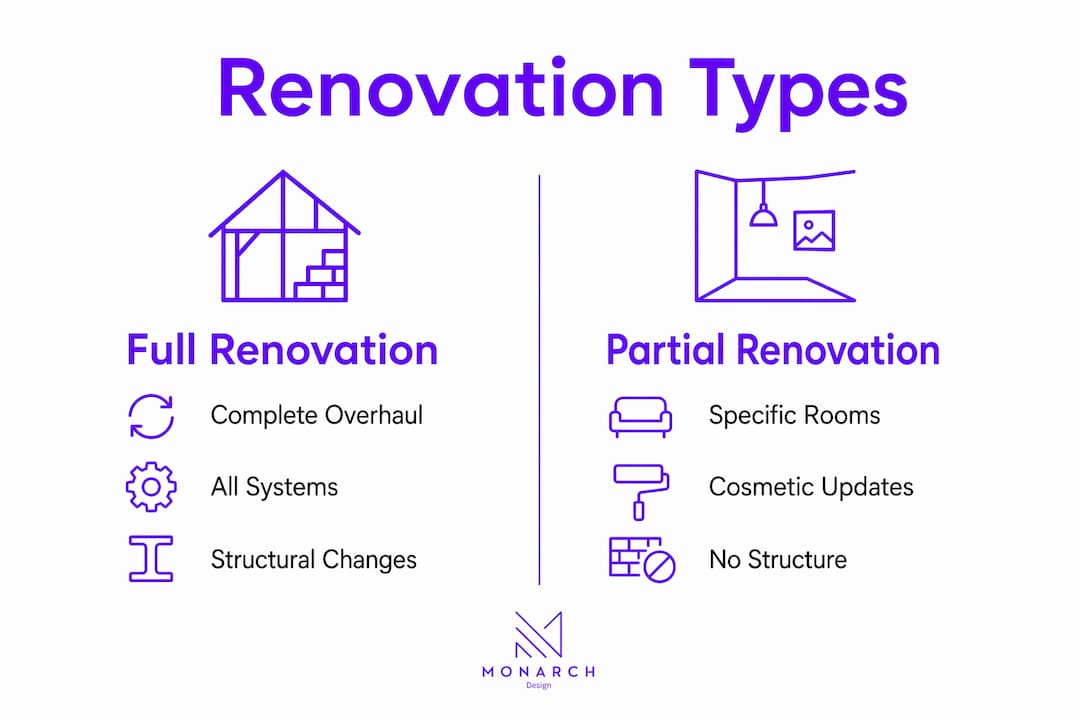
A full home renovation is a comprehensive replacement and upgrade of structural elements and key systems, including plumbing, electrical, and HVAC, not just surface-level updates. The industry term for this is a “whole house remodel,” and it differs fundamentally from a cosmetic refresh, which might involve repainting walls or replacing light fixtures without touching anything structural.
The scope of a complete home remodeling project typically covers these phases:
Demolition: Stripping interiors down to bare walls, ceilings, and floors to expose structural elements and existing systems
Structural repairs and modifications: Removing or adding walls, reinforcing beams, and correcting any defects found during demolition
System upgrades: Replacing or rerouting plumbing, electrical wiring, and ventilation to meet current safety codes
Interior finishing: Installing new flooring, cabinetry, fixtures, paint, and built-in furniture across all rooms
In Singapore, permits from the BCA must be secured before structural renovations begin, and non-compliance risks fines and insurance complications. This is not a formality you can skip. Engaging vetted professionals who understand local code requirements is the most reliable way to keep approvals on track. Monarch carpenters, for example, manages the full design-to-construction process in-house, which means permit coordination is handled alongside the design work rather than treated as an afterthought.
A whole house remodel also differs from a room-by-room renovation in its coordination demands. When every space is being worked on simultaneously, scheduling trades, managing material deliveries, and maintaining quality across the entire property requires a level of project oversight that most homeowners cannot realistically handle alone.

How long does a full home renovation take?
Full home renovations typically take between 4 and 12 months, covering planning, permitting, construction, and finishing. That range is wide because the actual duration depends on the size of the property, the complexity of structural changes, and how well the pre-construction phase was managed.
The typical phases and their approximate durations look like this:
Planning and design: 4 to 8 weeks, covering layout decisions, material selections, and mood board development
Permit processing: 2 to 6 weeks in Singapore, depending on the scope of structural work
Demolition: 1 to 2 weeks for most HDB or condo units
Rough-in work (plumbing, electrical, structural): 4 to 8 weeks
Interior finishing: 6 to 12 weeks, covering flooring, carpentry, painting, and fixture installation
Permit approvals and back-ordered materials are the two most common causes of delay. Material lead times for imported tiles, custom cabinetry hardware, and specialty fixtures can stretch 8 to 16 weeks, which means ordering early is not optional. Phased schedules with regular check-ins and contingency buffers reduce delays and budget overruns more reliably than any other single practice.
Pro Tip: Build a minimum four-week buffer into your move-in date. Finishing trades like tiling, carpentry, and painting almost always take longer than initial estimates, and rushing them produces visible defects that are expensive to fix after the fact.
What does a full home renovation cost?
The average whole home renovation cost in 2026 is approximately $52,275 for homes between 1,250 and 1,600 square feet, with a range from $19,500 to $88,400 depending on scope and materials. That spread reflects the enormous difference between a standard-finish renovation and a luxury remodel with custom millwork, imported stone, and high-specification fixtures.
Here is a breakdown of the major cost components:
Cost Component | Typical Share of Budget |
Structural work and demolition | 10 to 20% |
Plumbing and electrical systems | 15 to 25% |
Cabinetry and built-in carpentry | 20 to 30% |
Flooring and wall finishes | 15 to 20% |
Fixtures, fittings, and lighting | 10 to 15% |
Professional fees and permits | 5 to 10% |
Moving plumbing and electrical lines is a major driver of renovation costs, and retaining existing layouts saves thousands. This is particularly relevant in Singapore HDB flats, where wet areas are fixed by the original floor plan. If you can design around the existing plumbing positions, you eliminate one of the most expensive line items in the entire project.
Contractors frequently mark up materials, and sourcing tile, fixtures, and hardware independently can reduce your overall budget if delivery and timing are arranged carefully. This works best when you have a clear specification list and can commit to selections early enough that your contractor’s schedule is not disrupted.
Always allocate a 10 to 20% contingency fund on top of your quoted budget. Surprises behind walls, including outdated wiring, water damage, or substandard original construction, are common in older Singapore properties and cannot be priced until demolition reveals them.
Pro Tip: For phased renovations, a HELOC draws interest only on amounts drawn rather than the full loan value, making it more cost-effective than a lump-sum home equity loan when your renovation proceeds in stages.
How to plan and design your renovation
Setting clear functional goals before starting helps homeowners prioritize essentials over costly optional upgrades and reduces decision fatigue throughout the project. Before you look at a single material sample or design inspiration image, write down the non-negotiable outcomes: more natural light, an open-plan kitchen, a dedicated home office, or better storage. Those anchors prevent scope creep when you are standing in a showroom and everything looks appealing.
Design trends in 2026 relevant to Singapore homes include natural light optimization and multifunctional spaces, both of which reflect the wellness and sustainability priorities that have reshaped residential design since 2022. Biophilic elements, including indoor planting zones, larger window openings, and light-reflecting surfaces, are appearing consistently across both HDB and private property renovations.
When selecting materials and fixtures, consider these priorities:
Longevity over trend: Porcelain tiles, solid timber veneers, and powder-coated hardware outlast fashion cycles and reduce replacement costs over a 10-year horizon
Maintenance practicality: Matte surfaces hide daily wear better than high-gloss finishes in high-traffic areas like kitchens and entryways
Space perception: Light-toned flooring and cabinetry make compact Singapore apartments feel significantly larger without structural changes
A professional interior design mood board is not a decorative exercise. It is a decision-making tool that locks in your color palette, material combinations, and spatial proportions before any money is spent on procurement. Homeowners who skip this step frequently change their minds mid-construction, which generates costly variation orders.
Rushing material selections is one of the most common and costly mistakes homeowners make, because labor costs are fixed while materials determine the long-term quality of the result. Spend the time. The contractor’s schedule can accommodate a two-week delay in your tile decision far more easily than it can accommodate a full re-tile six months after completion.
For Singapore homeowners planning their kitchen specifically, a kitchen renovation checklist helps structure decisions around layout, appliance placement, and storage before engaging a contractor, which reduces the number of design revisions during construction.
Key takeaways
A full home renovation succeeds when scope, timeline, budget, and design goals are defined before demolition begins, not adjusted reactively during construction.
Point | Details |
Define scope precisely | A whole house remodel covers structure, systems, and finishes across all rooms, not just cosmetic updates. |
Plan for 4 to 12 months | Timeline depends on permit processing, material lead times, and structural complexity. |
Budget with a contingency | Set aside 10 to 20% above quoted costs to cover surprises revealed during demolition. |
Retain existing layouts where possible | Avoiding plumbing and electrical rerouting saves thousands and reduces construction time. |
Lock in design decisions early | Late material changes generate variation orders that inflate both cost and timeline. |
What I’ve learned from watching renovations go right and wrong
By Seth Wayne
After observing dozens of full home renovation projects in Singapore, the pattern that separates successful outcomes from stressful ones is almost never about budget size. It is about how early and how clearly the homeowner defined what they actually needed the space to do.
The most expensive mistakes I have seen come from homeowners who started with a vague brief, fell in love with a design aesthetic mid-project, and then tried to reverse structural decisions that had already been built. A feature wall becomes a load-bearing issue. A relocated kitchen island means rerouting a drain. These are not contractor failures. They are the predictable result of skipping the hard thinking at the front end.
What I consistently recommend is spending at least as much time on the brief as you spend on material selections. Write down how you actually live: where you eat, how much storage you genuinely use, whether you work from home, and how you want the space to feel at 7 AM versus 7 PM. That brief becomes the filter for every design decision, and it prevents the scope creep that turns a well-priced project into an overrun.
The final walkthrough is also underused. Most homeowners do a quick visual check and sign off. A thorough punch list, covering every door alignment, grout line, paint edge, and fixture function, protects you from living with small defects that compound into larger frustrations. Your contractor expects this. Do not skip it out of politeness.
— Seth Wayne
How Monarch carpenters can bring your renovation to life
Monarch carpenters has built a strong reputation among Singapore homeowners for delivering bespoke design and carpentry at a price point that does not require a compromise on quality. Clients consistently highlight the studio’s ability to translate a functional brief into spaces that feel considered, crafted, and genuinely livable, reflected in the positive reviews and repeat referrals the studio receives.

From initial concept through to final installation, Monarch carpenters manages the full design-to-construction process in-house, which means your project benefits from coordinated expertise rather than fragmented handoffs between separate firms. Whether you are planning a complete HDB overhaul or a private condo transformation, the team brings both design vision and technical precision to every stage. Visit Monarch carpenters to explore the studio’s portfolio and request a consultation for your renovation project.
FAQ
What is the difference between a full renovation and a partial renovation?
A full home renovation covers every room and all major systems, including plumbing, electrical, and structural elements, while a partial renovation addresses one or two areas without touching the rest of the property. The whole house remodel approach is more disruptive but produces a cohesive result and eliminates the need for phased disruptions over several years.
How much does a full home renovation cost in Singapore?
Costs vary widely based on property size, finish level, and structural complexity. The average renovation cost for a 1,250 to 1,600 square foot home is approximately $52,275, with a range from $19,500 to $88,400. Singapore-specific factors like HDB permit requirements and the cost of wet area work can push totals higher.
Do I need permits for a full home renovation in Singapore?
Permits from the BCA are required before structural renovations begin in Singapore. Proceeding without them risks fines, failed inspections, and complications with your property’s insurance coverage. Engaging a licensed contractor or design studio that handles permit applications is the most reliable way to stay compliant.
How do I avoid going over budget during a renovation?
Retain existing plumbing and electrical layouts wherever possible, lock in all material selections before construction begins, and allocate a contingency buffer of 10 to 20% above your quoted budget. Late design changes and back-ordered materials are the two most common causes of budget overruns.
Should I move out during a full home renovation?
For a complete home remodeling project, moving out is strongly advisable. With demolition, dust, and multiple trades working simultaneously across all rooms, the property is not safely or comfortably habitable. Factor temporary accommodation costs into your overall renovation budget from the start.
Recommended
Comments