
What Is the Design and Build Model for Singapore Homes
- Monarch
- Jul 12
- 8 min read
TL;DR:
The design and build model integrates design and construction under one contract for clearer accountability and faster project completion. It offers significant advantages in cost control, communication, and collaboration, especially in Singapore’s renovation market. Choosing a firm that emphasizes pre-construction planning and in-house capabilities ensures a smoother, more predictable project outcome.
The design and build model is a project delivery method where one entity handles both design and construction under a single contract, giving homeowners and property developers a single point of accountability from concept to completion. Unlike the traditional design-bid-build approach, where architects and contractors work separately and often at odds, this integrated model keeps design decisions and construction costs aligned in real time. Recognized by the Design-Build Institute of America (DBIA) as a leading delivery standard, it has gained strong traction in Singapore’s renovation and construction market. Monarch carpenters applies this model to deliver bespoke residential and commercial interiors with consistent quality and modest pricing.
What is the design and build model and how does it differ?
The design and build model is defined as a single-contract arrangement where one firm is responsible for both the design and construction phases of a project. This single-point responsibility eliminates the fragmented handoffs that cause delays and disputes in traditional builds. When an architect and a contractor work under separate contracts, each party can blame the other when problems arise. Under the design and build contract, there is no room for that finger-pointing.

The practical difference shows up in budget control. Traditional projects often follow a “design first, price later” sequence, where a homeowner falls in love with a design only to discover it exceeds their budget after months of planning. The design and build approach flips this. Design decisions are evaluated against cost estimates throughout the process, keeping the project financially grounded from day one. For Singapore homeowners working within HDB renovation guidelines or tight condo budgets, this real-time alignment is a significant advantage.
The DBIA’s risk allocation principles reinforce this further. Strategic risk allocation places construction and coordination risks with the firm best positioned to manage them, which is the design-build entity itself. Homeowners define their involvement and preferences upfront, then trust the integrated team to execute.
How does the design build process work from start to finish?
The design build process follows four overlapping phases: pre-design, schematic design, design development, and construction. What makes this sequence powerful is that phases overlap rather than run sequentially. Construction planning begins while design is still being refined, which compresses the overall timeline considerably.
Phase | Typical Duration | Key Activities |
Pre-design | 5–8 weeks | Site assessment, brief development, budget setting |
Schematic design | Weeks 6–12 | Concept layouts, material direction, preliminary costing |
Design development | Weeks 9–28 | Detailed drawings, specifications, contractor coordination |
Construction | 7–18 months | Build execution, quality checks, client updates |
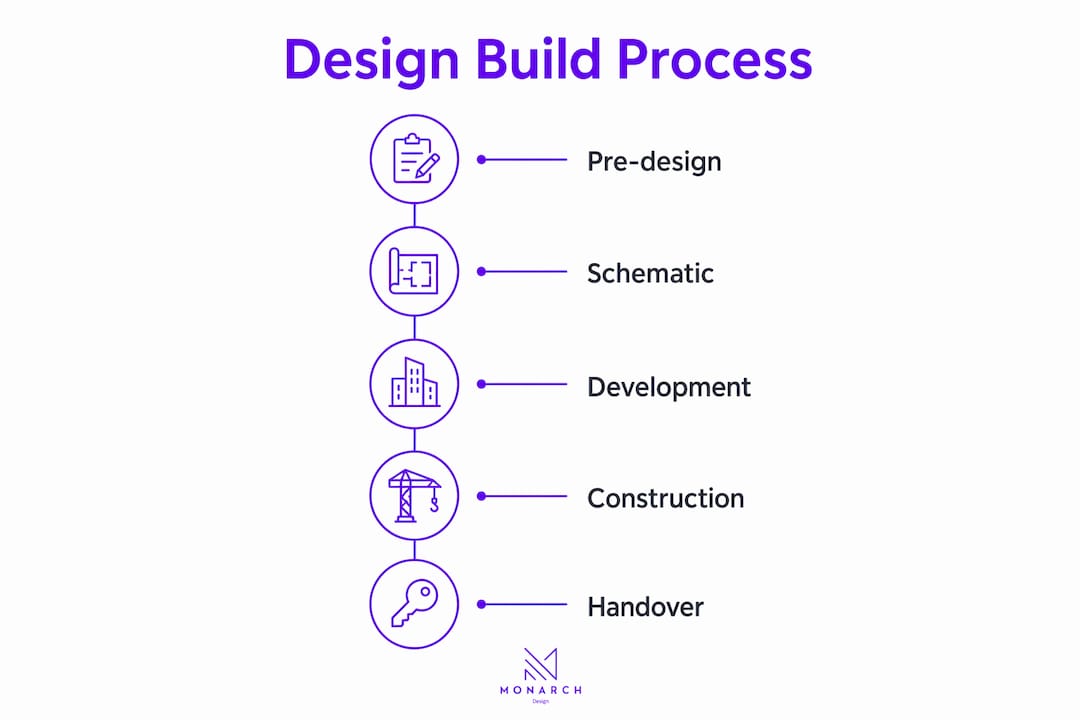
The pre-design phase is where the foundation of a successful project is laid. A paid pre-construction phase is standard practice in well-run design-build firms. Clients sometimes find this separate planning fee surprising, but it is the single most important investment in the entire project. It finalizes scope, locks in a realistic budget, and prevents the costly reactive changes that derail builds later.
During construction, the integrated team manages all subcontractors and material vendors under one roof. Integrated project leadership ensures that communication, quality, schedule, and budget are tracked by one accountable entity rather than spread across multiple firms with competing interests.
Pro Tip: Ask your design-build firm for a written phase timeline before signing any contract. A firm that cannot produce one has not done sufficient pre-construction planning.
What are the key benefits of design and build for Singapore projects?
The performance data behind the design and build model is compelling. Design-build projects complete up to 102% faster and show 3.8% less cost growth than traditional design-bid-build projects, according to a CII/Pankow benchmarking study. For a Singapore homeowner managing a renovation while renting temporary accommodation, faster completion translates directly into real savings.
The benefits extend well beyond speed:
Single contract, single responsibility. One firm owns the outcome. There is no dispute between your architect and your contractor about who caused a delay.
Real-time design-to-budget alignment. Design decisions are checked against cost estimates continuously, so you never receive a shock quote at tender stage.
Fewer change orders. When the design team and construction team share the same goals, last-minute design changes that inflate costs become far less common.
Simplified communication. You deal with one project lead, not four separate vendors. This reduces miscommunication and keeps decisions moving.
Better collaboration on bespoke elements. For custom carpentry, built-in joinery, and specialized finishes, having designers and craftsmen in the same team produces more refined results.
Information silos in traditional builds are a leading cause of project failure. Design-build’s integrated team structure breaks those silos down before they form. For Singapore developers managing multiple units or phased renovations, this structural advantage compounds across every project.
Pro Tip: Request a cost estimate at each design milestone, not just at the end. A good design-build firm will provide these automatically as part of their design-to-budget practice.
Common misconceptions and pitfalls to avoid with design-build
The most persistent myth about the design and build approach is that it suits only large commercial projects. Residential homeowners in Singapore benefit just as much, particularly when working with firms that specialize in bespoke interiors and carpentry at a modest scale. The model works for a three-room HDB renovation just as effectively as it does for a landed property rebuild.
That said, there are real pitfalls that homeowners and developers must avoid:
Skipping the pre-construction phase. Jumping straight to construction without a paid planning phase almost always leads to scope creep and budget overruns. The upfront pre-construction investment is non-negotiable for a well-run project.
Accepting vague contract allowances. Allowances are budget placeholders for items not yet specified. Vague allowances create disputes at handover. Insist on line-itemed allowances and detailed closeout documentation in every contract.
Ignoring the design-to-budget principle. Homeowners who fall in love with a design before confirming costs set themselves up for disappointment. Cost estimating must run alongside every design decision, not after it.
Underestimating client involvement. Design-build is not a “hand it over and forget it” model. Active client participation during pre-construction, particularly in defining scope and preferences, directly determines the quality of the final result.
Choosing a firm without integrated in-house capability. Some firms market themselves as design-build but subcontract both design and construction separately. This recreates the fragmentation the model is meant to solve. Verify that the firm has genuine in-house design and build capacity.
Pro Tip: Before signing, ask the firm to walk you through a completed project’s contract and closeout documentation. How they handled past handovers tells you exactly how they will handle yours.
How to engage effectively with a design-build firm in Singapore
Selecting the right design-build firm starts with evaluating their integration. A genuine design-build team has designers and builders working under the same leadership, sharing the same project goals. Review their completed projects to assess whether the design quality and construction finish are consistently aligned, not just visually impressive in photos.
Once you engage a firm, your role as a client matters more than most homeowners expect. Here is how to get the best results:
Define your brief clearly before the first meeting. Know your must-haves, your budget ceiling, and your timeline. Firms that practice design-to-budget alignment need this information to serve you well.
Participate actively in the pre-construction phase. This is where your input has the highest leverage. Changes made here cost almost nothing. Changes made during construction cost significantly more.
Ask for regular cost updates at each design milestone. A firm committed to budget transparency will provide these without being asked.
Clarify all material specifications in writing. Do not accept verbal assurances about finishes, fittings, or carpentry details. Every specification should appear in the contract.
Understand the handover process before construction begins. Know what documentation you will receive at project completion, including warranties, maintenance guides, and as-built drawings.
Monarch carpenters approaches every project with this collaborative discipline. Their in-house team of designers and craftsmen works directly with clients through each phase, keeping costs modest while delivering bespoke results. Clients consistently highlight the clarity of communication and the quality of the finished carpentry as standout strengths.
Key Takeaways
The design and build model delivers faster, more cost-controlled projects by placing design and construction under one contract and one accountable team.
Point | Details |
Single-contract accountability | One firm owns both design and construction, eliminating disputes between separate parties. |
Speed and cost advantage | Design-build projects complete up to 102% faster with 3.8% less cost growth than traditional methods. |
Pre-construction phase is critical | A paid planning phase finalizes scope and budget before construction begins, preventing costly changes. |
Design-to-budget discipline | Cost estimates must run alongside every design decision, not after, to keep projects on track. |
Client involvement drives outcomes | Active participation during pre-construction is the single highest-leverage action a homeowner can take. |
Why the design and build model is the right call for Singapore homeowners
By Seth Wayne
After years of watching renovation projects go sideways, the pattern is almost always the same. A homeowner hires an architect, gets a beautiful set of drawings, then discovers the contractor’s quote is 40% over budget. By that point, months have passed and the relationship between all parties is already strained. The design and build model does not just fix this problem. It makes the problem structurally impossible.
What I find most underappreciated about this approach is the pre-construction phase. Most homeowners see it as an extra fee. Experienced developers recognize it as the cheapest insurance they will ever buy. Every dollar spent defining scope and budget before construction starts saves multiples in reactive changes later. The firms that skip this phase, or offer it for free as a sales tactic, are the ones whose projects run over time and over budget.
Monarch carpenters’ approach reflects what I consider best practice. Their in-house designers and craftsmen share accountability for the final result, which changes how every decision gets made. When the person designing your built-in wardrobe is working alongside the person building it, the details get resolved before they become problems. That integration, combined with their commitment to modest pricing, is why their client reviews consistently reflect satisfaction rather than regret.
The shift from fragmented to integrated responsibility is not just a process improvement. It is a fundamentally different way of thinking about who owns the outcome of your project.
— Seth Wayne
Monarch carpenters: trusted design and build in Singapore
Monarch carpenters is a Singapore-based design and carpentry studio with a strong track record of delivering residential and commercial interiors under the design and build model, with consistently positive client feedback and pricing that respects real-world budgets.
Their in-house team handles everything from initial concept and space planning to bespoke carpentry and final handover, all under one contract. Clients praise the clarity of the process, the quality of the craftsmanship, and the absence of surprise costs. If you are planning a renovation or new build in Singapore and want a team that keeps design and budget aligned from day one, explore Monarch carpenters’ design and build services or browse their project portfolio to see the results firsthand.
FAQ
What is a design and build contract?
A design and build contract is a single agreement where one firm is responsible for both designing and constructing a project. It gives the client one point of contact and one party accountable for the entire outcome.
How does design-build differ from traditional construction?
In traditional construction, the architect and contractor work under separate contracts, which often causes disputes and delays. Design-build places both functions under one firm, aligning incentives and reducing friction.
Is the design and build model suitable for small home renovations?
The design and build model works effectively for projects of any scale, including HDB and condo renovations in Singapore. Homeowners benefit from the same cost control and communication advantages as large commercial clients.
Why is the pre-construction phase important in design-build?
The pre-construction phase finalizes scope, specifications, and budget before construction begins. Skipping it is the leading cause of cost overruns and disputes in design-build projects.
How do I choose a reliable design-build firm in Singapore?
Look for a firm with genuine in-house design and construction capability, a transparent cost estimating process, and a portfolio of completed projects with verifiable client reviews. Monarch carpenters meets all three criteria.
Recommended