
Open Concept Living Room Renovation Guide for Singapore Homes
- Monarch

- Jun 1
- 9 min read

TL;DR:
Open concept living room renovations in Singapore involve structural work to create a connected space that enhances natural light and perceived size. Proper planning must consider local regulations, hidden costs like beam installation and HVAC upgrades, and smart zone design using furniture and lighting instead of walls. Budgeting with contingencies and exploring broken-concept alternatives can save money while achieving a functional, bright, and spacious environment.
An open concept living room renovation is defined as the structural and design process of removing or softening walls between a living room, dining area, and kitchen to create a single, connected living space. This approach delivers measurable benefits: improved light distribution and a stronger sense of spaciousness that compartmentalized layouts simply cannot replicate. For Singapore homeowners working with HDB flats, BTOs, or condos, the renovation demands careful planning around structural regulations, realistic budgets, and smart zone design. This guide covers every stage, from permits to pendant lights, so you can make confident decisions before a single wall comes down.
What does an open concept living room renovation actually involve?
An open concept living room renovation goes well beyond demolition. The industry term used by designers and contractors is “open floor plan conversion,” and it encompasses structural work, mechanical rerouting, and a complete rethink of how zones function without physical walls to separate them.
The core appeal is well documented. Open floor plans improve natural light flow and the visual sense of space, which makes smaller Singapore apartments feel significantly larger than their floor area suggests. Families also report better interaction across the combined living, dining, and kitchen areas, a genuine quality-of-life gain for households with young children.
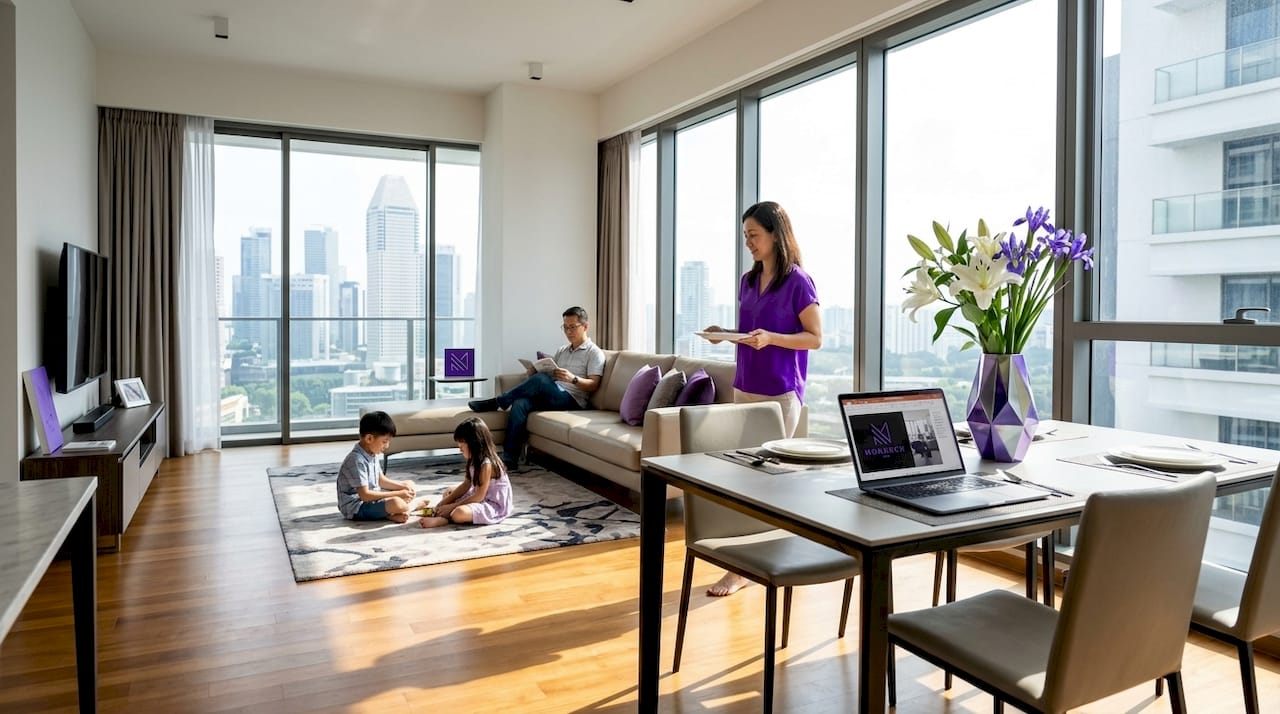
The challenge is that the work cannot be treated as a neat sequence of tasks. Framing, finishes, electrical, plumbing, and HVAC all interact simultaneously, which means a decision about flooring affects your lighting plan, and your lighting plan affects your electrical budget. Understanding this interconnection upfront prevents costly surprises mid-project.
Planning your renovation: Singapore-specific rules and costs
Singapore homeowners face constraints that do not apply in many other markets. HDB regulations restrict the removal of certain structural and party walls, which means your renovation scope is partly determined before you even speak to a contractor. Engaging a licensed contractor who understands HDB guidelines, or working with a design and build firm like Monarch carpenters, protects you from costly compliance failures.
What does a Singapore open concept renovation cost?
Cost varies significantly by property type and scope. Resale HDB renovations typically run S$60,000 to S$90,000 or more, with BTO and condo projects sitting at different price points depending on finishes and structural complexity. The table below breaks down the major cost buckets you should budget for:
Cost Component | Typical Scope |
Carpentry and built-ins | Custom cabinetry, TV feature walls, storage units |
Wet works and tiling | Floor leveling, tile replacement across merged zones |
Electrical and lighting | New circuits, pendant clusters, dimmer controls |
False ceiling and painting | Ceiling treatments to define zones, full repaint |
Structural beam installation | Required when load-bearing walls are removed |
Contingency fund | Recommended at 10–15% of total project budget |
Structural beam installation deserves special attention. When a load-bearing wall comes down, a steel or timber beam must replace it to carry the load safely. Beam installation costs range from $3,000 to $15,000 depending on span and material, and that figure excludes permits and inspections. This is a non-negotiable expense, not a line item you can trim.
Key hidden costs that catch Singapore homeowners off guard include:
HVAC upgrades: Open layouts increase HVAC runtime because the larger, undivided space is harder to cool efficiently. Budget for a system upgrade or additional fan coil units.
Ventilation for kitchen integration: Open concept living requires ducted range hoods rated at 600 to 1,200 CFM to handle cooking fumes in a shared space. Undersized hoods are the single most common regret among homeowners who merge kitchens with living areas.
Plumbing rerouting: If your kitchen or wet areas shift position, pipe relocation adds cost quickly.
Permit fees: HDB and condo renovations both require permits for structural work. Factor in processing time, which can add weeks to your timeline.
How do you design zones in an open concept living space?
Zone definition is the design skill that separates a well-executed open floor plan from a space that feels like one big, chaotic room. Pendant lighting clusters, flooring transitions, and area rugs substitute for walls in both visual and functional terms. Each tool signals to the eye where one activity ends and another begins.
Furniture arrangement is your first and most powerful zone-definition tool. A sofa placed with its back to the dining area creates a clear living zone boundary without blocking sightlines. A kitchen island serves the same purpose between the kitchen and dining zones, providing a visual anchor that maintains the open feel while giving each area its own identity. For furniture layout planning in Singapore homes, the goal is always to keep walkways clear while making each zone feel purposeful and contained.
Rugs and color repetition work together to create cohesion. Clear zones with rugs and lighting maintain visual coherence while keeping the floor plan open. Repeating one accent color across the living, dining, and kitchen zones ties the space together without making it feel uniform. Think of a warm terracotta tone appearing in a rug, a cushion, and a pendant shade across three zones.
Lighting is the most underused zone tool in Singapore renovations. Task, ambient, and accent lighting on independent dimmer controls allow each zone to shift mood and function without physical separation. A dining pendant on a warm dimmer, recessed downlights over the kitchen island, and a floor lamp beside the sofa create three distinct atmospheres within a single open space.
Pro Tip: When developing your color and materials plan, create a mood board before committing to finishes. Monarch carpenters’ guide on mood board creation walks you through the process of aligning colors, textures, and lighting across zones before a single tile is ordered.
Artwork and decorative elements complete each zone. A large-format artwork above the sofa anchors the living area. A sculptural pendant over the dining table signals the dining zone. These additions cost far less than structural work but deliver significant visual impact.
What happens during the actual renovation process?
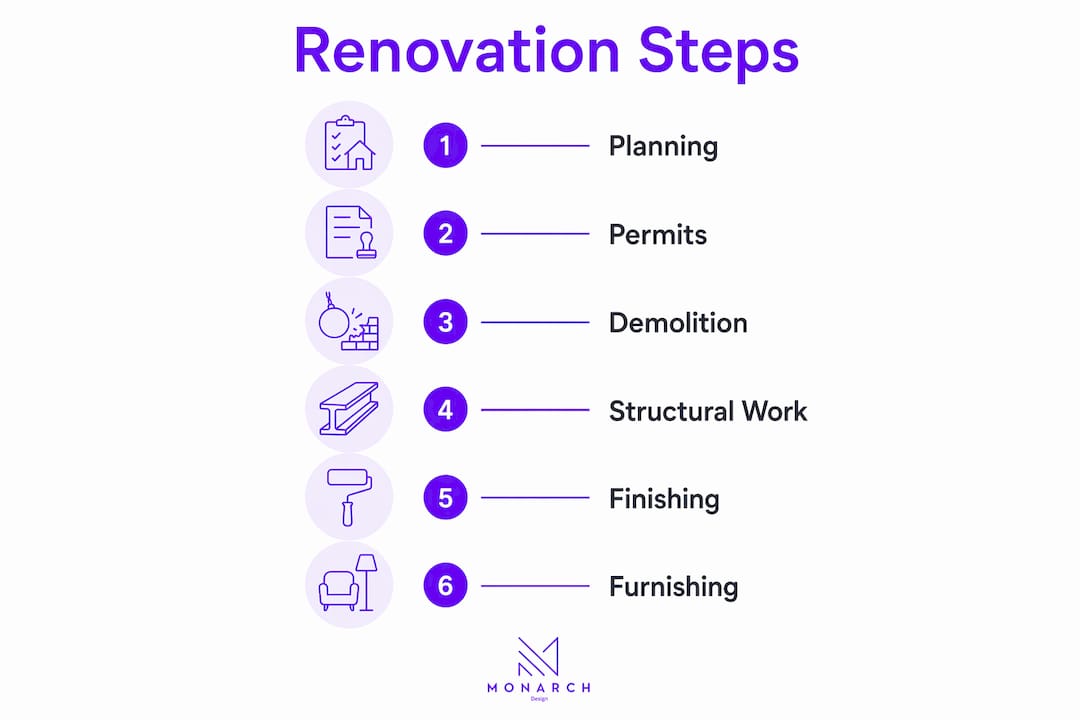
The demolition and construction phase of an open concept renovation follows a specific sequence, and understanding it helps you manage both expectations and living arrangements.
Structural assessment and permits: A structural engineer assesses which walls are load-bearing before any demolition begins. HDB and condo permits are submitted at this stage, and work cannot legally start until approvals are granted.
Demolition and beam installation: Non-structural walls come down first. Load-bearing walls are removed only after the replacement beam is in position. This is the most disruptive phase, generating significant dust and noise.
Mechanical rerouting: Electricians, plumbers, and HVAC technicians reroute services through the newly opened space. This phase often reveals surprises, which is exactly why a 10 to 15% contingency fund is not optional.
Flooring and ceiling work: New flooring is laid across the merged zones, often using a single material to reinforce the open feel. False ceiling treatments are installed to define zones overhead.
Carpentry, painting, and finishing: Built-ins, cabinetry, and feature walls are installed. Painting follows, and finally lighting fixtures, soft furnishings, and accessories complete the space.
“The renovation process for an open concept conversion rarely runs in a straight line. Budget for surprises in the mechanical phase, and you will finish the project without stress.”
Most Singapore open concept renovations take eight to twelve weeks from permit approval to handover. During this period, many homeowners arrange temporary accommodation or section off a livable area of the home. Discussing a phased approach with your contractor before work begins saves significant disruption.
How can you save money on an open concept renovation in Singapore?
Cost control in a living room redesign starts with one honest question: do you actually need to demolish walls, or can a broken-concept approach deliver the same feel at lower cost? Broken-concept designs use half walls, built-ins, and glass dividers to create openness while preserving some separation. This approach is increasingly favored in Singapore because it often sidesteps the structural permit process entirely, cutting both cost and timeline.
Practical cost-saving strategies worth applying:
Choose soft separations first: A built-in bookcase or half wall costs a fraction of full demolition and beam installation, yet delivers a comparable sense of openness.
Select durable mid-range materials: Engineered timber flooring and large-format porcelain tiles offer the look of premium finishes at significantly lower price points. Avoid specifying materials that require specialist installation.
Schedule outside peak demand: Contractor rates in Singapore are highest between October and February, when renovation activity peaks ahead of Chinese New Year. Scheduling your project between March and July typically yields better pricing and faster timelines.
Negotiate a fixed-price contract: Itemized quotations allow you to compare line by line and negotiate specific components. Lump-sum contracts obscure where your money goes.
Set a firm contingency: Allocate 10 to 15% of your total budget to a contingency fund and treat it as spent from day one. If you do not use it, you have a bonus. If you do, you are protected.
Pro Tip: Get at least three itemized quotations before committing to a contractor. The variance between the highest and lowest quotes for the same scope in Singapore can exceed 30%, and the cheapest quote is rarely the best value.
Key takeaways
A successful open concept living room renovation in Singapore requires structural planning, smart zone design, and disciplined budgeting before demolition begins.
Point | Details |
Permits come first | HDB and condo regulations restrict wall removal; confirm structural rules before planning your scope. |
Budget for hidden costs | HVAC upgrades, beam installation, and plumbing rerouting routinely add 20 to 30% beyond initial estimates. |
Zone design replaces walls | Rugs, pendant lighting, and furniture arrangement define functional areas without physical separation. |
Broken-concept saves money | Half walls and built-ins deliver openness at lower cost and often avoid the structural permit process. |
Contingency is non-negotiable | Set aside 10 to 15% of your total budget for surprises discovered during the mechanical phase. |
Why I think most Singapore homeowners overcomplicate this renovation
I have seen hundreds of open concept renovation projects across Singapore HDB flats and condos, and the pattern is consistent: homeowners spend months agonizing over whether to demolish a wall, then discover mid-project that a well-placed built-in or glass partition would have achieved the same result at half the cost and in half the time.
The honest truth is that pure openness is overrated. The spaces that feel best to live in are not the ones with every wall removed. They are the ones where zones are clearly defined, where the kitchen does not smell like the living room, and where a family member can watch television without competing with the sound of cooking. Broken-concept layouts address exactly these concerns, and they are gaining ground among Singapore designers for good reason.
What I find most rewarding about a well-executed open floor plan conversion is the resale value it creates. Buyers in Singapore consistently respond to spaces that feel larger and brighter, and a thoughtfully renovated open concept living area delivers both. The key word is “thoughtfully.” Lighting that is not zoned, ventilation that is undersized, and flooring that changes material every two meters all signal a renovation done on the cheap, and buyers notice.
My advice: start with your zone plan before you touch a single wall. Know where your living area ends, where your dining area begins, and how your kitchen integrates before you commit to any structural work. That clarity will save you money, time, and the kind of mid-project regret that is very expensive to fix.
— Seth Wayne
Transform your home with Monarch carpenters
Monarch carpenters has built a reputation in Singapore for delivering modern, cost-effective open concept renovations that homeowners consistently praise for design quality and budget transparency. Our clients regularly highlight how our in-house team of designers and carpenters translates a vision into a finished space without the surprises that plague less experienced contractors.

Whether you are planning a full open floor plan conversion or a broken-concept redesign that works within your HDB’s structural limits, Monarch carpenters brings the bespoke carpentry and design expertise to make it work beautifully and practically. Visit Monarch carpenters to explore our portfolio and request a consultation tailored to your home and budget.
FAQ
What walls can be removed in a Singapore HDB renovation?
HDB regulations prohibit the removal of structural and party walls without explicit approval. Non-structural partition walls can generally be removed with a standard renovation permit, but always confirm with a licensed contractor before planning your scope.
How long does an open concept living room renovation take in Singapore?
Most open concept conversions take eight to twelve weeks from permit approval to completion. Projects involving significant structural work or HVAC upgrades may run longer, particularly if permit processing is delayed.
Is a broken-concept layout better than a fully open floor plan?
For most Singapore homes, a broken-concept approach delivers comparable openness while managing noise, cooking smells, and visual clutter more effectively. It also typically costs less and avoids complex structural permits.
What is the most important zone-definition tool in an open concept space?
Lighting is the most versatile and underused tool. Independent lighting controls for each zone, combined with area rugs and furniture placement, replicate the functional separation that walls previously provided.
How much should I budget for a Singapore open concept renovation?
Resale HDB renovations typically cost S$60,000 to S$90,000 or more for a full scope. Add a 10 to 15% contingency for mechanical surprises, and get at least three itemized quotations before committing to a contractor.
Recommended
Comments